Hey, just so you know, some of the links on this site are affiliate links. That means I may earn a small commission if you buy something through them. It doesn’t cost you anything extra, and it helps me keep this site running. Thanks for your support!
Beginner hockey gear should protect without preventing movement. A player needs more than skates and a stick: hockey combines speed, falls, sticks, boards and a hard puck, so correctly fitted protective equipment is part of learning the sport safely.
NHL Learn to Play publishes a head-to-toe equipment sequence. This guide follows that structure and explains what a beginner should check before stepping on the ice.
Beginner hockey gear checklist
| Item | Main job | Fit check |
|---|---|---|
| Base layer / supporter | Comfort and equipment support | Secure without restricting stride |
| Shin pads | Protect knees and shins | Knee sits in cup; lower leg covered |
| Hockey socks | Cover/secure shin pads | Stay up without bunching |
| Pants / breezers | Protect hips, thighs and lower spine | Overlap protection without limiting skating |
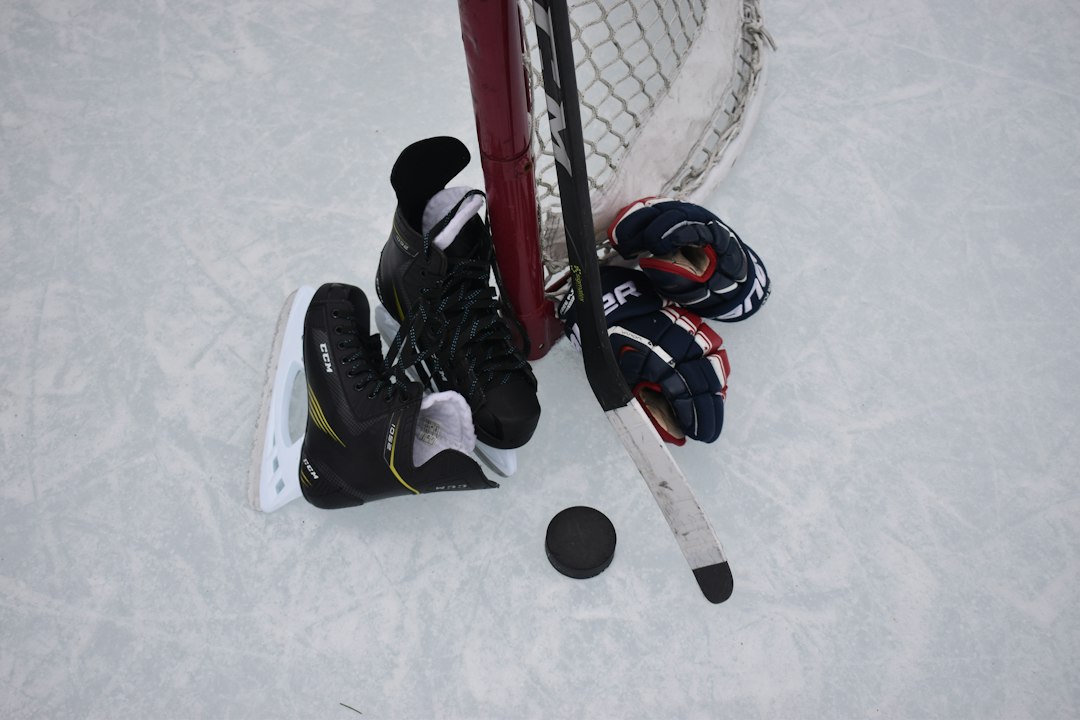
| Skates | Movement and edge control | Secure heel/ankle; correctly laced |
| Shoulder pads | Upper-body protection | Caps align over shoulders |
| Elbow pads | Elbow/forearm protection | Stay in place through arm movement |
| Helmet + face protection | Head/face protection | Proper certification and secure fit |
| Gloves | Hands/wrists + stick control | Finger mobility without excessive looseness |
| Stick | Puck control/shooting | Appropriate length and flex |
Skates: fit matters more than buying the stiffest boot
NHL beginner guidance says skates should be laced tightly from bottom to top so the ankles do not bend excessively. A beginner needs secure heel and ankle control without painful pressure or numbness.
Skate sizing is brand- and model-specific. Trying skates on with the socks you actually use is more useful than assuming your street-shoe size converts directly.
Helmet and facemask
NHL Learn to Play says the helmet and facemask should be of a design and construction approved by the Hockey Equipment Certification Council (HECC). Certification is a starting requirement—not a promise that injury cannot occur.
The helmet should sit securely rather than rocking around independently of the head. Follow the manufacturer’s fitting instructions for the exact model.
Shoulder and elbow pads should overlap protection
The NHL guide recommends aligning the center of the shoulders with the shoulder-pad caps. Elbow-pad straps should be tightened so the pads do not move during play.
When the player bends arms and rotates the torso, major gaps should not suddenly open between adjacent pieces of protective equipment.
Shin guards and pants
Shin pads should protect the knee and shin completely. Hockey pants protect the hips, thighs and lower spine. The useful fit test is movement: squat, stride and bend while checking that protection stays where it belongs.
Gloves: protection without losing stick feel
NHL guidance specifically calls for good finger and hand mobility. Gloves that are too large can reduce stick control; gloves that are too small may leave wrist gaps or restrict movement.
Stick length and flex
NHL Learn to Play says a stick should generally reach from the ice to the player’s chin when skates are on. That is a starting point. Position, skating posture and personal preference can move the final length.
Beginners should avoid an overly stiff shaft they cannot flex during a normal shot. Youth sticks are designed around smaller hands, height and strength.
Do not forget neck, mouth and league-specific requirements
Required equipment can differ by age group, league and governing body. Before buying the final setup, check the player’s organization for mouthguard, neck-laceration protection, full-face protection and other rules.
New vs used gear
Some protective items can be reasonable used purchases if they are clean, intact and still fit correctly. Be more cautious with safety-critical equipment whose age, impact history or certification status matters. Never assume a used helmet is safe because the shell looks clean.
FAQ
What hockey equipment should a beginner buy first?
Start with the league’s full required-equipment list, then prioritize correctly fitting skates, helmet/face protection and the complete protective set rather than buying only a stick and skates.
How long should a beginner hockey stick be?
NHL Learn to Play gives chin height with skates on as a general starting point.
Can hockey gear be too big?
Yes. Oversized pads can move away from the area they are supposed to protect and can interfere with skating or stick handling.
Is this a medical safety guarantee?
No. Protective equipment reduces certain risks but cannot eliminate injury in hockey.
Can a beginner buy used hockey equipment?
Some pads, pants, gloves and other non-critical items can be reasonable used purchases when they are clean, intact and fit correctly. Safety-critical equipment should be evaluated more cautiously for age, condition and certification.
How should hockey skates fit a beginner?
The heel should feel secure, the foot should not slide around, and lacing should support the ankle without causing painful pressure or numbness. Exact sizing varies by brand and model.
How do I know if protective pads are the right size?
Move through a skating stance, squat and arm swing. The pads should stay over the body areas they protect without opening large gaps or blocking normal movement.
Should I check my league rules before buying gear?
Yes. Age group, league and governing body rules can affect facemask, mouthguard, neck protection and other required equipment.
Bottom line
Fit the player, not the price tag. Protective pieces should stay in place through hockey movement, skates should secure the foot and ankle, and the stick should match the player’s size and strength.
Explore next: NHL & Hockey • Gear & Collectibles.
Source
NHL Learn to Play — Equipment Guide
Equipment guidance verified September 30, 2026. Follow your league and manufacturer rules for the exact player.