Hey, just so you know, some of the links on this site are affiliate links. That means I may earn a small commission if you buy something through them. It doesn’t cost you anything extra, and it helps me keep this site running. Thanks for your support!
Baseball is built around a simple clockless structure: teams trade turns batting and fielding, and outs — not minutes — move the game forward. Once you understand innings, half-innings and the three-out rule, the rest of a baseball game becomes much easier to follow.
What is an inning in baseball?
An inning has two halves. In the top half, the visiting team bats and the home team plays defense. In the bottom half, the home team bats and the visitors play defense. Each half-inning normally ends when the defensive team records three outs.
A standard Major League Baseball game is scheduled for nine innings. If the home team is already ahead after the visiting team finishes batting in the top of the ninth, the bottom of the ninth is unnecessary and the game ends. If the home team takes the lead in the bottom of the ninth or later, the game ends immediately on what fans commonly call a walk-off.
Why are there three outs in each half-inning?
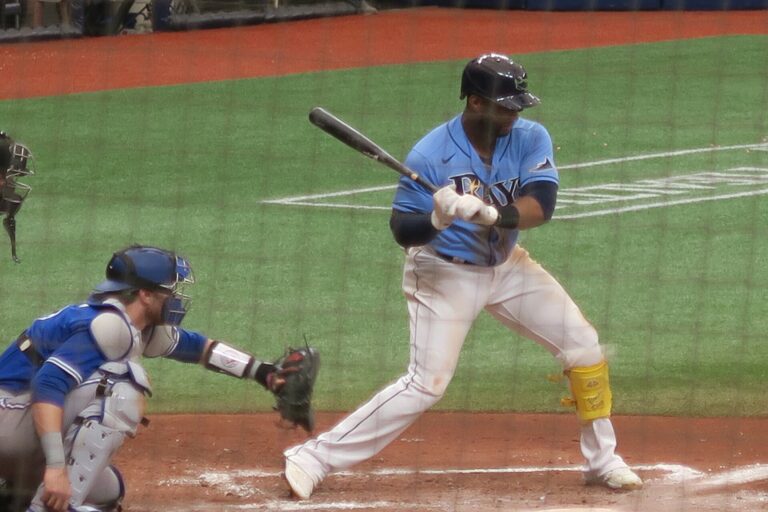
The batting team keeps sending hitters to the plate until the defense records three outs. An out can happen in several ways, including a strikeout, a caught fly ball, a force out, a tag out or certain rule-based plays. After the third out, the teams switch roles.
Because each team can make three outs per inning, a nine-inning game offers 27 defensive outs to each side when all nine defensive half-innings are needed. That is why you will often hear a late-game defense described as being “three outs away” from victory.
Top and bottom of the inning explained
- Top half: visiting team bats.
- Bottom half: home team bats.
- Middle of the inning: the short break after the third out of the top half.
- End of the inning: the break after the third out of the bottom half.
This structure is one reason baseball scoreboards display inning-by-inning lines. Each column shows what a team scored in that inning, while the final line adds total runs, hits and errors.
What happens if the game is tied after nine innings?
If an MLB regular-season game is tied after nine innings, it moves to extra innings. MLB’s current rule starts each half-inning after the ninth with an automatic runner on second base. The runner is generally the player in the batting order immediately before the hitter leading off that half-inning, or an eligible substitute.
The automatic-runner rule applies to regular-season MLB games, not postseason games. In the postseason, extra innings are played without placing an automatic runner on second.
How long can extra innings last?
There is no fixed maximum number of extra innings in a normal MLB game. Teams continue playing complete extra innings until one team finishes an inning ahead. If the home team scores the deciding run in the bottom half, play ends immediately.
Can a baseball game end before nine full innings?
Yes. The most common normal example is when the home team leads after the top of the ninth, so it does not need to bat again. Weather and other exceptional circumstances can also produce shortened or suspended games under MLB rules, so not every official game follows the clean nine-inning template from first pitch to final out.
A simple way to follow any baseball game
When you tune in, watch four things: the inning number, whether it is the top or bottom half, how many outs there are and which bases are occupied. Those four pieces of information tell you most of the immediate game situation.
Next, learn what every baseball position does and how the MLB postseason works. You can also browse the MLB & Baseball hub.
Official references
Rules and format were checked against MLB’s official rules/glossary, including MLB’s Automatic Runner glossary and Official Information. Featured image: Jose Francisco Morales / Unsplash; generic baseball imagery, not a specific MLB game.