Hey, just so you know, some of the links on this site are affiliate links. That means I may earn a small commission if you buy something through them. It doesn’t cost you anything extra, and it helps me keep this site running. Thanks for your support!
Few NFL rules create more instant debate than the catch rule. A receiver can appear to secure the football, get hit, fall to the ground and still leave fans asking the same question: was that actually a catch?
The easiest way to understand the rule is to separate the play into a short sequence. Under the NFL’s current rule framework, officials are looking for control of the ball, the required inbounds contact, and enough possession after that contact to establish that the receiver has completed the catch. The league’s 2026 rulebook remains the controlling source for the details.

The NFL catch rule in plain English
For a forward pass to become a completed catch, the receiver must first secure control of the football before it hits the ground. The player must then establish himself inbounds by getting both feet down or another qualifying body part down inbounds. Finally, the player must maintain control long enough to perform, or be capable of performing, an act common to the game.
That final piece is where many close calls live. A receiver who controls the ball and gets two feet down but immediately loses it before completing the catch may still be ruled incomplete. By contrast, once the catch is completed and the player becomes a runner, losing the ball can become a fumble instead of an incompletion.
The three-part test officials are really applying
1. Control the football
The first question is possession. The receiver must secure the ball in his hands or arms before the ball touches the ground. A ball can move slightly without automatically making a pass incomplete, but officials must determine whether the player actually controlled it.
If the ball hits the ground before the receiver establishes control, the pass is incomplete. If the ball contacts the ground after the player has already satisfied the elements of a catch, the result can be different. That is why slow-motion replay often focuses on exactly when control begins.
2. Get the required inbounds contact
In the NFL, a receiver normally needs two feet inbounds. A qualifying body part other than the hands can also satisfy the inbounds requirement. This is one of the clearest differences between NFL rules and some other levels of football, where one foot may be enough.
The boundary matters just as much as possession. A spectacular grab with one foot down and the second foot on the sideline is not a completed NFL catch. Toe taps, heel placement and whether a player was forced or carried out of bounds can become central replay questions.
3. Complete the act of catching the ball
After control and inbounds contact are established, the player must hold the ball long enough to make a football move or demonstrate the ability to do so. Examples commonly associated with that idea include taking an additional step, turning upfield, reaching or extending the ball, or otherwise transitioning from receiver to runner.
This part of the rule is intentionally based on football action rather than a stopwatch. There is no universal number of seconds that automatically creates a catch. Officials judge the sequence of control, inbounds contact and the receiver’s actions.
Why going to the ground still matters
The NFL simplified the catch rule several years ago, but falling catches can still be difficult because the receiver may be trying to satisfy the catch elements while contacting the ground. The key question is whether the player completed the catch before losing control.
If a player secures the ball, gets the required inbounds contact and completes the catch, he can become a runner before going down. If control is lost before that point, the play can remain an incomplete pass. This distinction is why two plays that look nearly identical at full speed can produce different rulings after replay.
Does the ball touching the ground automatically mean incomplete?
No. The phrase “the ball touched the ground” is not, by itself, enough to settle every catch ruling. Officials still have to determine whether the receiver maintained control and whether the ground caused a loss of control before the catch was completed.
A receiver can legally have the ball contact the ground if he already controls it and the ground does not cause him to lose that control. But if the ball hits the ground and the receiver has not yet secured it, or the contact with the ground causes the ball to come loose before the catch is complete, the pass can be ruled incomplete.
Catch or fumble: where the rule changes
One of the most important consequences of completing a catch is that the receiver can become a runner. At that point, a later loss of possession is evaluated as a potential fumble rather than simply as an incomplete pass.
That creates the familiar replay question: did the player ever become a runner? If the answer is no, the play may end as an incompletion. If the answer is yes, the next question becomes whether the runner was down before losing the ball or whether the defense recovered a live fumble.
What about catches near the sideline?
Sideline catches add a second layer of difficulty because officials must evaluate possession and boundary contact at nearly the same time. Replay angles may focus on a toe, heel or knee while another camera angle shows the receiver securing the ball.
The practical fan checklist is simple: did the receiver control the ball, did he get the required inbounds contact, and did he finish the catch before going out? If any of those elements fail, the pass is incomplete.
What is a simultaneous catch?
When an offensive player and defender gain possession at essentially the same time and neither establishes control first, the NFL has specific rules for simultaneous possession. These plays are rare, but they are another reminder that “who touched it first” is not always the same as “who possessed it first.”
Officials look at control, timing and whether either player clearly established possession before the other. The exact ruling can be highly fact-specific, so the current rulebook should govern any unusual game situation.
Why replay does not eliminate every catch controversy
Replay can slow the action down, but some catch decisions still require judgment. Officials may have to decide when control began, whether the ball moved enough to show loss of possession, whether both feet were completely inbounds and whether the receiver had completed the catch before contact or the ground disrupted the play.
That is also why broadcast freeze frames can be misleading. A single still image may show two feet down without proving that the receiver controlled the ball at that exact moment. The full sequence matters.
A quick catch-rule checklist for fans
- Control: Did the player secure the football before it hit the ground?
- Inbounds: Did he get two feet or another qualifying body part down inbounds?
- Completion: Did he hold the ball long enough to make or be capable of making a football move?
- After the catch: If the ball came out later, had he already become a runner?
- Replay: Does the full video sequence support changing the ruling, rather than one isolated frame?
How this fits into the bigger NFL rules picture
The catch rule is easier to understand when it is placed inside the larger structure of the game. If you are learning the league from the ground up, SportsyVibe’s guide to how NFL divisions, conferences and playoffs work explains how teams are organized and how the postseason field is built.
Future SportsyVibe NFL explainers will connect the catch rule to positions, officiating, replay, roster structure, the draft and other rules that shape how the game is played.
Official rule reference
This explainer was checked against the official 2026 NFL Rulebook and NFL Football Operations terminology. Rules can change, so current-season official materials should always control when a specific game ruling or future rule change is at issue.
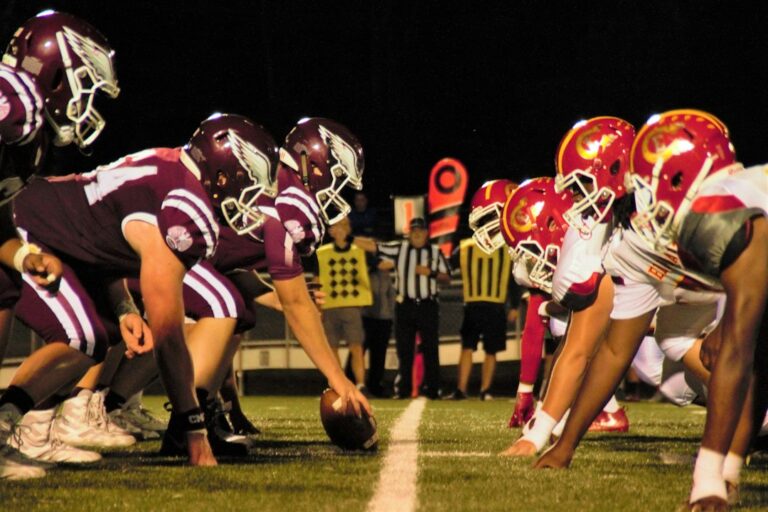
Featured photo: John Torcasio via Unsplash.