Hey, just so you know, some of the links on this site are affiliate links. That means I may earn a small commission if you buy something through them. It doesn’t cost you anything extra, and it helps me keep this site running. Thanks for your support!
Basketball still uses five traditional position labels — point guard, shooting guard, small forward, power forward and center — but modern teams are much less rigid than those names suggest. The best way to understand positions is to think about responsibilities: who organizes the offense, who creates shots, who defends the perimeter, who protects the rim and who controls the glass.
This guide breaks down the classic roles and then explains why today’s lineups increasingly use hybrids.
1. Point guard
The point guard is traditionally the primary ball handler and offensive organizer. This player brings the ball up the floor, initiates sets, reads the defense and tries to create efficient shots for teammates.
Common responsibilities include ball security, passing, pick-and-roll decision-making, tempo control and point-of-attack defense. Modern point guards may also be high-volume scorers, which is why the old idea that a point guard must be pass-first is no longer universal.
2. Shooting guard
The shooting guard traditionally supplies perimeter scoring. The role often emphasizes shooting off the catch, moving without the ball, attacking closeouts and defending opposing guards.
Many shooting guards also handle the ball extensively, so the difference between a point guard and shooting guard can depend more on who initiates the offense than on listed height or position.
3. Small forward
The small forward is usually a versatile wing. This player may score from the perimeter, attack the basket, rebound, switch across several defensive assignments and function as a secondary playmaker.
Because wings often need to do a little of everything, small forward is one of the positions where modern basketball has blurred traditional labels the most.
4. Power forward
The traditional power forward operated closer to the basket, set screens, rebounded and defended larger frontcourt players. In today’s game, many power forwards also shoot three-pointers, handle the ball and defend on the perimeter.
The rise of spacing has made the so-called stretch four common: a forward big enough to handle frontcourt duties but skilled enough to pull a defender away from the paint.
5. Center
The center is traditionally the largest interior player. Core duties often include rim protection, rebounding, screening, finishing around the basket and defending the paint.
Modern centers can be much more than interior finishers. Some are elite passers, three-point shooters or offensive hubs. Others specialize in defense, vertical spacing and rebounding.
Why modern basketball positions overlap
Traditional labels describe a starting point, not a complete job description. A lineup can feature a forward who runs the offense, a guard who defends bigger players and a center who spends much of the possession above the three-point line.
Coaches increasingly talk in terms of functions: ball handler, wing, shooter, screener, roller, rim protector or switch defender. Those descriptions can be more useful than the number attached to a position.
What do positions 1 through 5 mean?
- 1: Point guard
- 2: Shooting guard
- 3: Small forward
- 4: Power forward
- 5: Center
The numbering system remains useful for explaining lineups, but it should not be treated as a rule that limits what a player can do.
How to read a modern lineup
Instead of asking only who is the point guard or center, watch the possession and ask four questions:
- Who brings the ball up and starts the action?
- Who creates the first advantage?
- Who spaces the floor or sets the screen?
- Who protects the rim and finishes the defensive possession with a rebound?
Those answers reveal the real functional roles of the lineup.
Why this matters for fans
Understanding positions makes it easier to follow substitutions, matchup changes and coaching decisions. It also explains why two players listed at the same position can have completely different styles.
One point guard may control the game through passing. Another may pressure the rim as a scorer. One center may dominate the paint. Another may stretch the floor and initiate offense. The position label is the category; the role is how the player actually helps the team.
Related SportsyVibe coverage
SportsyVibe’s basketball authority section is expanding from legacy highlight coverage into rules, formats, player roles and league explainers. See the latest basketball stories in NBA Buzz.
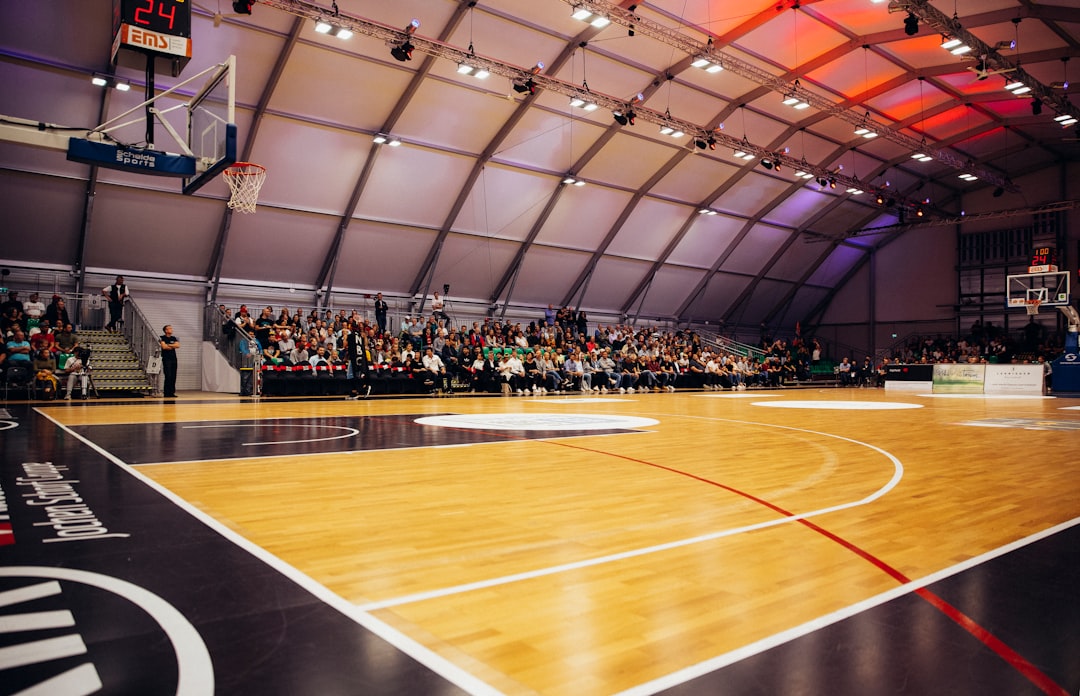
Featured image: Markus Spiske / Unsplash. Generic professional basketball imagery; it does not depict a specific NBA game.