
Hey, just so you know, some of the links on this site are affiliate links. That means I may earn a small commission if you buy something through them. It doesn’t cost you anything extra, and it helps me keep this site running. Thanks for your support!
Ice hockey looks chaotic at full speed, but each player has a defined job. At even strength, a team normally uses three forwards, two defensemen and one goaltender. Those roles overlap more than they once did, yet understanding the basic positions makes the game much easier to follow.
What are the main hockey positions?
The standard lineup is built around six roles on the ice: center, left wing, right wing, left defense, right defense and goaltender. Coaches organize these players into forward lines and defensive pairs that rotate throughout the game.
Center
The center is usually the forward with the broadest two-way responsibility. Centers take many faceoffs, support the puck in all three zones, help defensemen low in the defensive zone and often become a primary passing option through the middle of the ice.
On offense, centers frequently carry the puck through neutral ice, distribute to the wings and attack the slot. Defensively, they often track opposing forwards below the faceoff dots and support breakouts.
Left wing and right wing
Wingers generally play along the outside lanes. Their jobs include pressuring opposing defensemen on the forecheck, creating passing options along the boards, attacking the net and helping the team exit its own zone.
A winger’s handedness does not always match the side listed on the lineup card. Some players prefer their natural side for board play; others prefer the opposite wing because it can open better shooting angles toward the middle.
Defensemen
Two defensemen usually form a pair. Their first responsibility is preventing dangerous chances, protecting the middle of the ice and moving the puck out of the defensive zone. Modern defensemen are also expected to skate, pass and join the attack when the situation is safe.
One defenseman may pinch down the wall to keep an offensive-zone possession alive while the partner stays higher to protect against a counterattack. Communication between the pair is critical because a poor read can turn into an odd-man rush.
Goaltender
The goalie protects the net and is the last defensive layer. Beyond stopping shots, NHL-level goaltenders track traffic, control rebounds, handle the puck behind the net and communicate with defensemen on retrievals.
Goalies also influence how a team defends. A goalie who controls rebounds cleanly can end possessions, while long rebounds can create second and third scoring chances.
What are forward lines?
Teams group forwards into lines, usually three forwards at a time. Coaches change lines frequently because hockey shifts are short and physically demanding. A top scoring line may be used for offensive-zone starts, while another line may draw difficult defensive matchups.
Defensemen are usually organized into pairs. These pairs can also be adjusted during the game depending on score, penalties, injuries and matchups.
How positions change on the power play
When one team has a manpower advantage, its power-play setup may not look like a normal five-player formation. A common structure uses one player near the blue line, players on the flanks, a player in the middle or bumper area and a net-front presence. The exact alignment depends on personnel and coaching philosophy.
Traditional position labels matter less on the power play because teams are trying to create passing lanes and force defenders to move.
How positions change on the penalty kill
A shorthanded team has fewer skaters, so each player must protect more space. Penalty killers usually prioritize the middle of the ice, shooting lanes and dangerous passes through the slot. Forwards often pressure the puck higher while defensemen protect the area closer to the net.
Can a team play without a goalie?
Yes. A team can pull its goaltender for an extra skater, most commonly late in a game when trailing. The tradeoff is simple: the team gains another attacker but leaves its net empty. The NHL rulebook also permits a team to remove its goalie for an extra attacker in regular-season overtime, though special point consequences can apply if that team loses while the goalie is removed outside a delayed-penalty situation.
Do players stay in one position forever?
No. Players may switch wings, centers may move to wing, and defensemen can play either side depending on roster needs. During broken plays, everyone also has to read the situation rather than remain frozen in a textbook location.
The key takeaway
The easiest way to read a hockey lineup is to think of three layers: forwards create and pressure offense, defensemen protect space and move the puck, and the goaltender protects the net. Within those layers, centers, wings and defensive pairs have specialized responsibilities that change with score, strength and game situation.
Next, read how NHL standings points, overtime and shootouts work and explore SportsyVibe’s NHL & Hockey coverage.
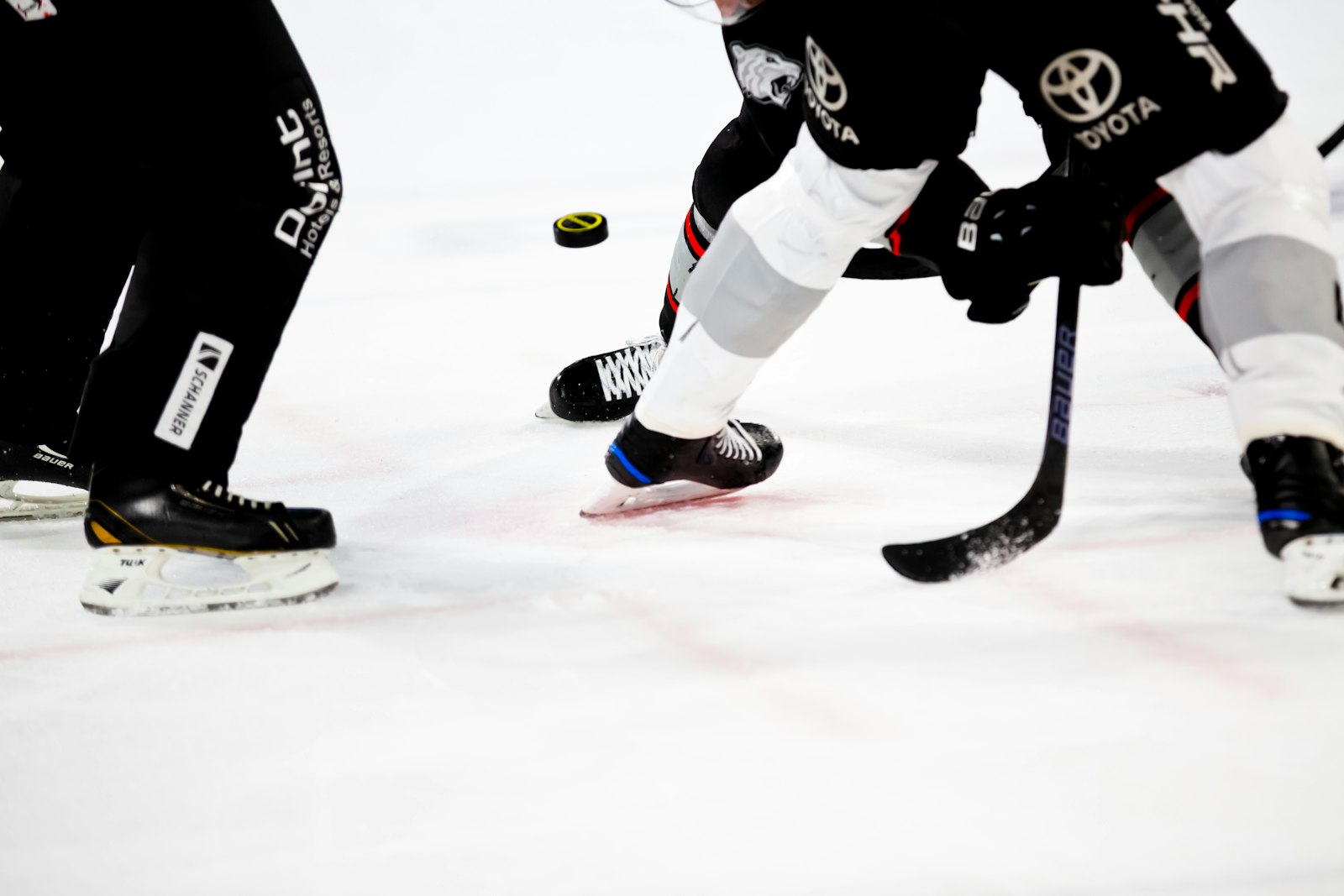
Image note: the featured photograph shows generic ice hockey action and is not presented as an NHL game.
Sources: NHL 2025-26 Official Rules and NHL hockey glossary materials.