
Hey, just so you know, some of the links on this site are affiliate links. That means I may earn a small commission if you buy something through them. It doesn’t cost you anything extra, and it helps me keep this site running. Thanks for your support!
The 24 Hours of Le Mans is one of motorsport’s defining endurance races. Instead of asking a driver and car to be fastest for a short burst, Le Mans asks an entire team to survive and compete for a full day while multiple classes race on the same circuit at the same time.
The 2026 edition ran at the 13.626-kilometer Circuit de la Sarthe and featured 62 cars across three categories: 18 Hypercars, 19 LMP2 cars and 25 LMGT3 cars. That mixture is the key to understanding the race: Le Mans is not one race in the simple sense. It is several class battles happening inside one 24-hour contest.
How long is the 24 Hours of Le Mans?
The race lasts 24 hours. In 2026, the start was scheduled for 4:00 p.m. CEST on Saturday and the finish for 4:00 p.m. CEST on Sunday. The winner is determined by distance completed when the clock expires, subject to the sporting regulations.
That makes Le Mans fundamentally different from a fixed-lap event such as the Daytona 500 or Indianapolis 500. Those races have a defined distance. At Le Mans, the clock is the central limit, so teams must manage performance over changing temperatures, darkness, traffic, tire wear, fatigue and the possibility of mechanical problems.
For another look at how major motorsport events differ, see Daytona 500 vs Indianapolis 500.
What are the Le Mans classes?
The exact class structure can change by season, so it should always be rechecked against current FIA World Endurance Championship regulations. In 2026, Le Mans used three major classes.
Hypercar
Hypercar is the top category and normally produces the overall winner. These are purpose-built or highly specialized prototypes from major manufacturers and teams competing for outright victory.
LMP2
LMP2 is a prototype category with its own class battle. LMP2 cars are slower than the leading Hypercars but considerably faster than GT machinery, which creates constant speed differences and traffic-management decisions.
LMGT3
LMGT3 uses racing cars based more closely on recognizable production-car platforms. These cars compete for their own class victory while sharing the track with much faster prototypes.
A driver can therefore be nowhere near first overall and still be fighting for a prestigious Le Mans class win.
Why multi-class traffic matters
Traffic is part of the competition, not an inconvenience outside it. Faster cars repeatedly catch slower classes. The faster driver has to judge where to pass without wasting time or creating unnecessary risk, while the slower-class driver still has a race of his or her own to manage.
This creates a skill that is less prominent in single-class racing: predicting closing speed. A prototype may approach a GT car very quickly, especially at night or under changing weather. One poor decision can cost seconds, damage a car or end the race entirely.
What is a driver stint?
A stint is the period a driver spends in the car between stops or driver changes. Le Mans entries use multiple drivers because no one person can safely and competitively drive the entire event.
Teams plan stints around fuel or energy usage, tire condition, driver workload, traffic and the rules governing maximum driving time. The fastest driver is not automatically used for every critical period. A team may want a particular driver for the start, nighttime conditions, changing weather or the closing hours.
Why pit strategy is so important
Over 24 hours, tiny time losses compound. A stop that is only a few seconds slower can matter if it happens repeatedly. Teams therefore think about far more than raw lap time.
Typical strategic questions include:
- How long can the car run before refueling or replenishing energy?
- Can the tires safely remain on the car for another stint?
- Is it better to change drivers now or later?
- Will traffic be better or worse after the stop?
- Should the team react immediately to weather or wait one more lap?
- Can a small mechanical issue be managed, or should it be repaired before it becomes a retirement?
Endurance racing rewards a team that can be fast and repeatably efficient.
What happens at night?
Night racing changes the character of Le Mans. Visibility drops, reference points look different, temperatures fall and fatigue becomes more important. Drivers are still dealing with large speed differences between classes, but now headlights and illuminated number panels become part of judging traffic.
The darkness also makes consistency especially valuable. A heroic qualifying-style lap is less useful than a sequence of clean, repeatable laps that preserve the car and avoid mistakes.
Why reliability matters as much as speed
A car that is fastest for one hour but spends 20 minutes in the garage is unlikely to beat a slightly slower car that runs cleanly. That is why Le Mans engineering focuses heavily on durability, serviceability and managing wear.
Brakes, tires, powertrain components, bodywork and electronics all endure stresses for far longer than in most conventional races. Teams also need procedures that let crews diagnose and repair problems quickly.
What does “overall winner” mean?
The overall winner is the car that completes the greatest race distance at the front of the field under the rules. Class winners are the leading finishers within their respective categories.
That means Le Mans can produce several meaningful winners: one overall winner and separate class winners. Fans following LMP2 or LMGT3 may be focused on a completely different battle than viewers watching the Hypercar lead.
Why Le Mans matters in motorsport
Le Mans has been held since 1923 and is traditionally grouped with the Monaco Grand Prix and Indianapolis 500 as motorsport’s unofficial Triple Crown. Its importance comes from more than history. The event tests speed, engineering, strategy, teamwork and human endurance in one competition.
It also creates a format in which manufacturers can prove that performance is not only about one fast lap. A successful Le Mans car has to keep delivering while the conditions, drivers and race situation change around it.
To compare two other major open-wheel systems, see IndyCar vs Formula 1.
What to remember
The simplest way to understand Le Mans is this: it is a 24-hour multi-class race where outright pace, traffic management, driver rotation, pit execution, energy use and reliability all count toward the result. The fastest car matters, but the team that manages the entire day best is usually the one still in position to win when the clock runs out.
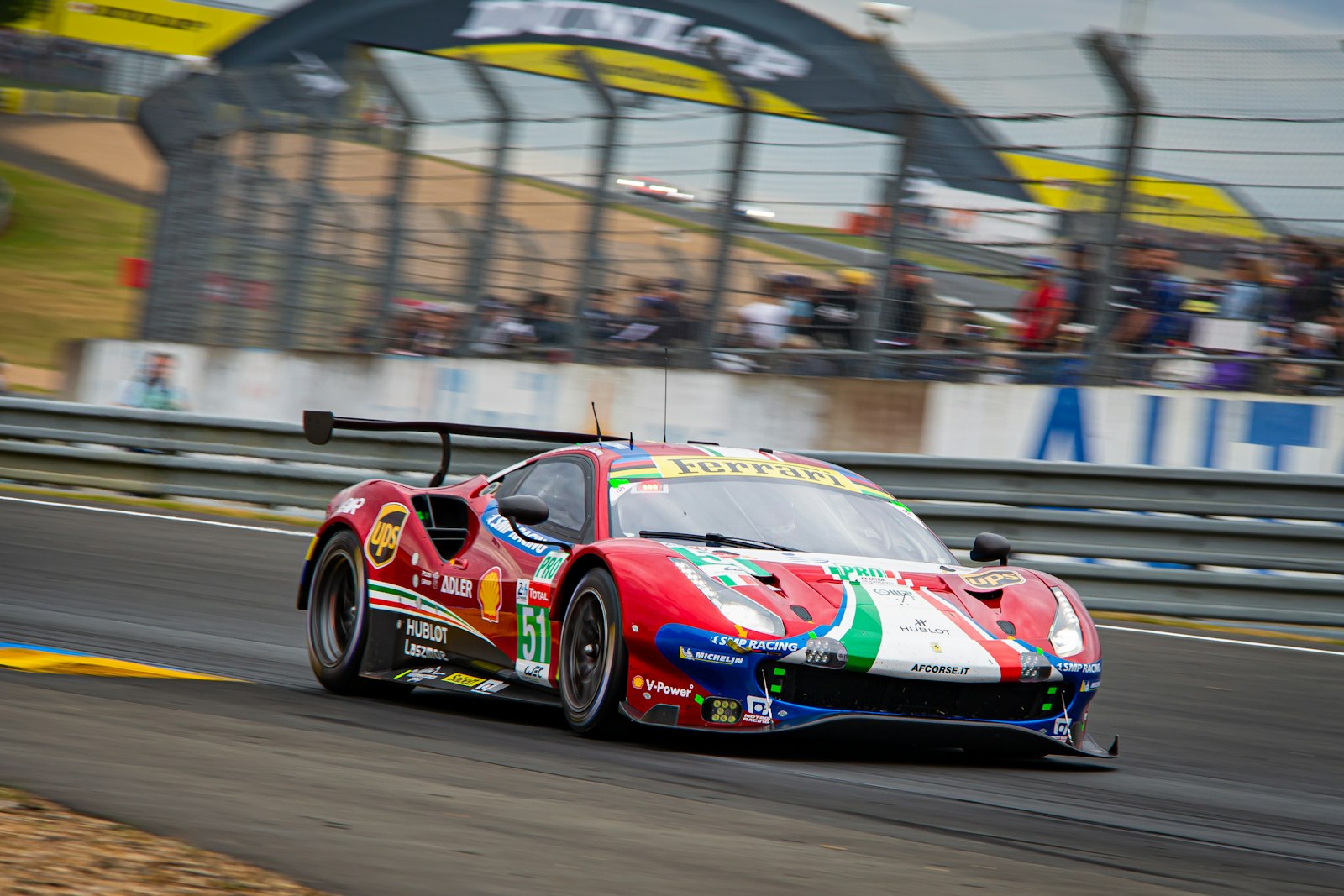
Image note: the featured photograph is a historical Le Mans endurance-racing image and is not presented as the 2026 race.
Sources: FIA World Endurance Championship 2026 Le Mans race information and official 2026 Le Mans entry-list materials.