
Hey, just so you know, some of the links on this site are affiliate links. That means I may earn a small commission if you buy something through them. It doesn’t cost you anything extra, and it helps me keep this site running. Thanks for your support!
Modern sports venues are no longer just bowls of seats wrapped around a field. The most ambitious projects are entertainment districts, broadcast studios, engineering demonstrations and year-round event machines. Their price tags can reach into the billions, but cost alone does not make a venue spectacular.
SportsyVibe ranked these projects using two lenses: reported construction or development cost and spectacle — architecture, technology, flexibility, visual identity and fan experience. Because stadium budgets are reported differently by project, this is not a strict inflation-adjusted accounting table. Some published figures include broader site work or surrounding development while others focus more narrowly on the venue itself, and projects built in different currencies and years are not directly comparable.
| Rank | Venue | Reported scale | Signature spectacle |
|---|---|---|---|
| 1 | SoFi Stadium | About $5 billion | Indoor-outdoor design, 70,000-square-foot Infinity Screen |
| 2 | Intuit Dome | About $1.8–$2 billion | Halo Board, The Wall, fan-first basketball design |
| 3 | Allegiant Stadium | $1.97 billion | Retractable grass field, translucent roof, Las Vegas setting |
| 4 | MetLife Stadium | Roughly $1.6–$1.7 billion | 82,500 seats, two NFL franchises, mega-event scale |
| 5 | Yankee Stadium | $1.6 billion | Historic visual language rebuilt as a modern premium ballpark |
| 6 | Mercedes-Benz Stadium | About $1.5 billion | Pinwheel retractable roof and halo video board |
| 7 | Tottenham Hotspur Stadium | £1.2 billion stadium build | Retractable grass pitch above a dedicated NFL surface |
| 8 | AT&T Stadium | More than $1.2 billion | Retractable roof, giant end-zone doors and massive event capacity |
| 9 | Levi’s Stadium | $1.2 billion | Silicon Valley technology and sustainability focus |
| 10 | UBS Arena | About $1.1 billion arena | Modern hockey venue designed around Islanders identity |
1. SoFi Stadium — Inglewood, California
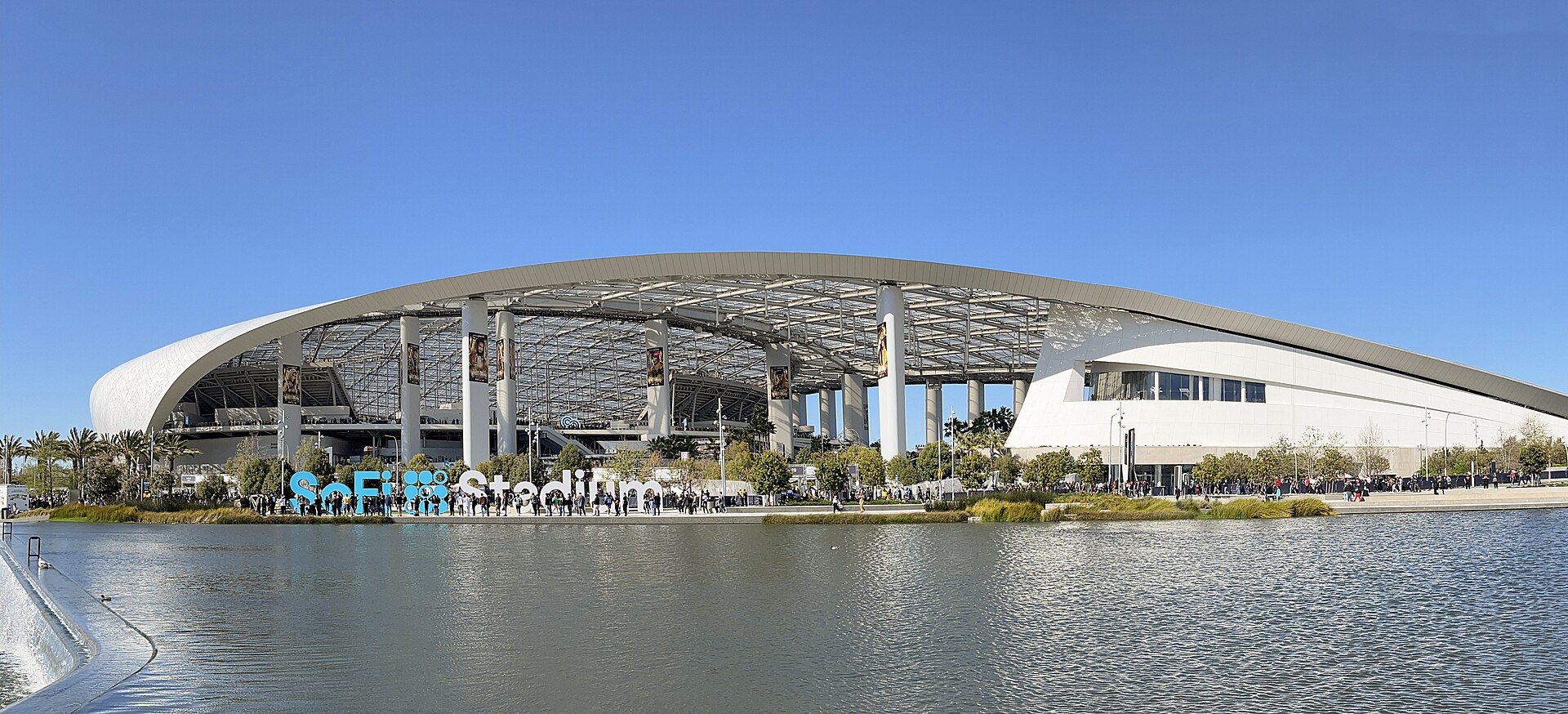
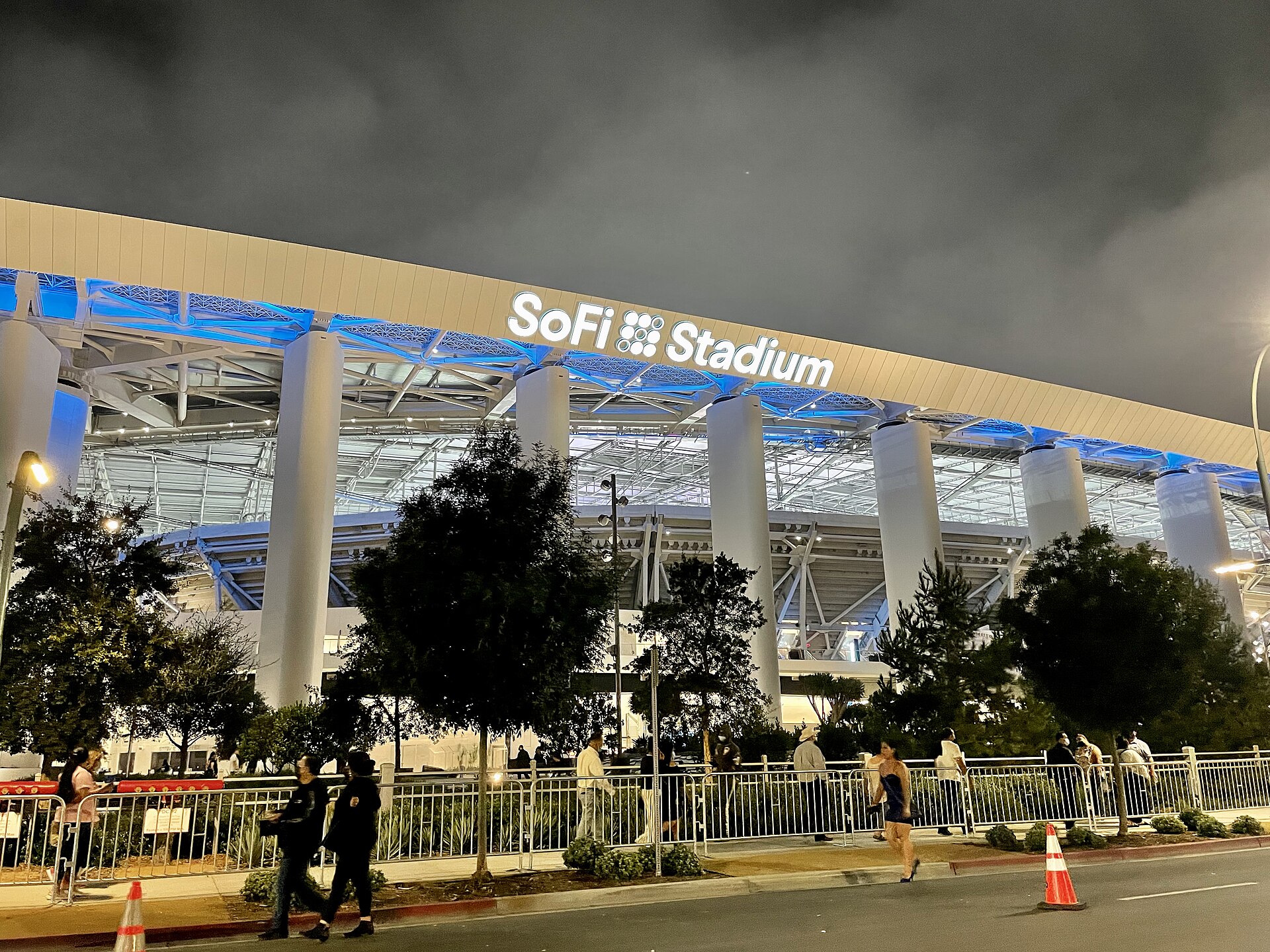
SoFi Stadium sits in its own category because the building feels less like a conventional football stadium than a climate-controlled entertainment landscape. Opened in 2020 as the home of the Rams and Chargers, the venue spans roughly 3.1 million square feet beneath a broad translucent canopy. The seating bowl remains open to the Southern California air, creating the unusual indoor-outdoor experience that has become the stadium’s visual signature.
The centerpiece is the double-sided Infinity Screen suspended above the field. At roughly 70,000 square feet, it is large enough to function as part scoreboard, part broadcast surface and part architectural object. The building’s reported cost is commonly placed around $5 billion, and Reuters has described it as a $5 billion project. SoFi has already hosted a Super Bowl and World Cup matches and is being adapted again for the 2028 Olympics, including swimming competition. Few venues combine price, technological ambition and event flexibility at this scale.
2. Intuit Dome — Inglewood, California
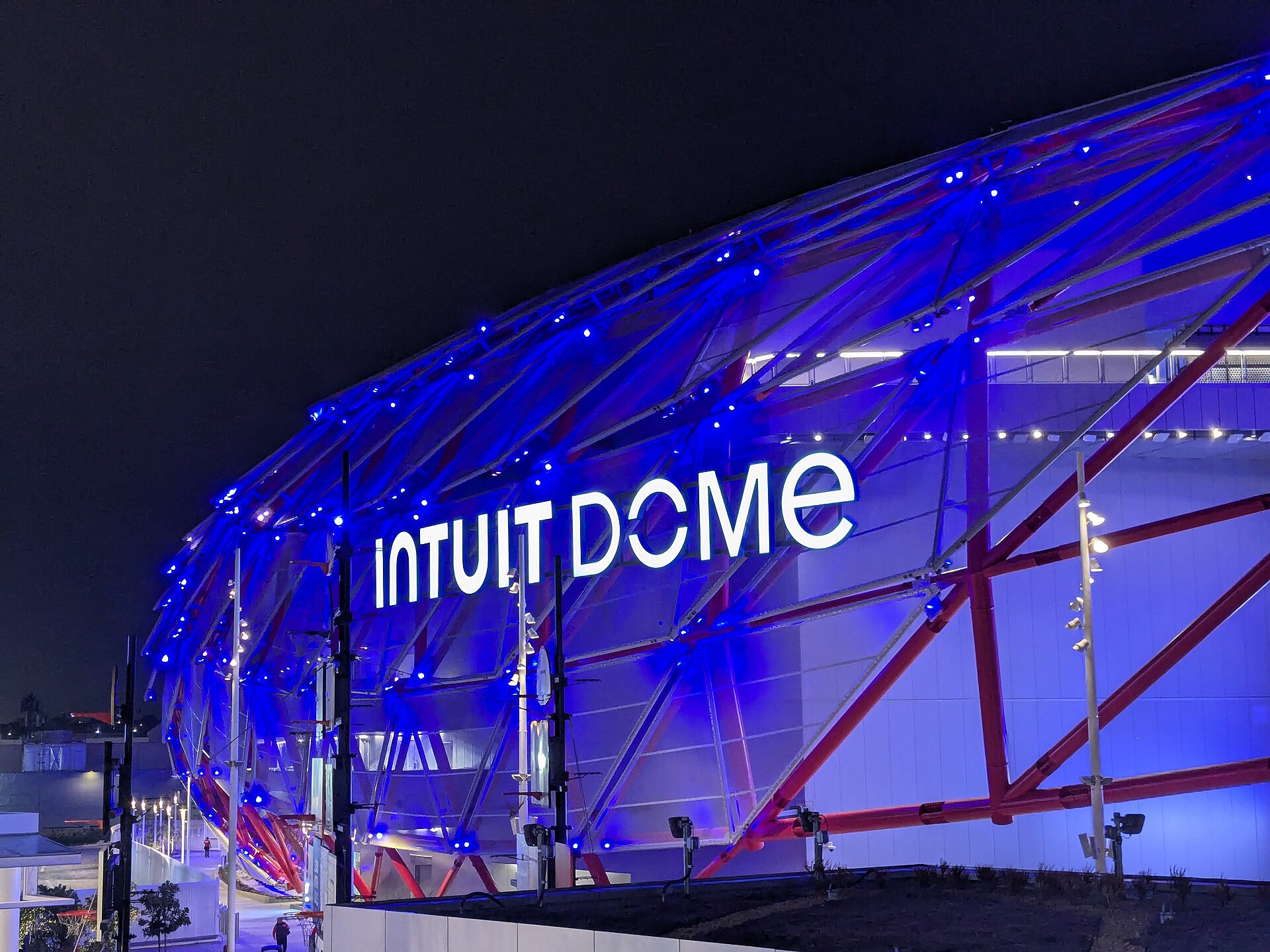
Intuit Dome is spectacular for a different reason: it was designed almost obsessively around basketball. The Clippers opened the arena in 2024 after a privately financed project initially announced at $1.8 billion and later commonly described as approaching $2 billion. Instead of trying to be a neutral multipurpose box first, the building makes the basketball experience the organizing principle.
The 18,000-seat arena includes five full-sized courts, a steep 51-row supporter section called The Wall and a two-sided Halo Board with more than 38,000 square feet of display surface. The club emphasized legroom, sightlines, fast entry, concessions and constant access to game information. That philosophy makes Intuit Dome one of the clearest examples of a modern owner treating a venue itself as a competitive product. It does not have a century of memories yet, but its fan-experience engineering immediately placed it among the most ambitious arenas in sports.
3. Allegiant Stadium — Las Vegas, Nevada
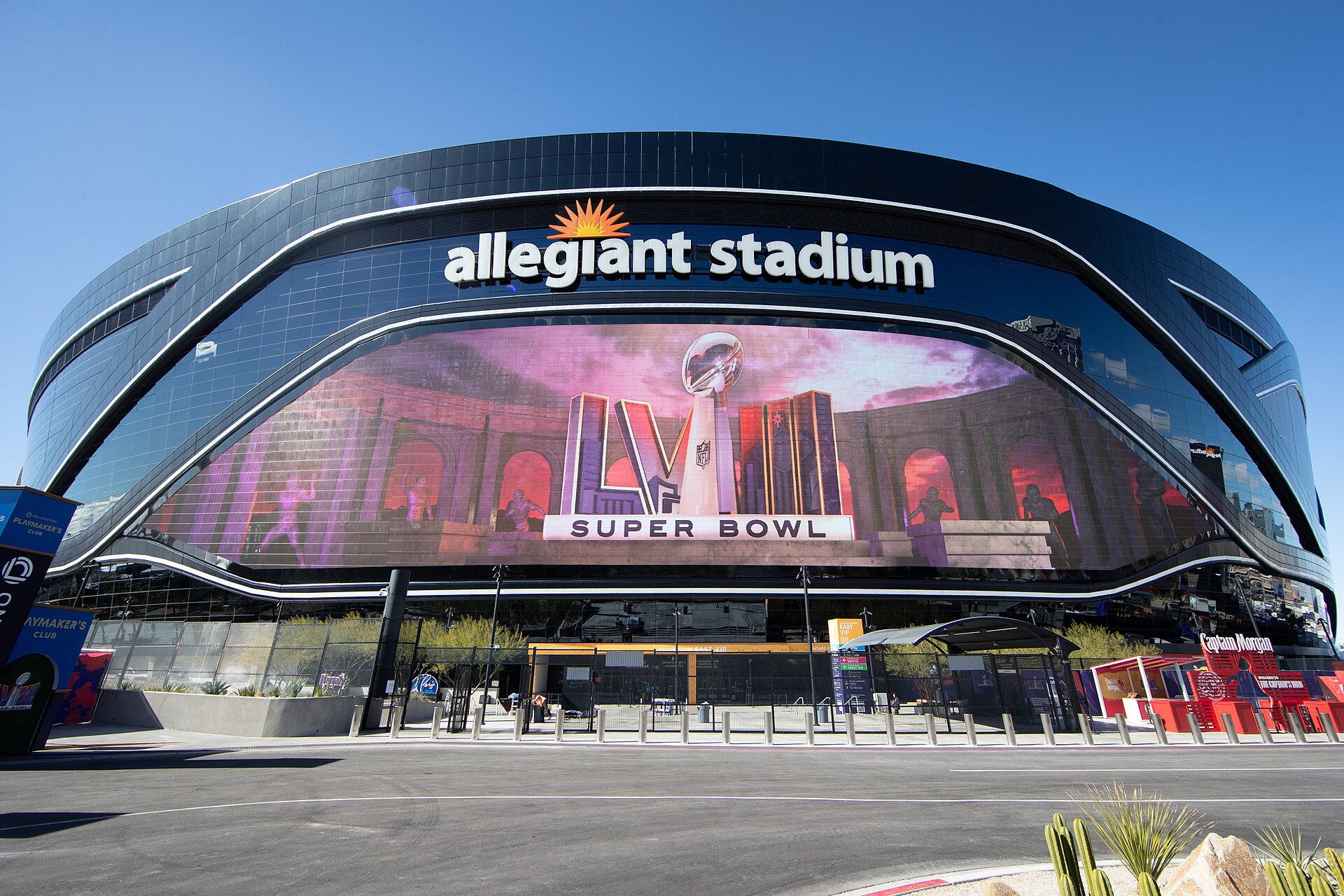
Allegiant Stadium was built to look at home in Las Vegas: glossy black exterior, dramatic lighting and a location just west of the Strip. The $1.97 billion facility opened in 2020 with 65,000 seats, a translucent roof and enormous operable walls that can open visual connections toward the city.
The engineering trick that separates it from many domes is the retractable natural-grass field. The Raiders can play on grass while the field tray moves outside for sunlight and maintenance, leaving a durable interior surface available for UNLV football, concerts and other events. The building quickly moved into the major-event rotation, hosting Super Bowl LVIII and becoming one of the country’s highest-profile entertainment venues. Allegiant demonstrates what happens when a stadium is planned for both an NFL franchise and a destination city that expects spectacle.
4. MetLife Stadium — East Rutherford, New Jersey
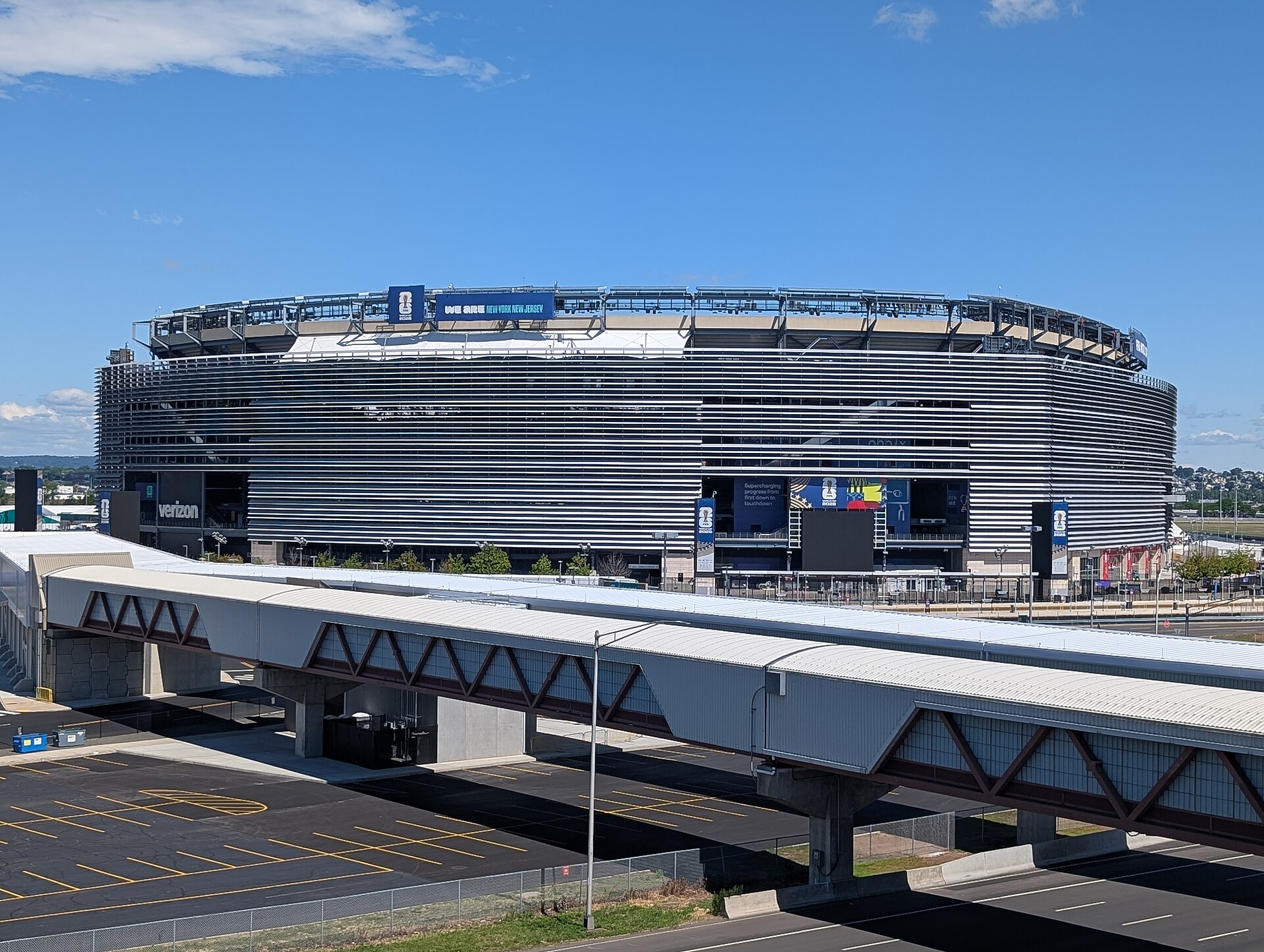
MetLife Stadium’s spectacle is scale and operational complexity. It opened in 2010 as the shared home of the New York Giants and New York Jets, an unusual arrangement that requires the same 82,500-seat building to change visual identities depending on which franchise is hosting. Its reported construction cost is generally placed around $1.6 to $1.7 billion.
The exterior louvers and programmable lighting help the stadium switch colors and branding, while the interior was designed to handle some of the largest crowds in American sports. It has hosted a Super Bowl, major soccer, college football and concerts, and in 2026 became the World Cup final venue under FIFA’s tournament naming convention. MetLife is less architecturally theatrical than SoFi or Mercedes-Benz Stadium, but its ability to serve two NFL teams and absorb global-scale events makes it one of the biggest pure workhorses on the list.
5. Yankee Stadium — Bronx, New York
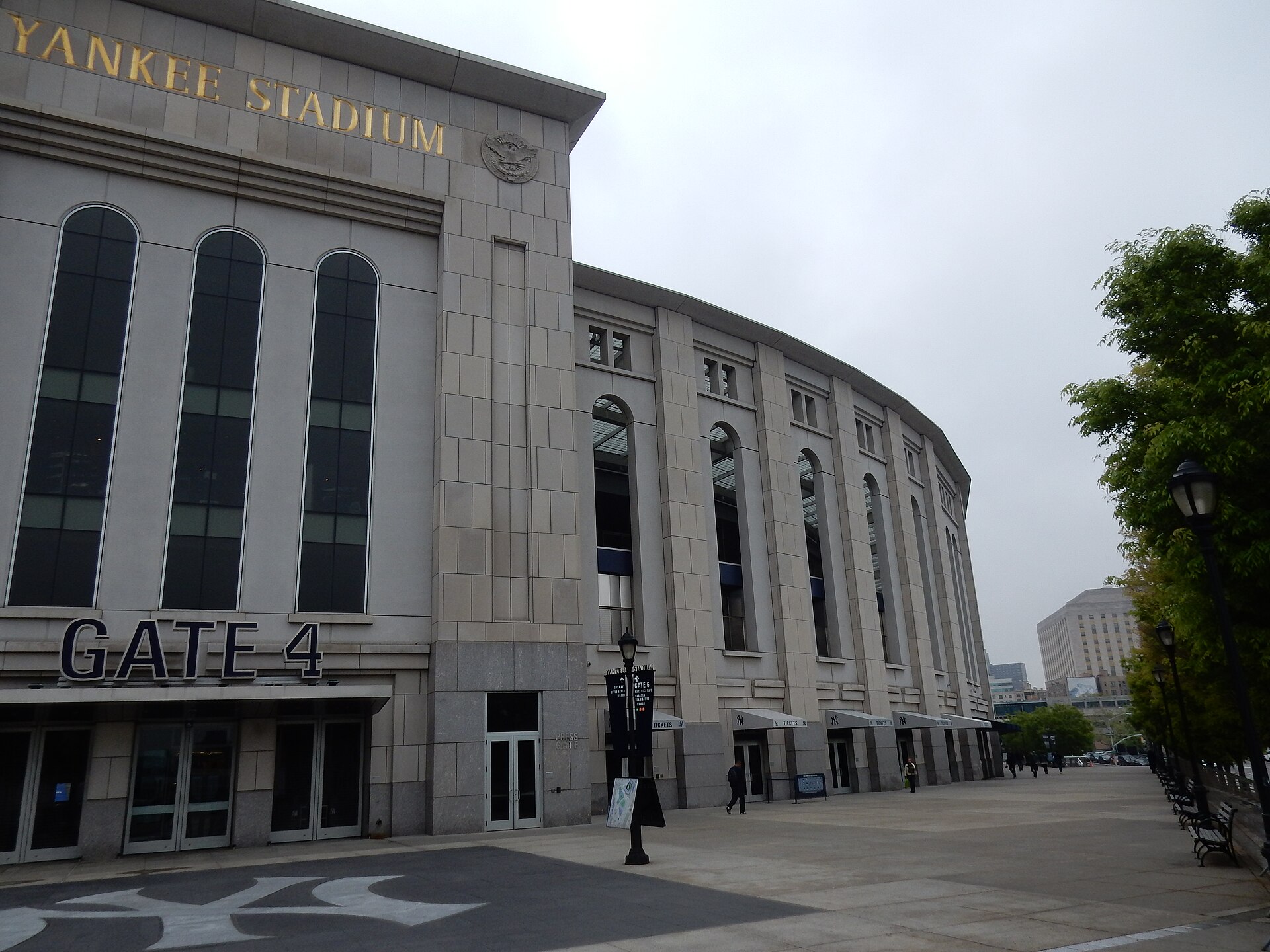
When the Yankees replaced the original Yankee Stadium, the challenge was not simply to build something new. The club wanted a 21st-century ballpark that still looked and felt connected to a venue that had hosted Ruth, Gehrig, DiMaggio, Mantle and generations of October baseball. The result opened in 2009 with monumental limestone-and-granite styling, a modern version of the famous frieze and an interior built around premium seating and hospitality.
Yankees leadership has put the cost at $1.6 billion, extraordinary for a baseball stadium of its era. That expense bought more than seating: the building includes Monument Park, the Yankees Museum, extensive clubs and suites, and infrastructure for events beyond MLB, including soccer, college football and hockey. The current stadium cannot reproduce the exact history of the original, but its architectural strategy — modern scale wrapped in deliberate historical references — makes it one of the most expensive exercises in sports nostalgia ever built.
6. Mercedes-Benz Stadium — Atlanta, Georgia
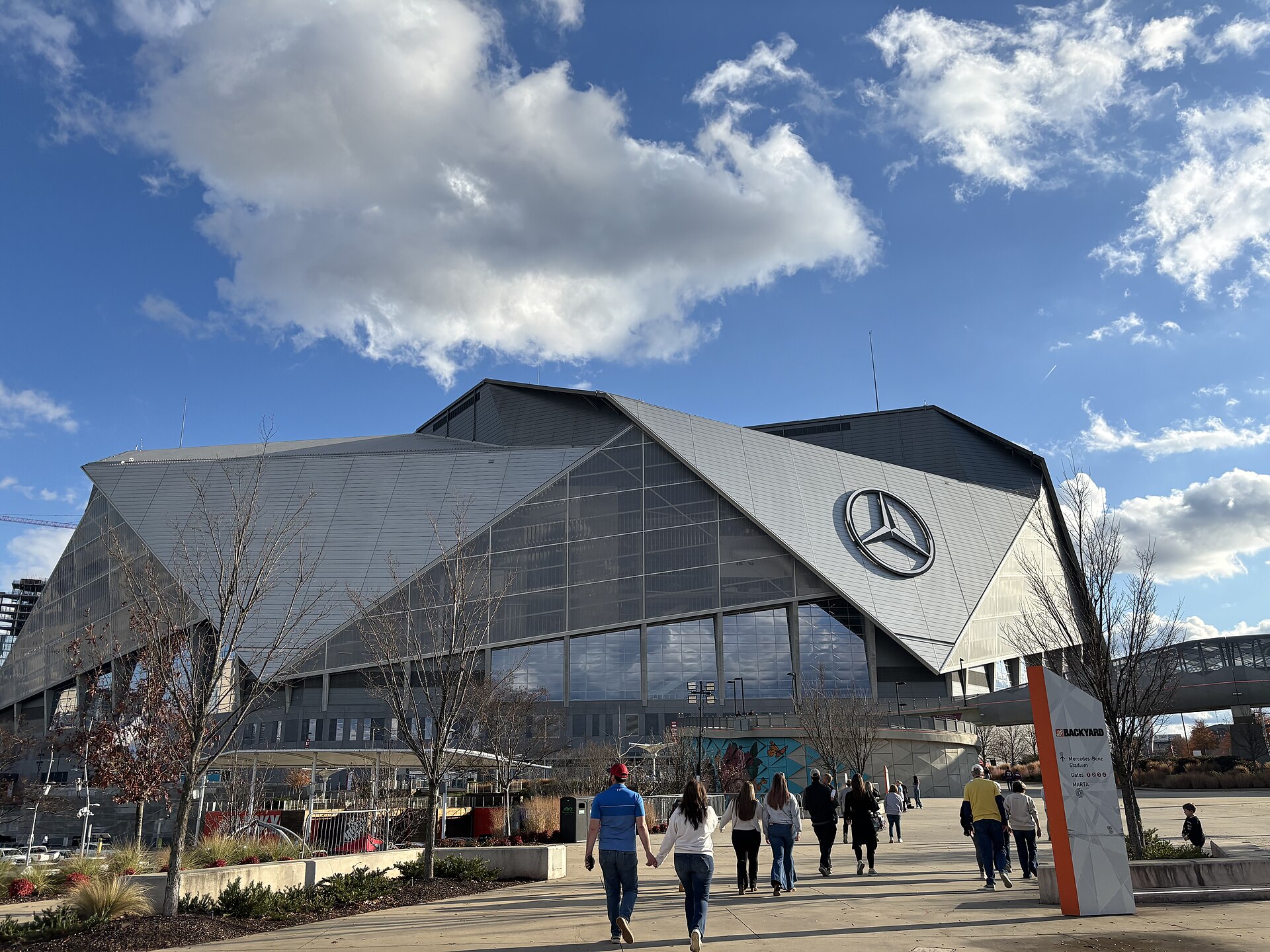
Mercedes-Benz Stadium is one of those buildings whose roof becomes the logo. Its eight moving roof petals were designed to open and close around a central oculus, creating a camera-friendly effect unlike the standard two-panel retractable roof. Inside, a 360-degree halo video board circles the opening and keeps information visible from nearly every direction.
The reported project cost settled around $1.5 billion, and the building opened in 2017 as the home of both the NFL’s Falcons and Major League Soccer’s Atlanta United. That dual use matters: the stadium can feel like an NFL venue one weekend and a major soccer stadium the next, with adjustable seating and curtains helping reshape the environment. It has already hosted a Super Bowl, major college football, concerts and 2026 World Cup matches. From an architecture-and-technology standpoint, Atlanta built one of the clearest symbols of the retractable-roof era.
7. Tottenham Hotspur Stadium — London, England
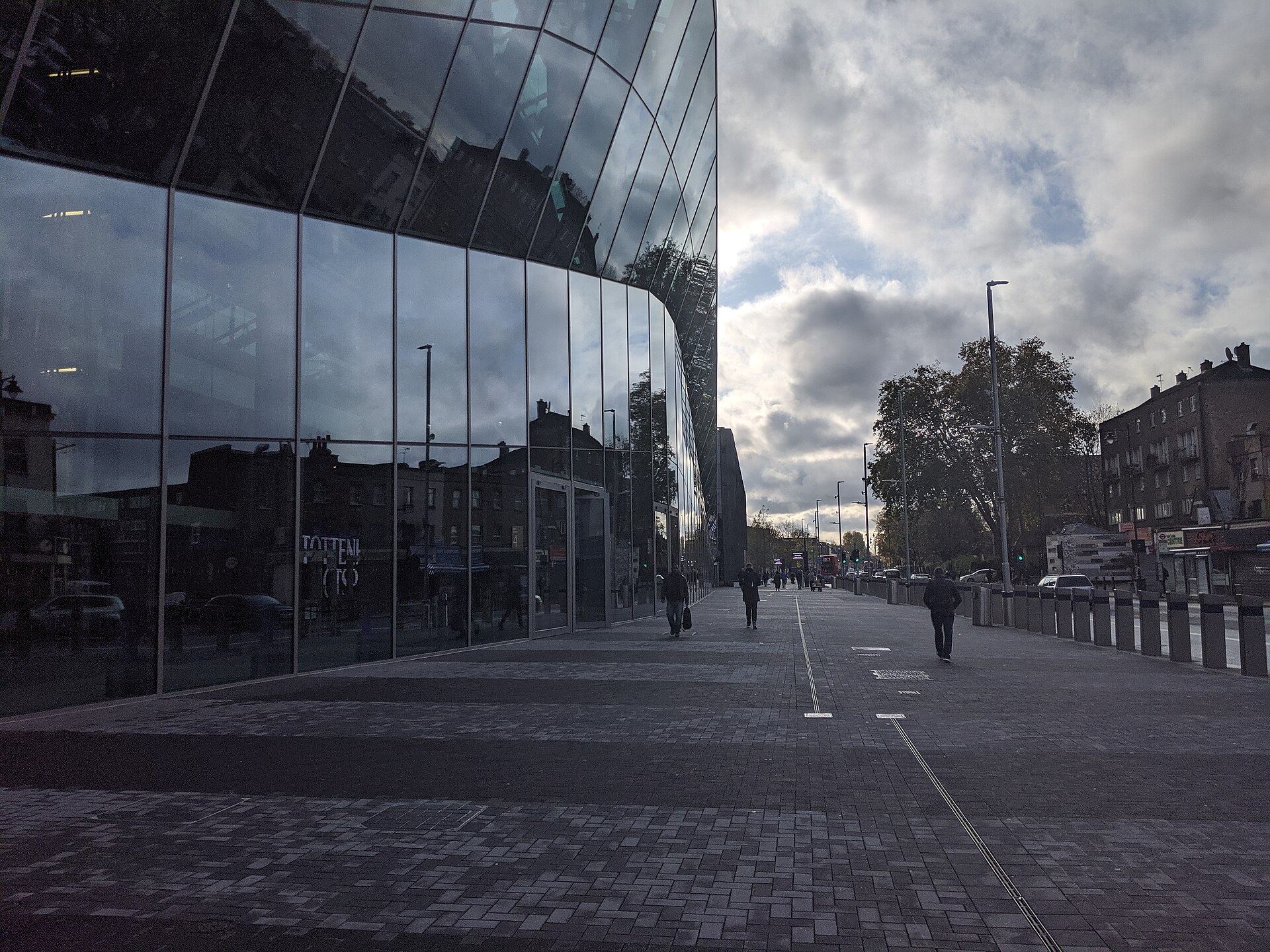
Tottenham’s stadium solves a problem many multipurpose venues handle poorly: how to host elite soccer and American football without making either sport feel temporary. The club’s natural-grass soccer pitch separates into sections and retracts beneath the South Stand, exposing a dedicated artificial surface below for NFL games and other events.
The club has described the stadium build as a £1.2 billion project. It opened in 2019 with roughly 62,850 seats and a 17,500-seat single-tier South Stand that concentrates supporters behind one goal. The building also includes premium hospitality, a microbrewery, long bars and event spaces designed to keep the property active outside match days. The retractable-field system is the headline technology, but the deeper achievement is that the building still reads visually as a soccer ground rather than a generic multipurpose bowl.
8. AT&T Stadium — Arlington, Texas
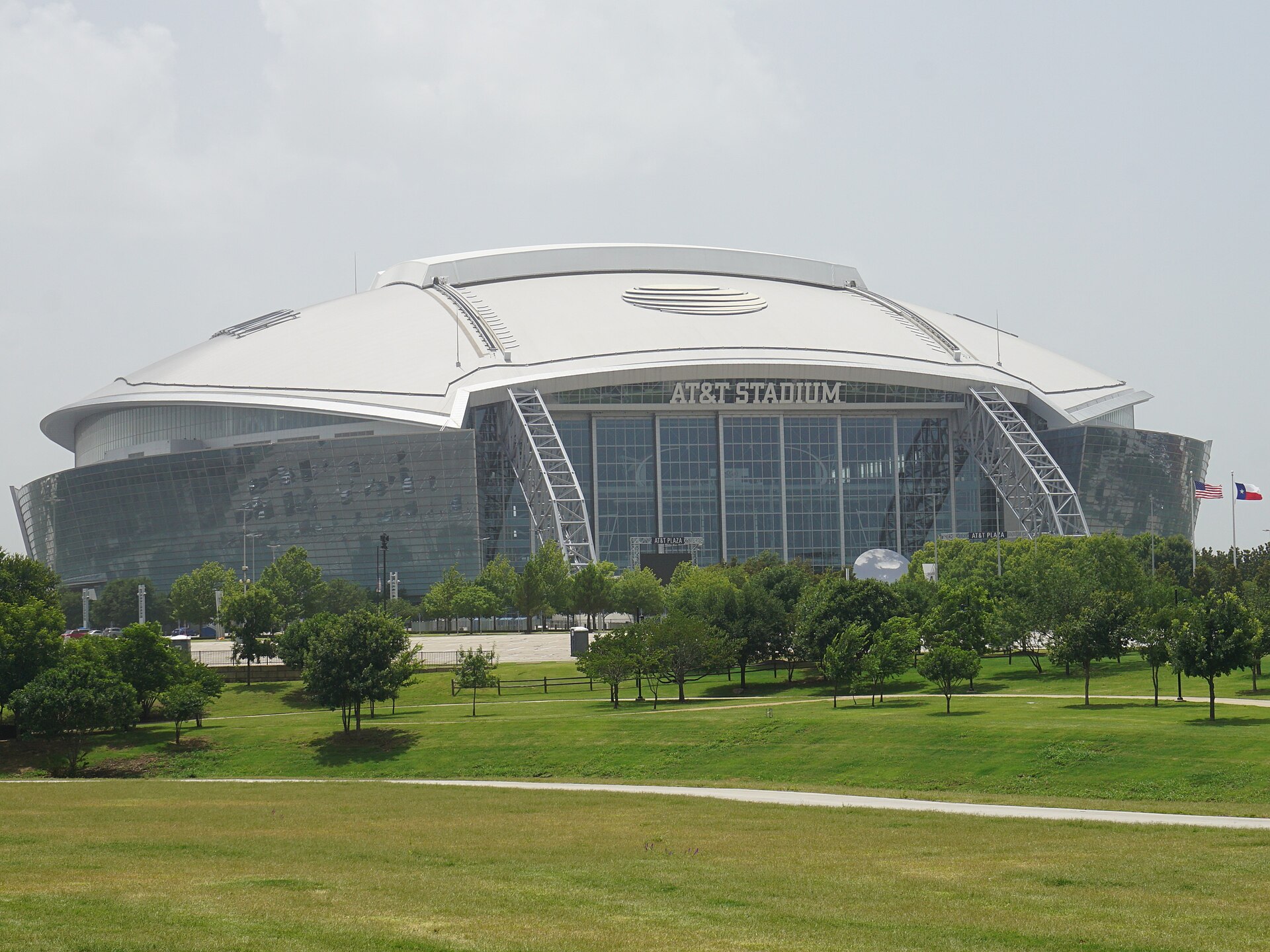
AT&T Stadium opened in 2009 and immediately reset expectations for what an NFL venue could look like on television. The retractable roof, enormous glass end-zone doors and center-hung video board were designed to make the building feel oversized even by Texas standards. Arlington says the venue topped $1.2 billion when it opened, with the Cowboys covering costs above the city’s fixed contribution.
The stadium’s official football seating is around 80,000, but major events can push attendance far higher with standing-room configurations. It has hosted a Super Bowl, college football championships, WrestleMania, boxing, concerts and international soccer. The video board has since been surpassed in raw dimensions by newer displays, yet AT&T Stadium remains historically important because it helped establish the modern formula: the stadium itself should be part of the broadcast spectacle, not merely the container for the game.
9. Levi’s Stadium — Santa Clara, California
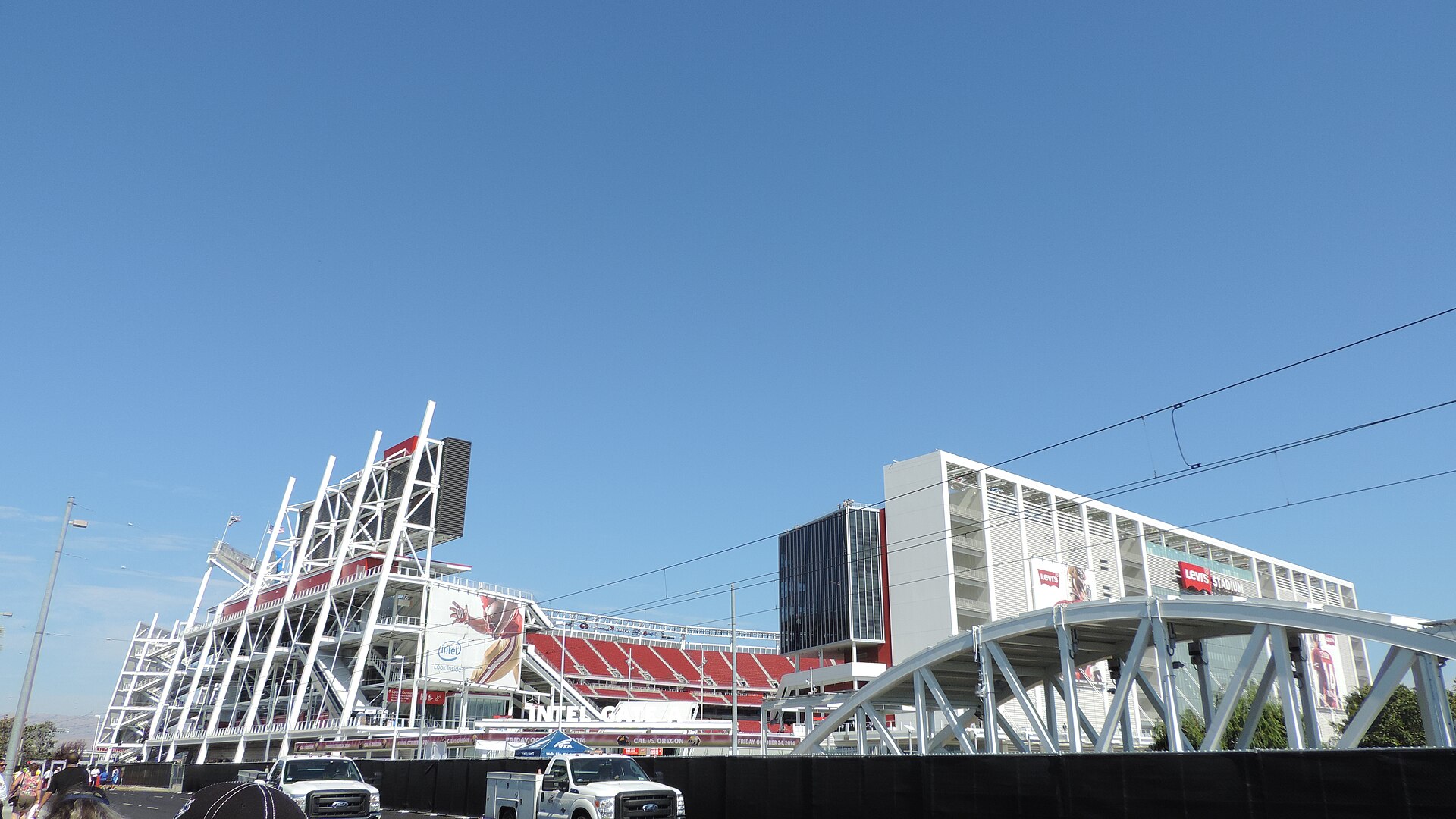
Levi’s Stadium represents the Silicon Valley version of a football stadium: open-air, connectivity-heavy and built with sustainability as part of the public identity. The stadium opened in 2014 at a reported cost of $1.2 billion and spans roughly 1.85 million square feet. Its design places a very large share of seats in the lower bowl, while the west-side suite tower carries a green roof.
The venue was promoted as one of the most technologically advanced stadiums of its generation, with extensive wireless infrastructure and large video boards. Solar bridges and LEED-oriented design helped make environmental performance part of the building’s story rather than an afterthought. Levi’s has hosted Super Bowl 50, major soccer and concerts and remains a high-profile Bay Area event site. Its architecture is less theatrical than SoFi’s, but its technology-and-sustainability brief was influential.
10. UBS Arena — Elmont, New York
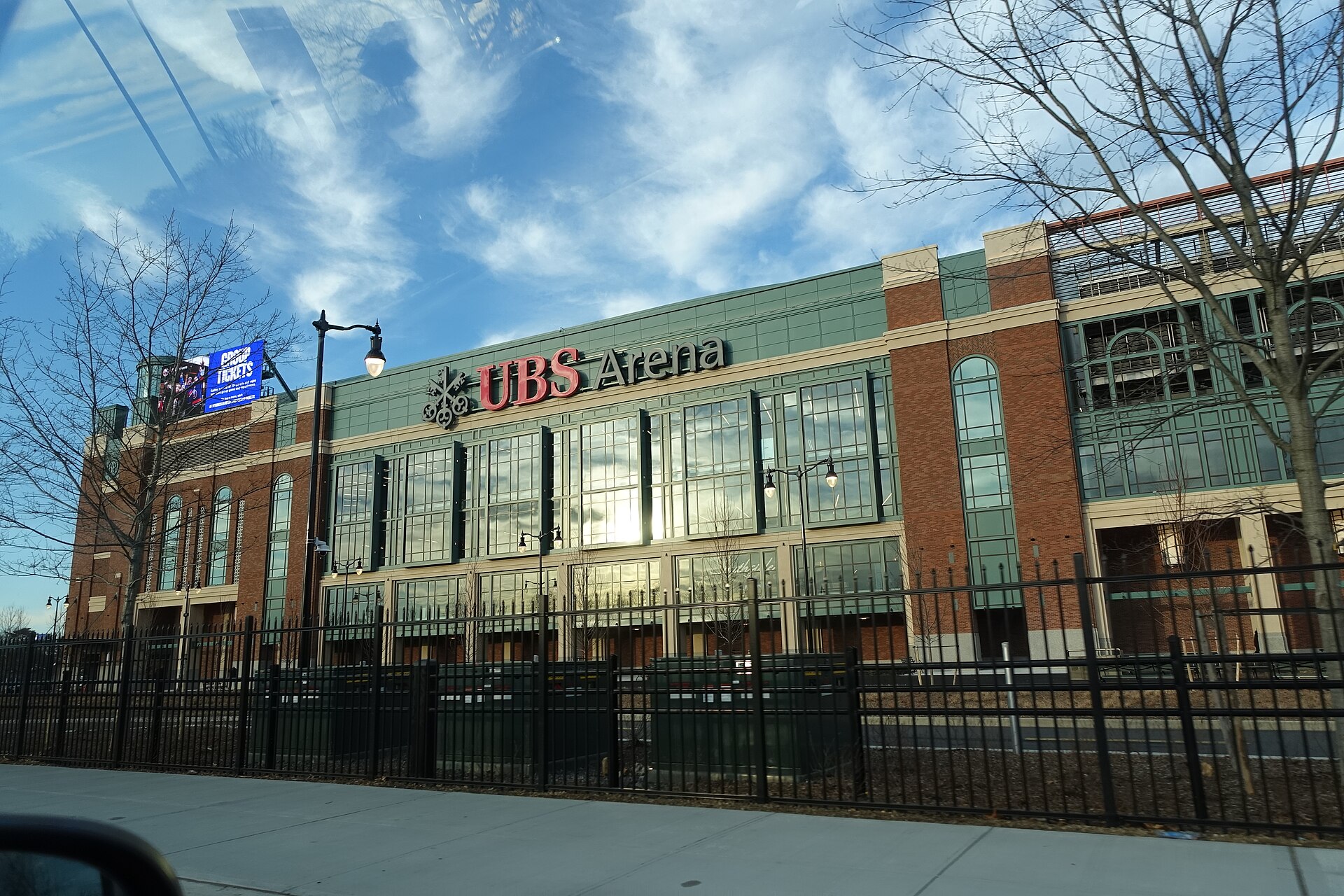
UBS Arena is the smallest venue in this ranking by seating capacity, but it belongs because of how much investment went into giving the Islanders a purpose-built permanent home on Long Island. The arena opened in 2021 at Belmont Park after years in which the franchise split time between Nassau Coliseum and Barclays Center. Public redevelopment records placed the arena portion of the project at about $1.1 billion.
The hockey configuration seats roughly 17,500 and was designed around strong sightlines, steep seating and a visual language meant to connect a new building to the Islanders’ history. Premium clubs, lounges and concessions were integrated without sacrificing the hockey-first atmosphere that fans felt was missing during the Barclays Center years. UBS is not trying to look futuristic in the same way as Intuit Dome. Its spectacle comes from building an expensive modern arena that still feels deliberately local and franchise-specific.
What makes a sports venue worth billions?
The biggest budgets usually come from more than seats and concrete. Roof systems, video infrastructure, retractable fields, premium hospitality, surrounding development, broadcast technology, transportation work and the ability to host many types of events all expand the project. The business logic is simple: an expensive stadium has to earn money on far more days than the home team’s schedule alone can provide.
That is why the strongest projects on this list are flexible. SoFi can convert between NFL, soccer, concerts and Olympic uses. Tottenham can reveal an entirely different playing surface. Allegiant moves its grass field outdoors. Intuit Dome turns digital displays and fan interaction into part of the event itself. The spectacle is not decoration — it is part of the revenue model.
FAQ
What is the most expensive sports stadium ever built?
SoFi Stadium is widely reported as the most expensive completed stadium, with major news reporting the project at roughly $5 billion. Some broader development estimates for the surrounding Hollywood Park district can be higher, which is why scope matters when comparing figures.
Why is Intuit Dome ranked above Allegiant Stadium if their reported costs overlap?
This ranking weighs spectacle and innovation as well as cost. Intuit Dome’s basketball-specific engineering, Halo Board and supporter-wall design give it an unusually distinctive arena experience, while Allegiant remains one of the most impressive large stadiums in North America.
Are these costs adjusted for inflation?
No. The table uses rounded reported nominal project costs. An inflation-adjusted ranking would reorder some older buildings and would still face accounting differences between projects.
Why are only some venues outside the United States included?
The ranking follows publicly reported project scale and spectacular features rather than geography. Tottenham’s £1.2 billion build makes it an obvious international inclusion; future versions of this topic could compare expensive venues region by region.
Sources
- SoFi Stadium — About the Stadium
- LA Clippers — Intuit Dome Press / Fact Resources
- Allegiant Stadium — Certificate of Occupancy / $1.97B project
- MetLife Stadium — Official Site
- New York Yankees — Yankee Stadium build history
- Mercedes-Benz Stadium — Official Site
- Tottenham Hotspur — Financial Results / Stadium Build
- City of Arlington — AT&T Stadium project financing
- Levi’s Stadium — Stadium Facts
- UBS Arena — Official Site
Image credits & licensing
Venue images are locally hosted copies of reusable Wikimedia Commons photographs or licensed Unsplash photographs selected specifically for the named venues. Article images include Commons photographs of SoFi Stadium, Intuit Dome, Allegiant Stadium, MetLife Stadium, Yankee Stadium, Mercedes-Benz Stadium, Tottenham Hotspur Stadium, AT&T Stadium, Levi’s Stadium and UBS Arena. Individual media-library records retain titles and alt text; original Commons files carry their applicable Creative Commons or public-domain terms. The featured SoFi image is a separate reusable Commons photograph.