
Hey, just so you know, some of the links on this site are affiliate links. That means I may earn a small commission if you buy something through them. It doesn’t cost you anything extra, and it helps me keep this site running. Thanks for your support!
NHL standings are built around points, not simply wins and losses. A team earns two standings points for a win, one point for an overtime or shootout loss, and no points for a regulation loss. That system is why the standings include an OTL column and why two teams with similar win totals can have different point totals.

How many points does an NHL team get for a win?
A regulation, overtime or shootout win is worth two standings points. A team that loses in regulation gets zero. A team that reaches the end of regulation tied is guaranteed at least one point, even if it later loses in overtime or the shootout.
This creates the familiar NHL record format of wins, regulation losses and overtime/shootout losses.
Why does an overtime loss earn one point?
If a regular-season game is tied after three 20-minute periods, both teams have already secured one standings point. The extra session decides which club earns the additional point for the win.
This means an overtime game distributes three standings points between the teams: two to the winner and one to the loser.
How regular-season overtime works
Under the NHL’s current rules, regular-season overtime lasts up to five minutes and is played at three-on-three skater strength when no penalties alter the manpower situation. The first team to score wins immediately.
Because there is more open ice than at five-on-five, possession, speed and line changes become especially important. Teams may use forwards and defensemen in flexible combinations rather than a conventional lineup.
What happens if overtime ends tied?
If no one scores during the five-minute overtime period, the game moves to a shootout. Each team initially receives three attempts. If the score remains tied after those attempts, the shootout continues in sudden-death rounds until one team scores and the other fails to match it in the same round.
The shootout determines the winner, but shootout goals are not treated like ordinary goals for every statistical purpose. The final game score records the winning team with one more goal than its opponent.
What do RW and ROW mean?
NHL standings use several win categories that matter for tiebreaking.
- RW means regulation wins.
- ROW means regulation plus overtime wins, excluding shootout wins.
- W is total wins, including shootout wins.
These distinctions matter because the league prefers wins earned before the shootout when teams finish tied in standings points.
What are the NHL standings tiebreakers?
The NHL’s modern tiebreaking structure prioritizes regulation wins, followed by regulation-plus-overtime wins and then total wins before moving to head-to-head and goal-based criteria. Because procedures can be updated, SportsyVibe treats the exact tiebreak sequence as an annual-verification item rather than a permanently fixed fact.
What does points percentage mean?
Points percentage measures the share of available standings points a team has earned. It becomes useful when teams have played different numbers of games.
For example, a club with fewer total points may still have a better points percentage if it has played significantly fewer games. That is why standings races can look different when comparing raw points with games played.
How are playoff overtime rules different?
The Stanley Cup Playoffs do not use the regular-season five-minute three-on-three format or a shootout. If a playoff game is tied after regulation, teams continue playing full 20-minute sudden-death overtime periods until someone scores.
That distinction is one of the biggest rule differences between the regular season and postseason.
Why the NHL point system affects strategy
Because reaching overtime guarantees a point, late-game decisions can affect both teams’ place in the standings. Coaches still play to win, but the standings value of getting through regulation tied can become important during a close playoff race.
The system also explains why a team with fewer regulation wins can remain competitive in total points if it accumulates many overtime losses.
The key takeaway
The simplest way to read the NHL standings is: two points for any win, one for an overtime or shootout loss, zero for a regulation loss. Regular-season overtime is five minutes of three-on-three play, followed by a shootout if needed. Regulation wins and ROW then become important when teams finish tied in points.
For the lineup side of the game, read Hockey Positions Explained. For postseason structure, continue to How the NHL Playoffs Work.
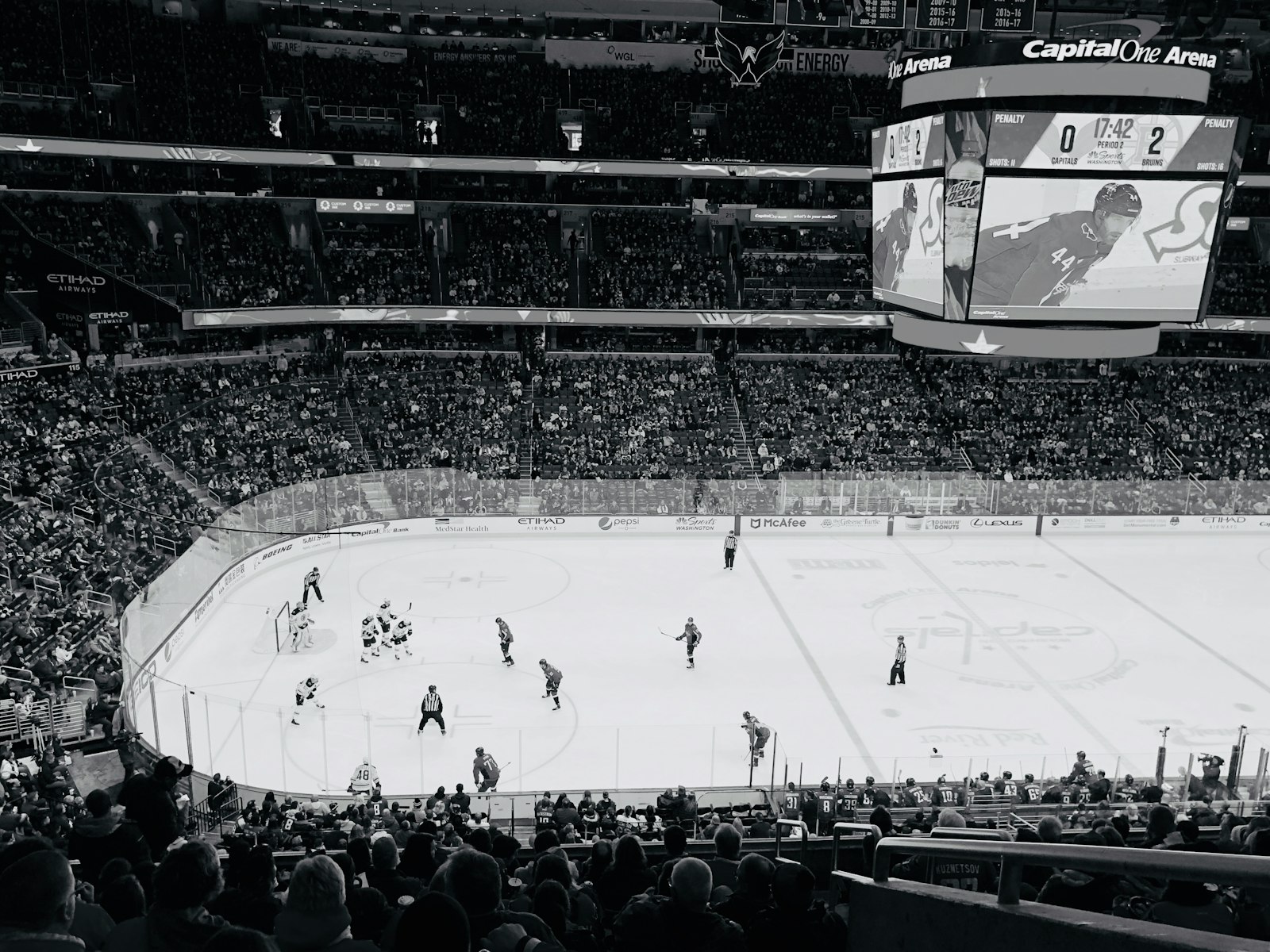
Image note: the featured photograph shows generic ice hockey arena action and is not presented as an NHL game.
Sources: NHL 2025-26 Official Rules, NHL standings/playoff materials and NHL records information.