
Hey, just so you know, some of the links on this site are affiliate links. That means I may earn a small commission if you buy something through them. It doesn’t cost you anything extra, and it helps me keep this site running. Thanks for your support!
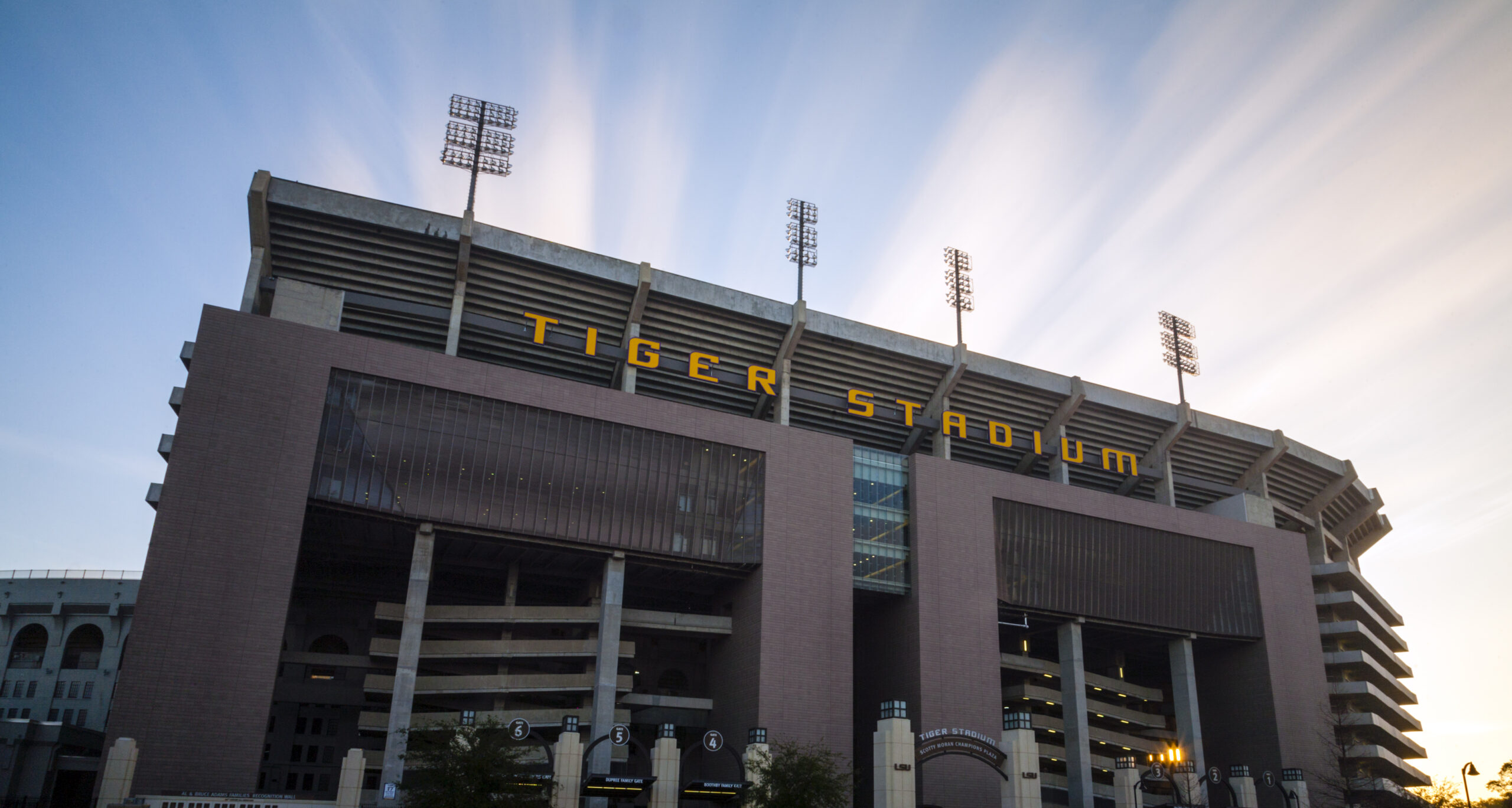
College football atmosphere is about much more than capacity. The best stadiums turn an ordinary Saturday into a ritual: fans arrive hours early, bands and traditions build the tension, the team entrance raises the volume, and the crowd becomes part of the game once the ball is kicked.
SportsyVibe ranked these stadiums by crowd intensity, signature traditions, pregame and tailgating culture, visual identity, consistency in big games, and fan participation. This is an atmosphere ranking, not a list of the largest buildings. For the size ranking, see the 10 largest college football stadiums in America. You can also explore the SportsyVibe Stadiums & Arenas hub and our 10 most iconic sports stadiums in the world.
| Rank | Stadium | School | Signature atmosphere |
|---|---|---|---|
| 1 | Tiger Stadium | LSU | Saturday night in Death Valley, Callin’ Baton Rouge and relentless crowd noise |
| 2 | Beaver Stadium | Penn State | The White Out and a wall of coordinated crowd color |
| 3 | Ohio Stadium | Ohio State | The Horseshoe, TBDBITL and Buckeye pageantry |
| 4 | Memorial Stadium | Clemson | Howard’s Rock and the run down The Hill |
| 5 | Neyland Stadium | Tennessee | Vol Walk, running through the T and checkerboard tradition |
| 6 | Kyle Field | Texas A&M | The 12th Man, Midnight Yell and coordinated Aggie yells |
| 7 | Saban Field at Bryant-Denny Stadium | Alabama | Walk of Champions and championship-level expectation |
| 8 | Sanford Stadium | Georgia | Between the Hedges, the lone trumpeter and Light Up Sanford |
| 9 | Autzen Stadium | Oregon | Compact bowl, crowd pressure and modern brand energy |
| 10 | Camp Randall Stadium | Wisconsin | Jump Around and a stadium-wide fourth-quarter ritual |
1. Tiger Stadium — LSU
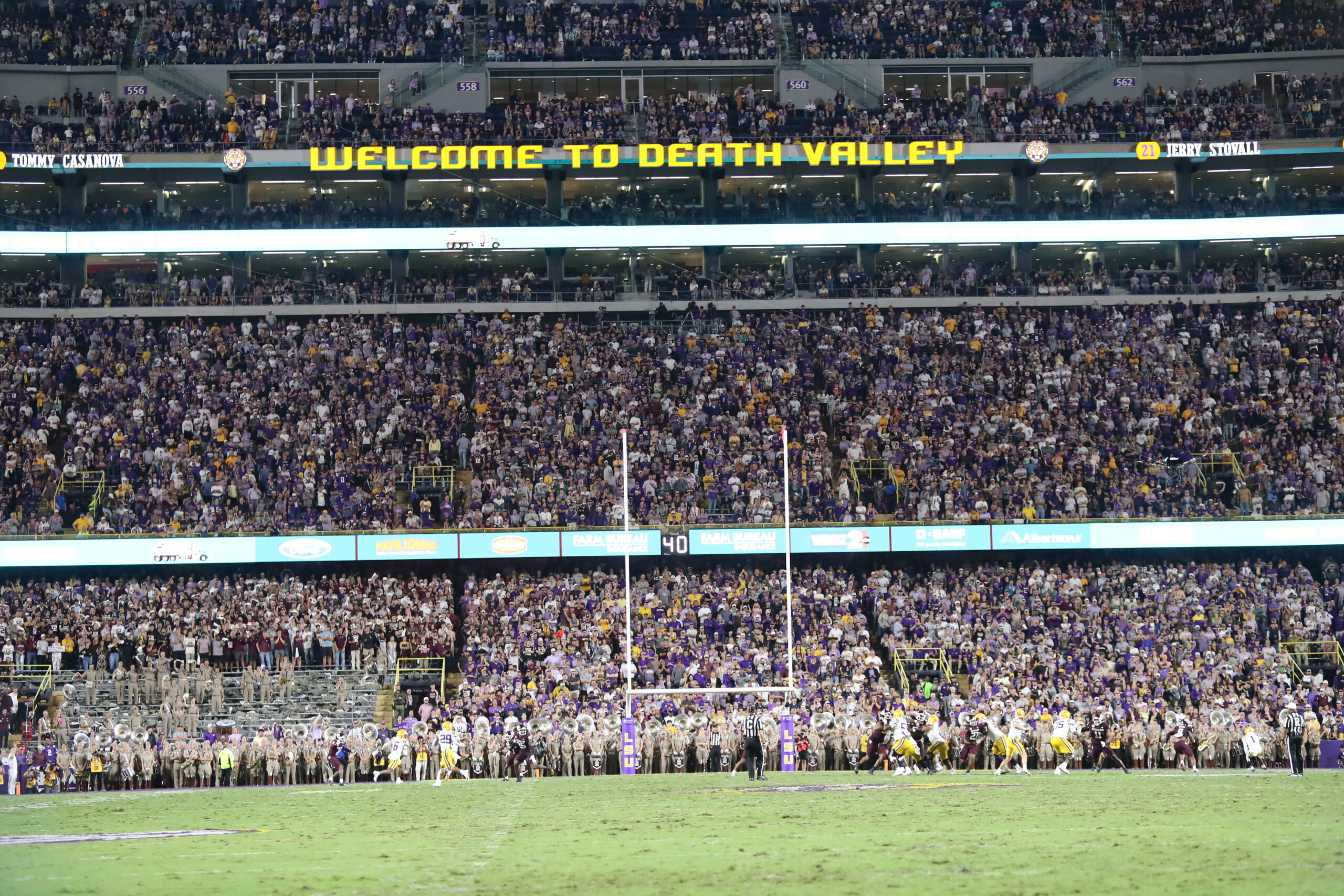
LSU gets the No. 1 spot because Tiger Stadium combines raw noise, night-game mystique and a pregame culture that starts long before kickoff. The building itself matters, but the real force is the crowd: more than 100,000 people compressed around the field, reacting together and feeding off every defensive snap.
The soundtrack is part of the identity. LSU’s 2026 fan guide calls Death Valley one of college football’s most electric game-day experiences, while the school’s game-day soundtrack highlights traditions such as Callin’ Baton Rouge, Fight for LSU, Swag Surfin’ and Tiger Rag. Those rituals make the stadium feel less like a generic large venue and more like a place with its own rhythm.
What separates Tiger Stadium from many other elite environments is how consistently the mythology matches the experience. A major opponent under the lights can turn Baton Rouge into an all-day event, with tailgating, band traditions and the stadium roar building toward kickoff. If the ranking is about total atmosphere rather than architecture alone, Death Valley is the benchmark.
2. Beaver Stadium — Penn State
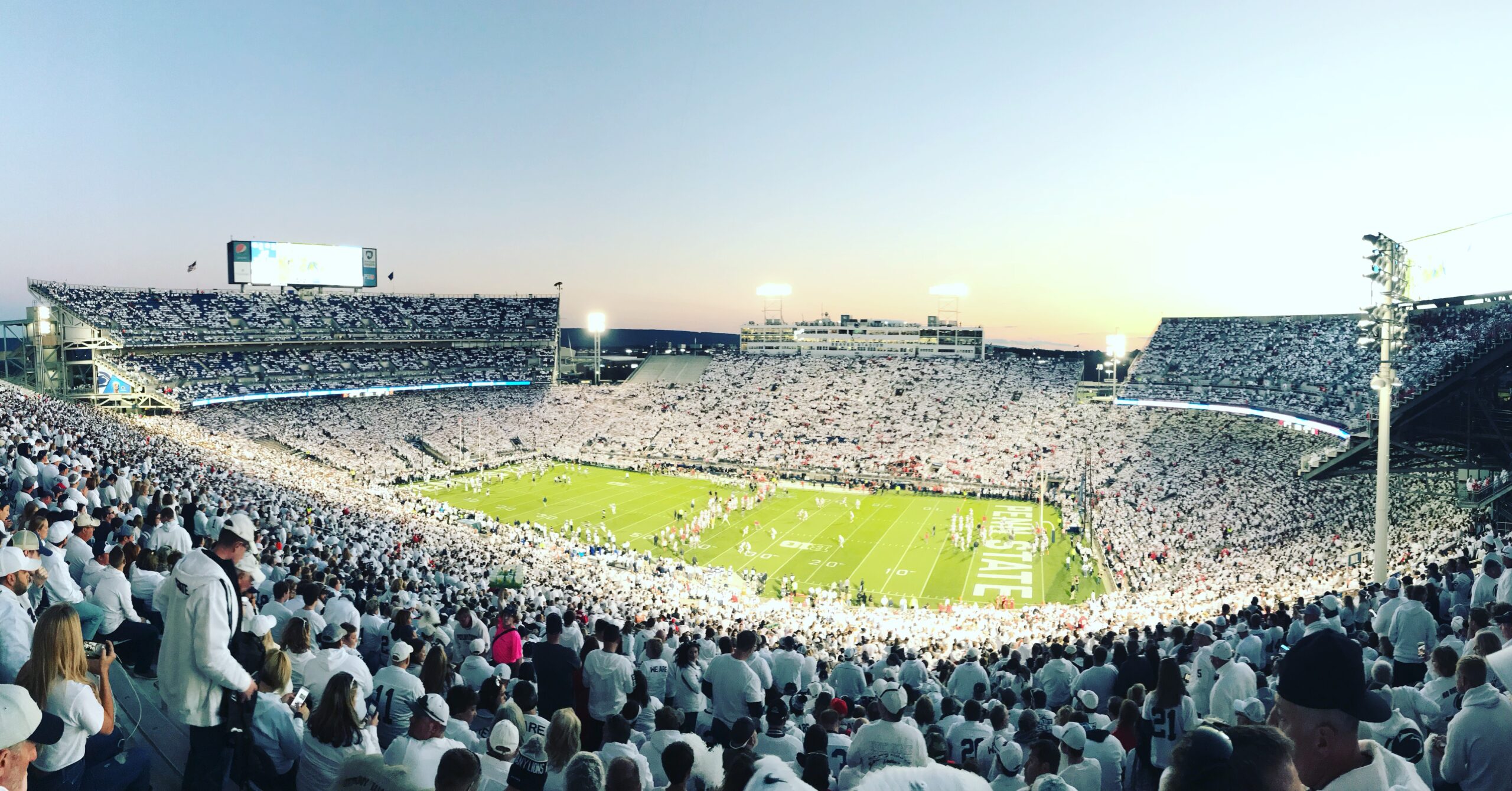
Penn State’s White Out is one of the few college football traditions that can define an entire television broadcast before the game even starts. When the stadium is packed in white and the crowd is moving in unison, Beaver Stadium becomes instantly recognizable and visually overwhelming.
For 2026, Penn State designated USC on October 10 as the 19th full-stadium White Out, while also continuing its Stripe Out and Helmet Stripe themes. That matters because the atmosphere is not a one-off novelty. Penn State has turned coordinated fan participation into a repeatable part of the home-field experience.
Beaver Stadium’s size amplifies everything: the entrance, the first defensive third down, the student section and the nighttime light show. LSU may have the edge in all-day southern football culture, but few single-game environments anywhere can match Penn State when the White Out is at full force.
3. Ohio Stadium — Ohio State
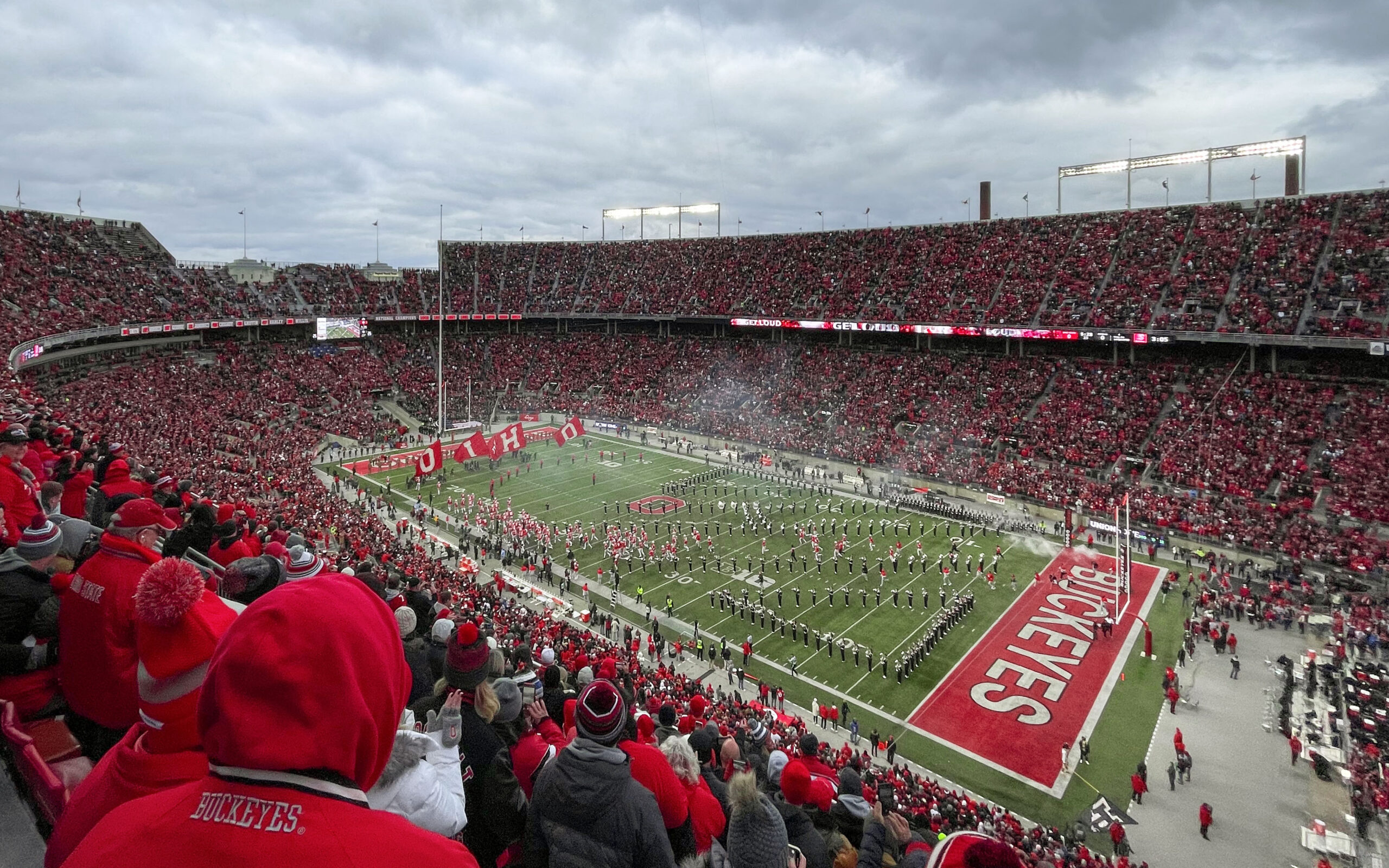
Ohio Stadium earns its place near the top because the atmosphere is built on more than volume. The Horseshoe has hosted Buckeye football since 1922, and the day is layered with rituals that make a home game in Columbus feel ceremonial as well as intense.
Ohio State’s current game-day program still centers traditions such as the Victory Bell, TBDBITL’s ramp entrance and the marching band’s performance culture. The school’s 2026 fan-experience updates were specifically framed as additions around — not replacements for — the traditions that make Ohio Stadium special.
The rivalry stakes also matter. When a major Big Ten opponent arrives, and especially when Michigan is involved, the stadium becomes part of the competitive story. The close double-deck horseshoe design keeps a massive crowd visually connected to the field, giving the venue both scale and pressure.
Browse current Sports & Outdoors best sellers for tailgating, travel and game-day essentials.
4. Memorial Stadium — Clemson
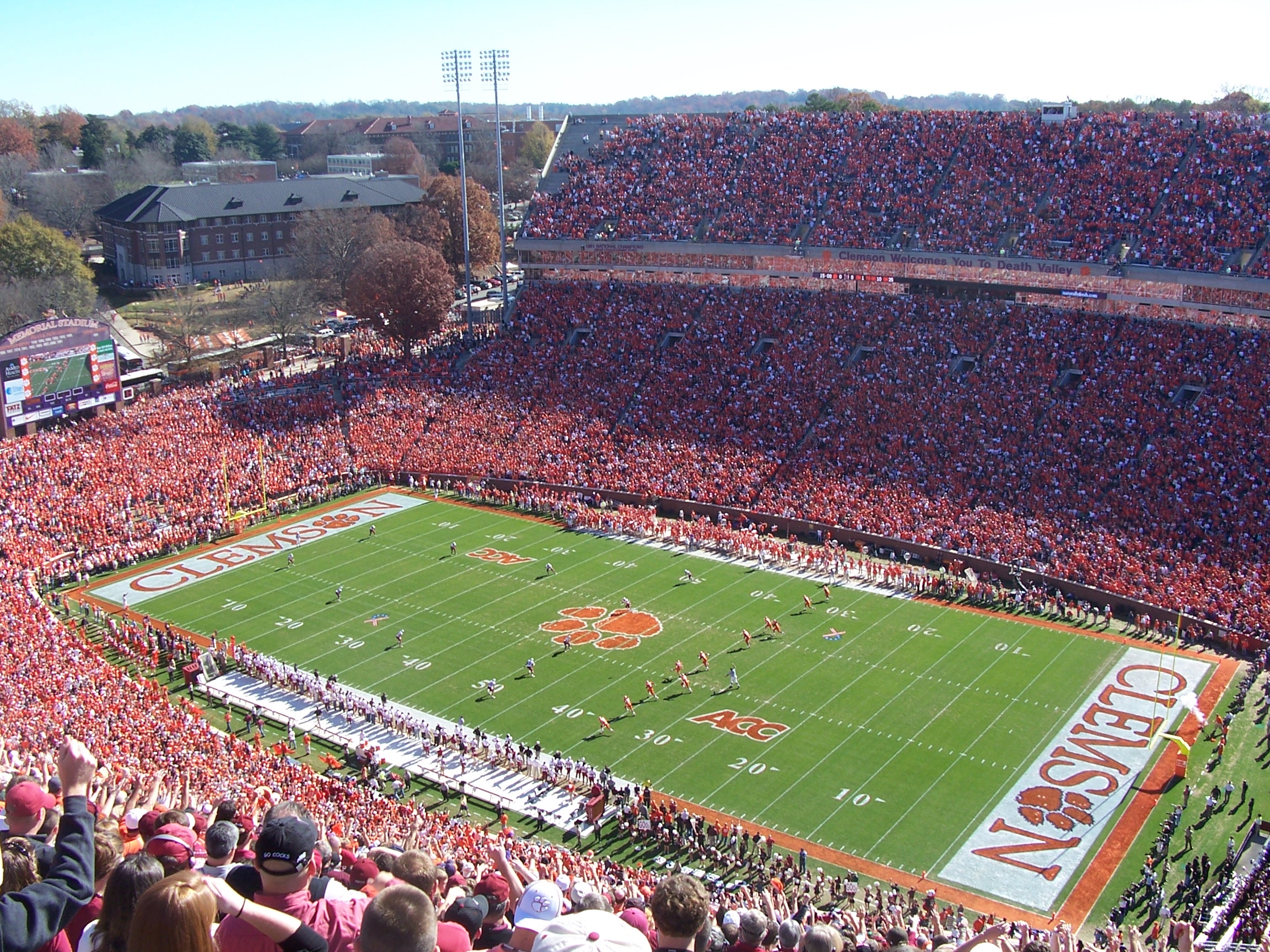
Clemson’s environment is anchored by one of the most famous entrances in sports. Before home games, the Tigers gather near Howard’s Rock, the cannon fires, Tiger Rag begins and the team runs down The Hill into Memorial Stadium.
Clemson’s own history of the tradition traces the modern Howard’s Rock ritual to 1967 and the return of the run-down-the-Hill entrance to 1972. The school describes the sequence as a tradition that now links the team, band, cheerleaders and crowd in one burst of pregame energy.
That concentrated entrance is why Clemson ranks this high. Plenty of stadiums are loud after kickoff; Clemson creates a signature moment before the opening kick that visitors plan around. When a top opponent comes to Death Valley, The Hill gives the stadium a sense of occasion that is hard to duplicate.
5. Neyland Stadium — Tennessee
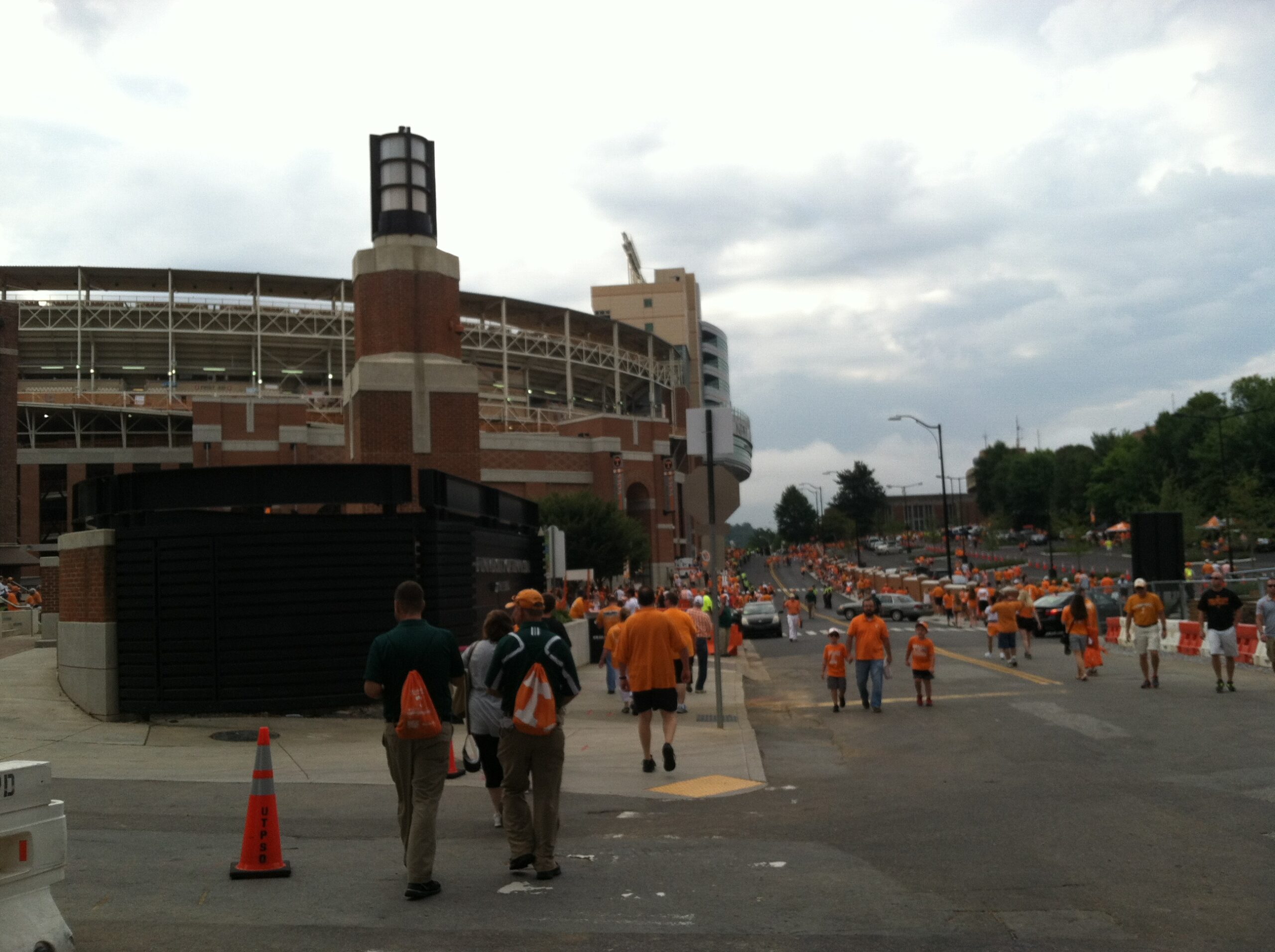
Neyland Stadium is one of the places where the city, campus and stadium all seem to point toward game day. Tennessee fans can build the day around the Vol Walk, the band, the riverfront setting and the climb in energy that ends with the team running through the T.
The orange-and-white checkerboards are part of that visual identity. Tennessee traces the modern orange-and-white checkerboard end-zone tradition to 1964, while Down the Field and the Pride of the Southland Band help frame the team entrance and scoring moments.
The result is an atmosphere that feels unmistakably Tennessee. A packed Neyland at night, especially for a major SEC game, has the size and noise of an elite stadium but also the traditions and setting needed to make the experience memorable beyond the final score.
6. Kyle Field — Texas A&M
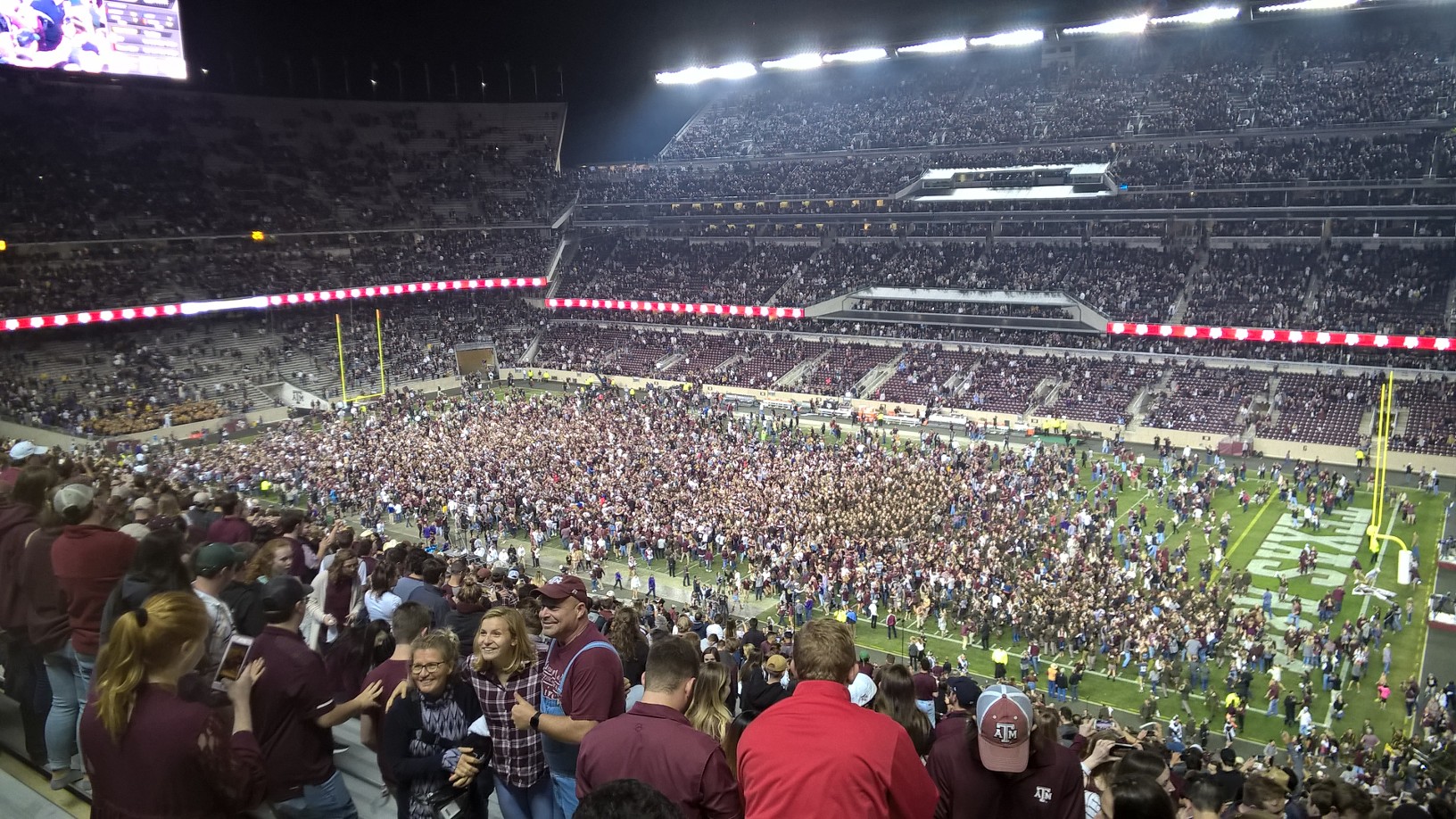
Texas A&M turns fan participation into a system. The night before home games, Midnight Yell fills Kyle Field with students and fans learning and performing coordinated yells, singing the Aggie War Hymn and preparing for the next day’s game.
Texas A&M’s official game-day information says Midnight Yell regularly attracts more than 25,000 people, while the team’s Spirit Walk, Corps of Cadets march-in and Yell Leaders continue the traditions into Saturday. That makes Kyle Field different from venues where crowd energy is mostly spontaneous.
Once the game begins, the 12th Man idea becomes the organizing principle of the stadium. The synchronized yells and huge crowd can produce an intimidating, almost choreographed sound. Even people who do not follow Texas A&M closely usually leave understanding that the culture is the product.
Explore Audible best sellers in Sports & Outdoors for college football history, biographies and long-form listening.
7. Saban Field at Bryant-Denny Stadium — Alabama
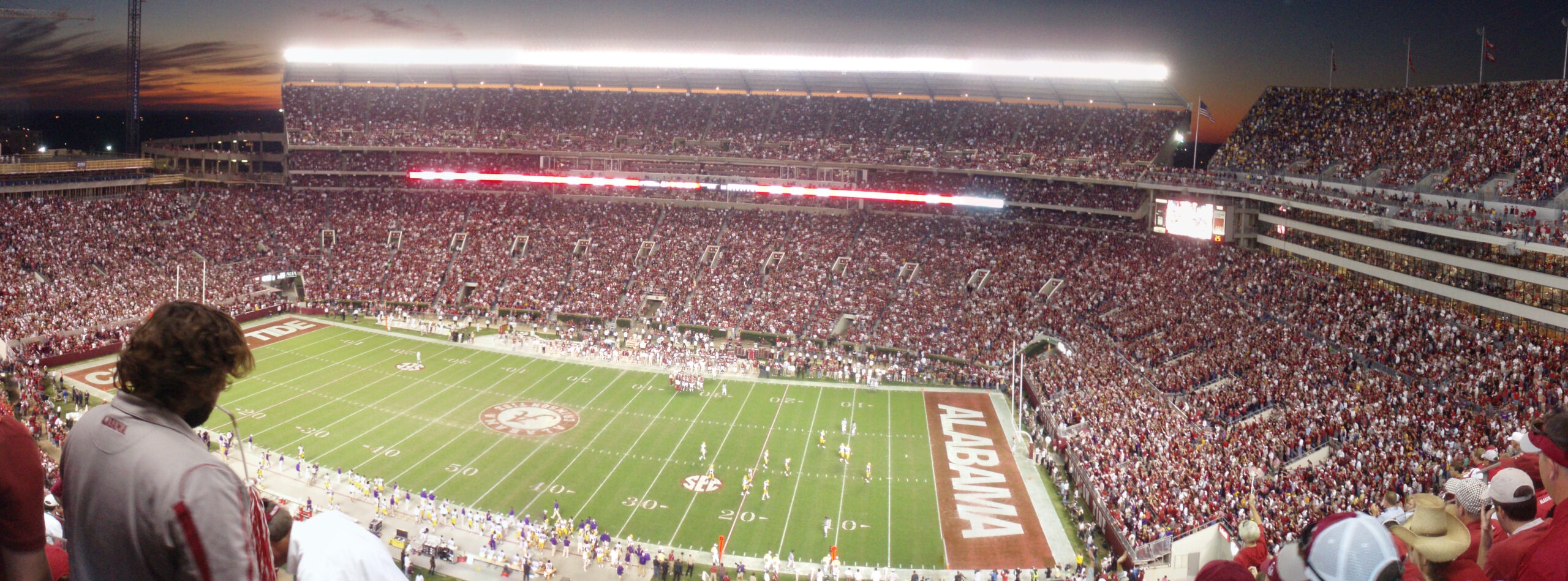
Alabama’s home atmosphere is powered by expectation. Bryant-Denny is not simply loud because the crowd is large; it is intense because generations of championship football have made every major home game feel like an event the Crimson Tide is supposed to control.
The Walk of Champions remains one of the day’s signature rituals, bringing the team through a dense corridor of fans before entering the stadium. Alabama’s 2026 game-day materials continue to reference the Walk of Champions alongside other long-running traditions even as the venue receives fan-experience and wayfinding updates.
A major SEC night game in Tuscaloosa can become one of the sport’s hardest environments for a visitor. Alabama ranks a little below the top six here only because several venues above it have a more singular, instantly identifiable ritual. In total game-day intensity, Bryant-Denny still belongs in the elite tier.
8. Sanford Stadium — Georgia
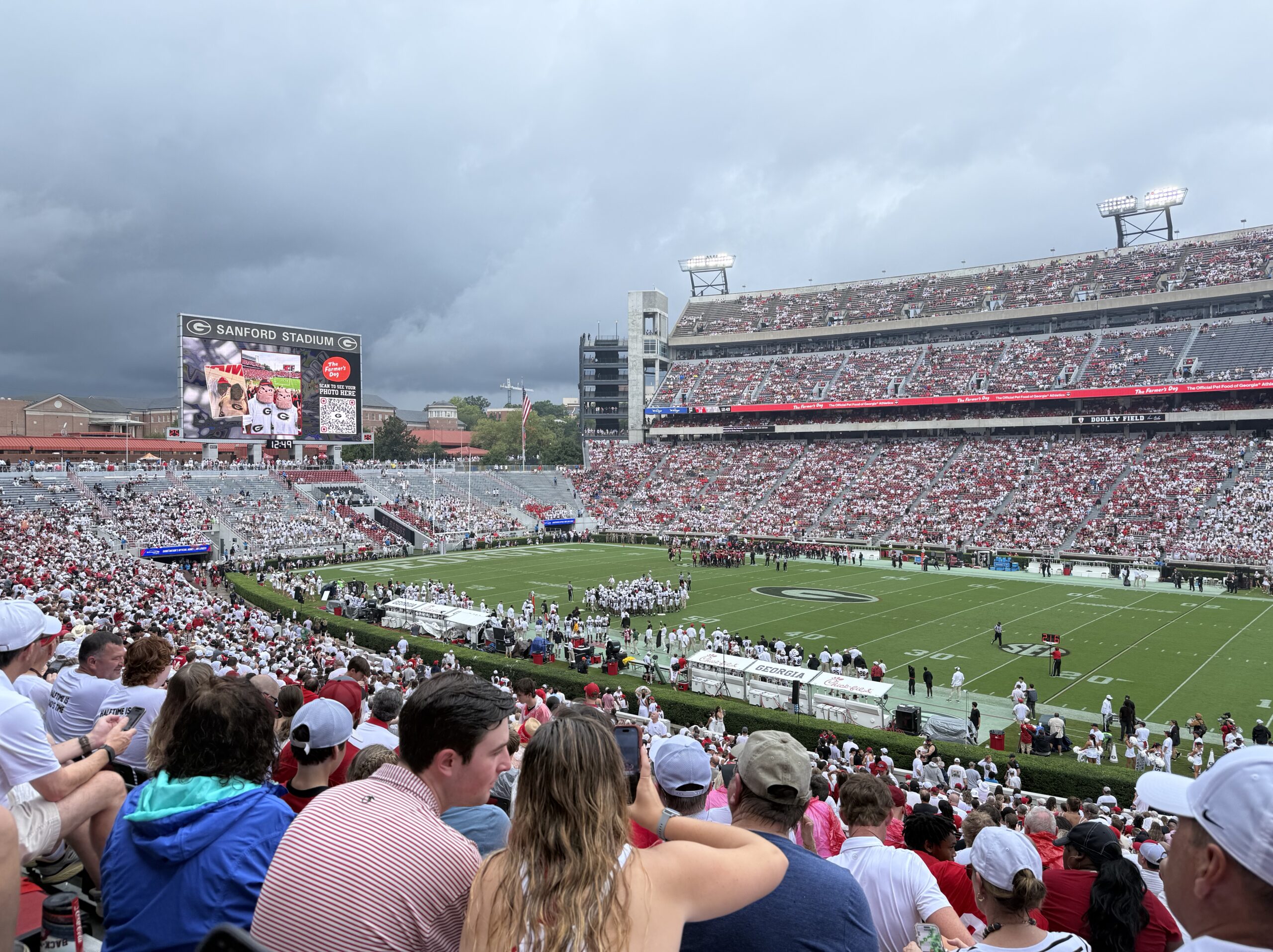
Georgia’s atmosphere starts with location. Athens is one of the sport’s classic college towns, and Sanford Stadium sits close enough to campus life that game day feels woven into the city rather than isolated in a parking-lot district.
Inside, Georgia has built a recognizable sequence of traditions: Between the Hedges, the lone trumpeter playing the opening notes of the Battle Hymn, Glory, Glory, and the newer Light Up Sanford presentation with red stadium lighting and cell-phone lights. Georgia’s athletics department still highlights those traditions as central parts of the home experience.
The combination of old and new works. Sanford retains the identity of a historic SEC stadium while using lighting and production to make night games feel contemporary. Add an elite opponent and a packed student section, and Athens becomes one of the country’s most complete football weekends.
9. Autzen Stadium — Oregon
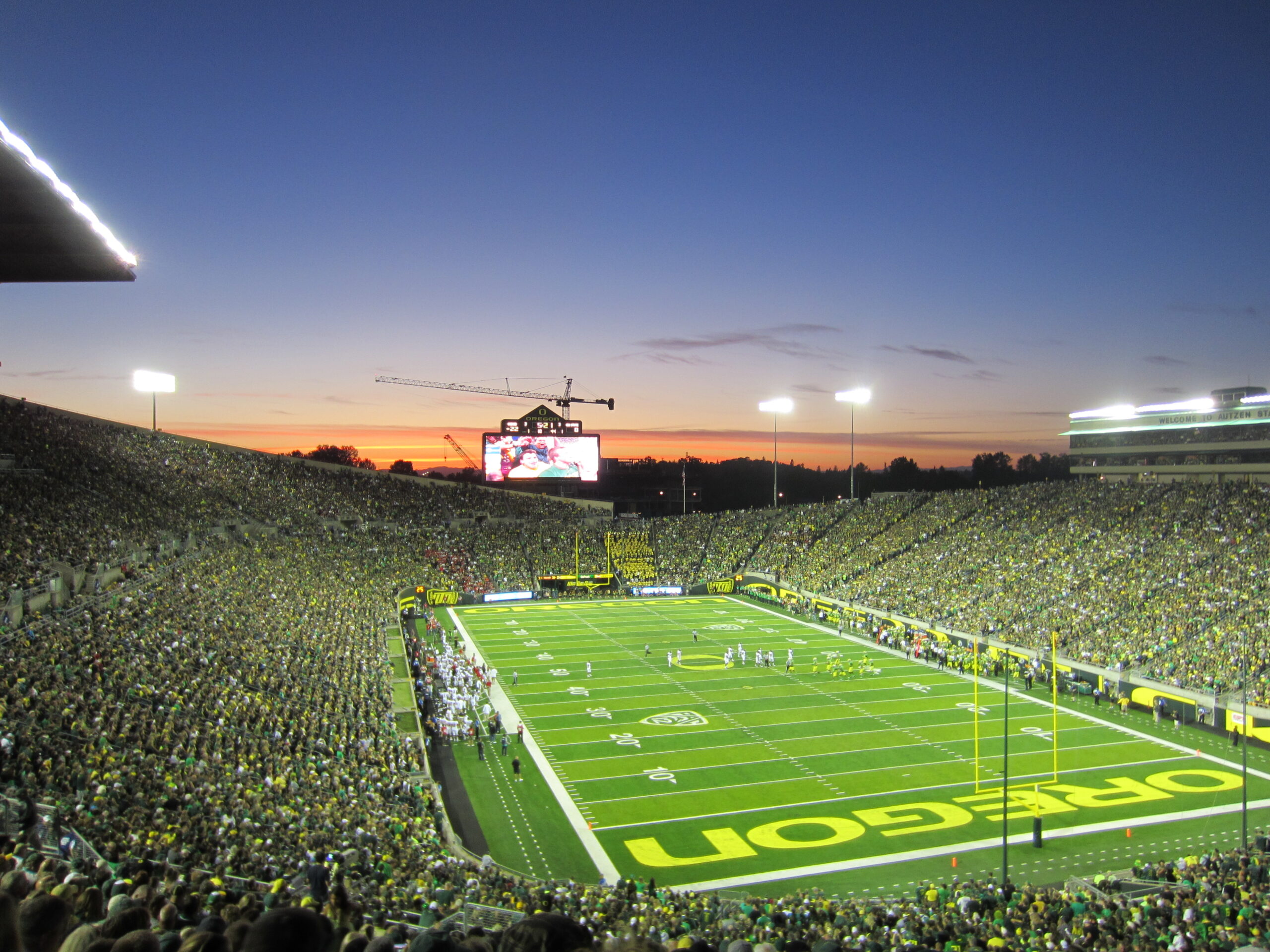
Autzen Stadium is the outlier on this list because its reputation is not built on being one of the country’s largest buildings. Its strength is concentration. The bowl keeps the crowd close, and the sound can feel much larger than the raw attendance number suggests.
Oregon’s modern game-day identity adds another layer: uniforms, music, graphics, the Duck, the marching band and a highly produced stadium presentation all fit the program’s broader brand. For 2026, Oregon expanded bookable game-day experiences around Autzen, including the March to Victory and on-field activities.
That combination makes Autzen especially effective for big games. The crowd pressure is real, but so is the visual identity. When Oregon is playing a ranked opponent in Eugene, the stadium looks and sounds like a purpose-built home-field advantage rather than simply a large place to watch football.
Browse sports and outdoors book best sellers for histories, biographies, rivalries and fan-culture reads.
10. Camp Randall Stadium — Wisconsin
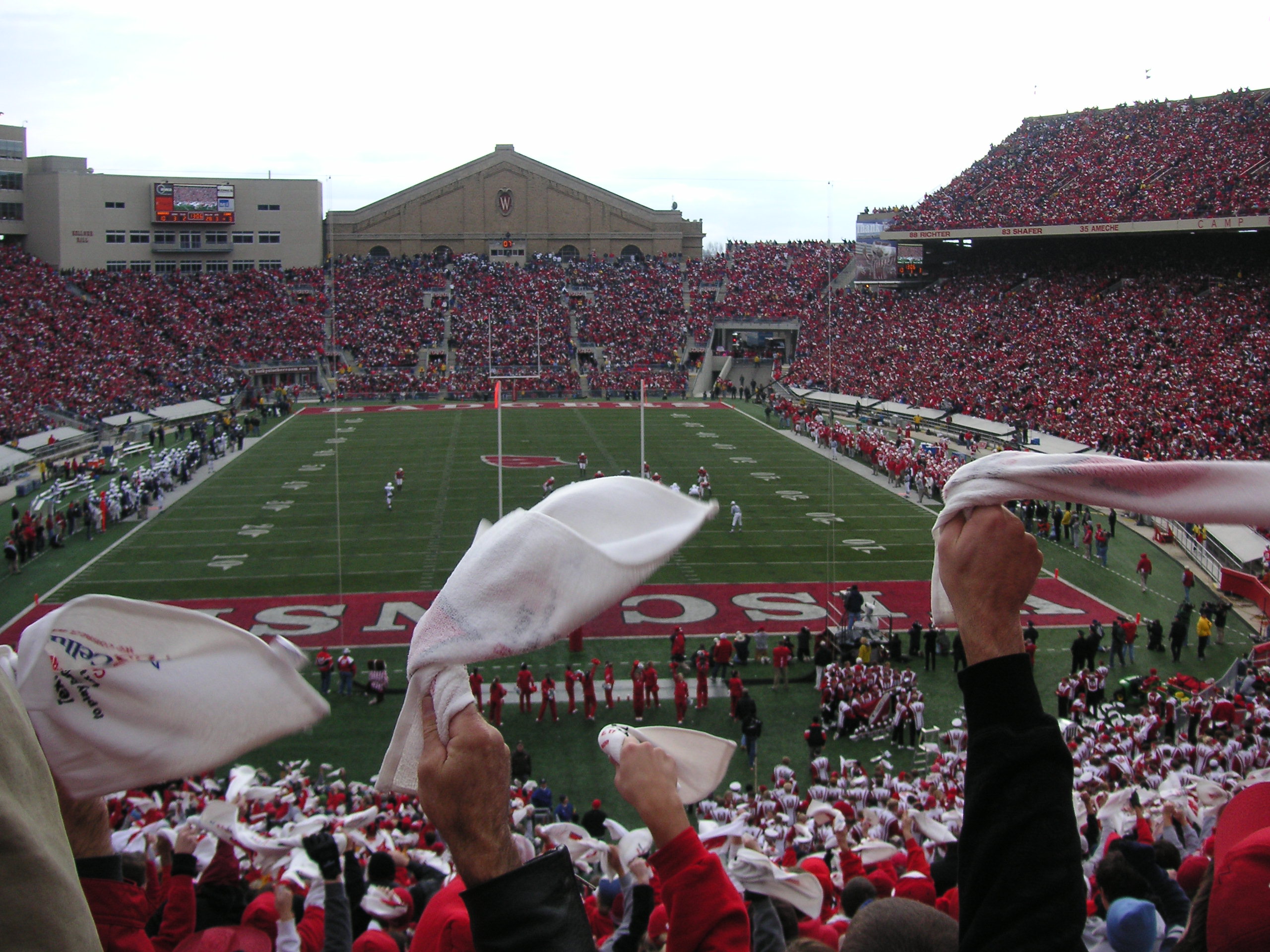
Camp Randall makes the Top 10 because one tradition can sometimes summarize an entire stadium. Between the third and fourth quarters, House of Pain’s Jump Around comes over the speakers and the crowd turns the building into a moving mass of red.
Wisconsin says the tradition began in 1998 and remains a core part of every football game day. The school’s fan information notes that the entire stadium jumps in unison, while the Fifth Quarter with the Wisconsin marching band extends the communal feeling even after the game ends.
Madison also matters. The bars, neighborhoods and campus scene around Camp Randall give the weekend a college-town feel before fans ever reach their seats. It may not produce the constant decibel level of LSU or Penn State, but few stadiums have a more recognizable late-game ritual.
What makes a great college football game-day atmosphere?
The best environments combine multiple layers. Noise matters, but so do traditions that fans can identify instantly, a pregame scene worth arriving early for, a student section that participates throughout the game, and a stadium design that keeps the crowd connected to the field.
That is why this list does not simply follow capacity. Autzen can compete with buildings nearly twice its size because the crowd is concentrated. Clemson’s entrance can elevate Memorial Stadium before a snap is played. Wisconsin can create one of the sport’s signature moments in a single break between quarters.
The strongest game-day atmospheres also survive changes in coaches and players. They belong to the fan base and the place itself.
Frequently Asked Questions
What college football stadium has the best atmosphere?
SportsyVibe ranks LSU’s Tiger Stadium No. 1 for overall game-day atmosphere because Death Valley combines crowd intensity, night-game mystique, a huge tailgating culture and multiple signature music and band traditions.
What is the Penn State White Out?
The White Out is Penn State’s coordinated full-stadium game in which fans wear white, creating one of college football’s most recognizable crowd scenes. Penn State designated USC on October 10 as the 2026 full-stadium White Out.
Why is Clemson’s entrance famous?
Clemson players gather at Howard’s Rock and then run down The Hill into Memorial Stadium as the cannon fires and the band plays. The school traces the Howard’s Rock ritual to 1967 and the modern return of the Hill entrance to 1972.
What happens at Texas A&M Midnight Yell?
The night before a home game, thousands of Aggies gather at Kyle Field for yell practice, the Aggie War Hymn and stories from the Yell Leaders. Texas A&M says the event regularly draws more than 25,000 people.
When does Wisconsin play Jump Around?
Wisconsin plays Jump Around between the third and fourth quarters at Camp Randall Stadium. The tradition dates to 1998 and has become one of the most recognizable crowd-participation moments in college football.
Final word
College football’s best stadiums are memorable because they make fans participants rather than spectators. Tiger Stadium has Death Valley at night. Beaver Stadium has the White Out. Clemson has The Hill. Kyle Field has Midnight Yell and the 12th Man. Camp Randall has Jump Around.
The details are different, but the pattern is the same: the best game-day environments are built from rituals repeated long enough that the stadium itself becomes part of the program’s identity.
Sources
- LSU Athletics — 2026 Football Fan Guide
- LSU Athletics — GameDay Soundtrack
- Penn State Athletics — 2026 Football Game Themes
- Ohio State — 2026 Ohio Stadium game themes and fan experience
- Ohio State — Ohio Stadium
- Clemson Athletics — The Hill
- Tennessee Athletics — Traditions
- Texas A&M — Kyle Field A-to-Z
- Texas A&M — Football GameDay Traditions
- Alabama Athletics — Saban Field at Bryant-Denny Stadium
- Georgia Athletics — Traditions
- Oregon Athletics — 2026 Autzen GameDay Experiences
- Wisconsin Athletics — Football Fan Information
Image credits & licensing
Featured image: Daniel Foster, LSU Tiger Stadium, CC BY-SA 2.0 via Wikimedia Commons. LSU inline: Tammy Anthony Baker, Texas A&M Aggies–LSU Tigers Football, CC BY 4.0. Beaver Stadium: StateLionPro, CC BY-SA 4.0. Ohio Stadium: Quintin Soloviev, CC BY 4.0. Clemson Memorial Stadium: Wikimedia Commons public-domain image. Neyland Stadium: Nascarking, CC0. Kyle Field: Tanknight, CC BY-SA 4.0. Bryant-Denny Stadium: Latics, CC BY-SA 2.0. Sanford Stadium: BullDawg2021, CC BY 4.0. Autzen Stadium: Another Believer, CC BY-SA 3.0. Camp Randall Stadium: Wikimedia Commons public-domain image.