Hey, just so you know, some of the links on this site are affiliate links. That means I may earn a small commission if you buy something through them. It doesn’t cost you anything extra, and it helps me keep this site running. Thanks for your support!
A football helmet is not “properly fitted” just because it goes on the player’s head. Fit is model-specific and should be checked using the manufacturer’s instructions, the team’s equipment process and current certification requirements.
This guide explains the verification steps. It does not promise that any helmet prevents concussion or eliminates injury risk. No football helmet can make contact sport risk disappear.
Start with the helmet manufacturer’s fitting guide
Riddell’s current Proper Fit resources state that correct fitting and maintenance are essential to protective equipment use. The company publishes separate fitting guides for varsity, youth and specific helmet platforms.
That model-specific part matters. Do not assume the air system, pad configuration, chinstrap geometry or adjustment procedure is identical across every helmet.
Watch Riddell’s original varsity helmet fitting guide on YouTube
Measure before guessing the shell size
Manufacturer guides typically begin with head circumference, measured around the widest relevant point of the head according to that model’s instructions. Use the actual size chart for the helmet being fitted rather than carrying a size assumption from an older model.
The helmet should sit in the intended position
Riddell fitting materials commonly use eyebrow position and helmet level as visual checks. The front edge should not ride so high that the forehead is broadly exposed, and the helmet should not sit so low that it interferes with vision.
Follow the exact fitting guide for the specific helmet rather than using a generic “two fingers” shortcut from memory.
Check movement, not just comfort
A properly fitted helmet should move with the head rather than slide independently around it. With the chinstrap secured, an equipment professional can check for excessive rotation, lift and front-to-back movement while making sure the fit is not creating painful pressure.
Chinstrap and jaw fit are part of the system
The chinstrap is not an accessory added after shell sizing. It helps keep the helmet seated during movement and contact. Jaw pads, cup position and strap tension should follow the helmet maker’s procedure.
What NOCSAE certification does—and does not—mean
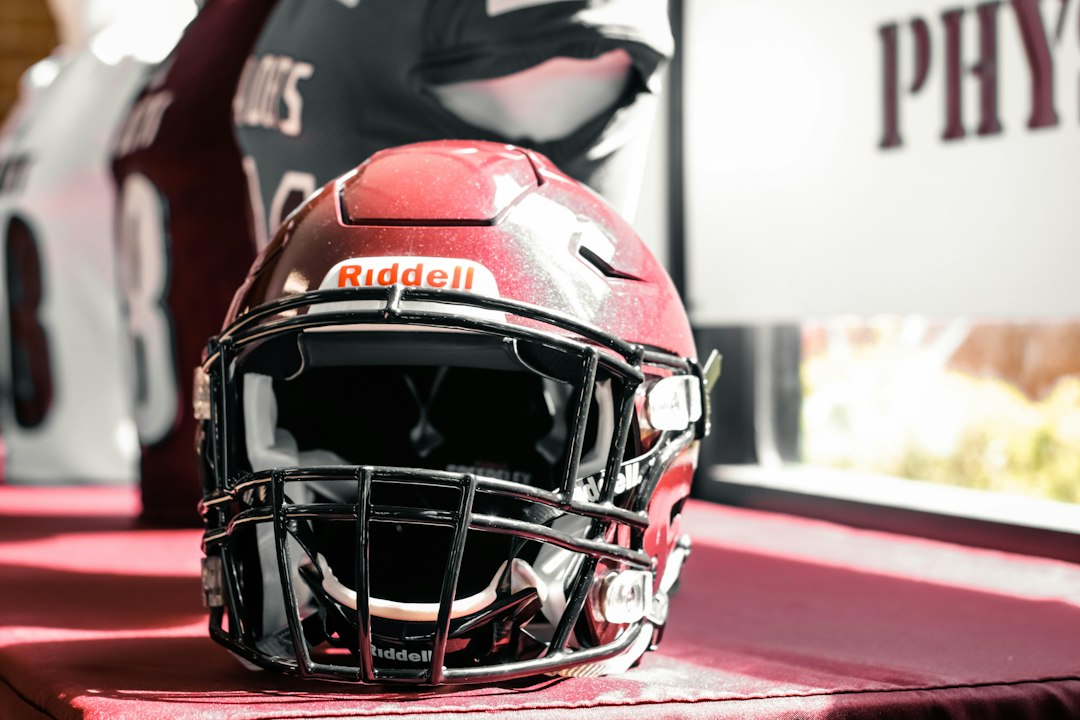
NOCSAE maintains performance standards for football helmets. Its current ND002-25 specification for newly manufactured football helmets became effective in August 2026 and establishes laboratory performance requirements for new helmets.
A standard is an important minimum performance and certification framework. It is not a guarantee that a player cannot suffer a concussion, skull injury or other harm. Helmet choice should never be used to encourage riskier contact technique.
Youth standards are evolving
NOCSAE has also finalized a youth-specific football helmet standard, ND006, with an effective date in September 2027. Because standards and effective dates change, teams and families should verify the certification requirements that apply to the player’s level and season rather than relying on an old shopping guide.
Fit can change during the season
Hair, weight, growth, pad compression, repairs and ordinary wear can change how equipment fits. Recheck after maintenance, after a major fit complaint, and whenever the helmet no longer sits or moves as it did at the original fitting.
Used and reconditioned helmets need extra verification
Do not buy a used helmet based on appearance alone. Check age, labeling, reconditioning/certification status, components and whether the model can still be properly serviced. Follow the manufacturer, league and equipment-manager requirements that apply.
Football helmet fit checklist
- Correct model-specific size chart used
- Head circumference measured according to manufacturer instructions
- Helmet sits at the proper height and level
- Vision is unobstructed
- Chinstrap/jaw system is secured correctly
- No excessive independent helmet movement
- No sharp or painful pressure points
- Current certification/label requirements verified
- Fit rechecked after service, growth or major change
When to get help
If you are unsure about fit, stop guessing. Use a trained equipment manager, coach operating under the program’s equipment process, manufacturer representative or qualified sporting-goods fitter. For symptoms after a hit, follow medical/concussion protocols rather than treating the helmet fit as a diagnosis.
Bottom line
The best helmet is not simply the most expensive model. It is an appropriate, currently compliant helmet that is fitted, maintained and worn correctly for the individual player. Fit is necessary; it does not make football risk-free.
Continue with NFL Gridiron Gold and Gear & Collectibles.
Sources
- Riddell — Proper Fit Resources
- NOCSAE — Football Standards
- NOCSAE — ND002 Football Helmet Performance Standard
- NOCSAE — Youth Football Helmet Standard Overview
Standards and fitting resources verified September 29, 2026. This is equipment education, not medical advice.