
Hey, just so you know, some of the links on this site are affiliate links. That means I may earn a small commission if you buy something through them. It doesn’t cost you anything extra, and it helps me keep this site running. Thanks for your support!
A baseball glove should match the player’s hand and the job the glove has to do. A bigger glove is not automatically easier. Infielders usually need quicker transfers, outfielders need more reach, pitchers often want a closed web, and younger players need a glove they can actually close.
The ranges below are a starting point, not a replacement for trying the glove on. Rawlings and Wilson both publish current sizing guidance, and their ranges overlap without being identical. That is a useful reminder that fit is not one exact number.
Baseball glove size by position
| Player / position | Common starting range | What the design prioritizes |
|---|---|---|
| Youth infield | About 10.25–11.75 inches depending on age/brand | Control and quick transfers |
| Adult infield | About 11–12 inches | Shallower pocket and faster exchange |
| Adult outfield | About 12–12.75 inches | Reach and a deeper pocket |
| Pitcher | Roughly 11.5–12.5 inches | Control plus a web that can conceal grip |
| First base | Specialized mitt, often 12–13 inches adult | Scooping and receiving throws |
| Catcher | Specialized catcher’s mitt | Receiving, padding and ball security |
Why infield gloves are usually smaller
Wilson describes infield gloves as among the smallest on the field, with shallower pockets that help fielders get the ball out quickly. Middle infielders often value fast transfers more than maximum reach. Third basemen may choose a slightly larger model for reaction plays, but the same control principle applies.
Why outfield gloves are larger
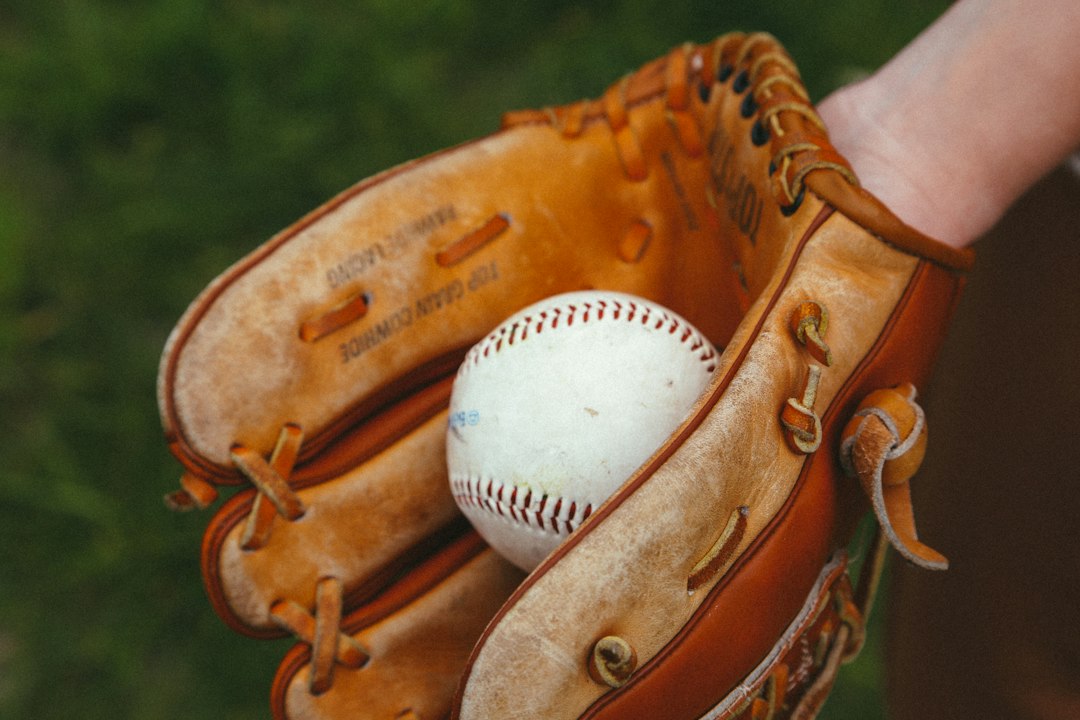
Outfielders trade some transfer speed for reach and security. Wilson’s current guide says outfield gloves are typically larger with deeper pockets, while Rawlings lists adult outfield sizing at 12 to 12.75 inches. The extra length can help on fly balls and balls hit into the gaps.
Pitcher gloves: size plus concealment
Pitchers do not just field the position. They also need to avoid showing the baseball and grip before the pitch. Closed-web designs are common for that reason. Wilson’s current adult guide places pitchers broadly in the 11.5 to 12.5-inch range.
First base and catcher are different categories
A first-base mitt is built to receive throws and scoop balls in the dirt. A catcher’s mitt adds substantial padding and a rounder receiving shape. Do not force these positions into a normal fielder-glove size chart.
Age matters because hand size and control matter
Rawlings’ current chart lists T-ball gloves at 8.5 to 10 inches, youth infield gloves at 10.25 to 11.5 inches, and youth outfield gloves at 11.5 to 12.25 inches. Wilson’s youth ranges vary by narrower age bands.
The most important practical test is whether the player can control and close the glove. Wilson specifically warns that an oversized glove can feel heavy and awkward for a younger player.
How to tell whether a glove fits
- The hand should not slide around inside the glove.
- The player should be able to close it without fighting the leather or hand opening.
- The fingers should sit naturally in the stalls.
- The wrist opening should feel secure without cutting off movement.
- The player should be able to field and transfer the ball comfortably.
Do not confuse glove size with quality
Leather grade, break-in, web style and construction matter, but none fixes a bad fit. For a developing player, the right size and manageable stiffness can be more useful than a premium glove that is too large or too difficult to close.
Bottom line
Start with position → age/hand size → control → material and budget. Infielders usually go smaller, outfielders larger, and first base/catcher use specialized mitts. Use manufacturer charts as ranges, then verify the glove on the actual player.
See more baseball explainers in MLB & Baseball and equipment guidance in Gear & Collectibles.
Sources
Sizing references verified September 29, 2026. Manufacturer ranges differ; use them as fit starting points.