Hey, just so you know, some of the links on this site are affiliate links. That means I may earn a small commission if you buy something through them. It doesn’t cost you anything extra, and it helps me keep this site running. Thanks for your support!
SEATTLE — The Chicago Bears finished Week 8 with a 34–17 victory over the Seattle Seahawks on Monday, November 2, 2026, and running back D’Andre Swift supplied three rushing touchdowns. Chicago improved to 6–2 after a third consecutive win, while Seattle fell to 4–4. The result mattered for more than the final margin: it showed how the Bears could keep control against a defense that had been limiting opponents throughout the season.
Swift provided the finishing power, but this was a win built across three phases. Quarterback Caleb Williams threw for 247 yards, a newly reinforced Chicago defense slowed Seattle, and a blocked field-goal attempt helped protect a lead when the Seahawks were still within striking distance. The NFL’s official game analysis identifies all three contributions.
Bears–Seahawks final score and key numbers
| Measure | Chicago | Seattle |
|---|---|---|
| Final score | 34 | 17 |
| Record after game | 6–2 | 4–4 |
| Standout offensive performance | D’Andre Swift: 3 rushing TDs | Jaxon Smith-Njigba: 118 receiving yards |
| Quarterback passing yards | Caleb Williams: 247 | Sam Darnold: 188 |
These numbers frame the story, but they do not by themselves explain when the game swung. Chicago forced Seattle to chase the game, then responded to the Seahawks’ third-quarter push rather than conceding the momentum.
Swift turned the second half into Chicago’s game
Swift’s three rushing scores all came after halftime, according to the game report. That is a critical distinction from a running back merely accumulating yardage while a team is already out of reach. Seattle had narrowed Chicago’s advantage to 20–17 during the fourth quarter, leaving the game open. Swift’s later touchdowns helped turn a three-point contest into a decisive two-score margin.
The scoring sequence underlines the value of a dependable ground-game finisher. When an opponent has enough passing talent to rally, field position and clock control become more than supporting details. Chicago kept its offense capable of answering, and Swift supplied those answers without requiring Williams to win the entire game through the air.
Chicago’s passing production still mattered. Williams completed 24 of 34 throws for 247 yards and a touchdown. The official NFL account notes that the Seahawks had not previously allowed a quarterback to exceed 176 passing yards in their first seven games. Williams went well beyond that benchmark, which made it harder for Seattle to commit every defender to slowing Swift.
Chicago’s opening drive established the terms
The Bears did not wait for a late breakthrough to establish control. Their opening touchdown series covered 80 yards in 17 plays, according to NFL Research cited by the league. That long possession quieted the road atmosphere and demonstrated a different kind of offensive efficiency: sustaining a drive against a unit that usually forces opponents off the field.
It also changed the burden on Seattle’s offense. Playing from behind increases pressure on pass protection and reduces the margin for turnovers. Chicago was able to pair patient early offense with more aggressive scoring later instead of treating every possession as an all-or-nothing opportunity.
Defense and special teams made the cushion possible
Defensively, the Bears sacked Sam Darnold three times and intercepted him once, while Seattle totaled 252 offensive yards in the league’s analysis. Newly acquired defensive lineman Jeffery Simmons was part of the pressure Chicago generated in his debut. That is an encouraging immediate contribution, although one game cannot establish the long-term outcome of the acquisition.
Chicago’s special teams also blocked a Seattle field-goal attempt early in the fourth quarter. The timing was significant: after Seattle had fought to stay close, a successful kick could have made the closing sequence more difficult for the visitors. Instead, the Bears denied points and preserved a clearer path to the finish.
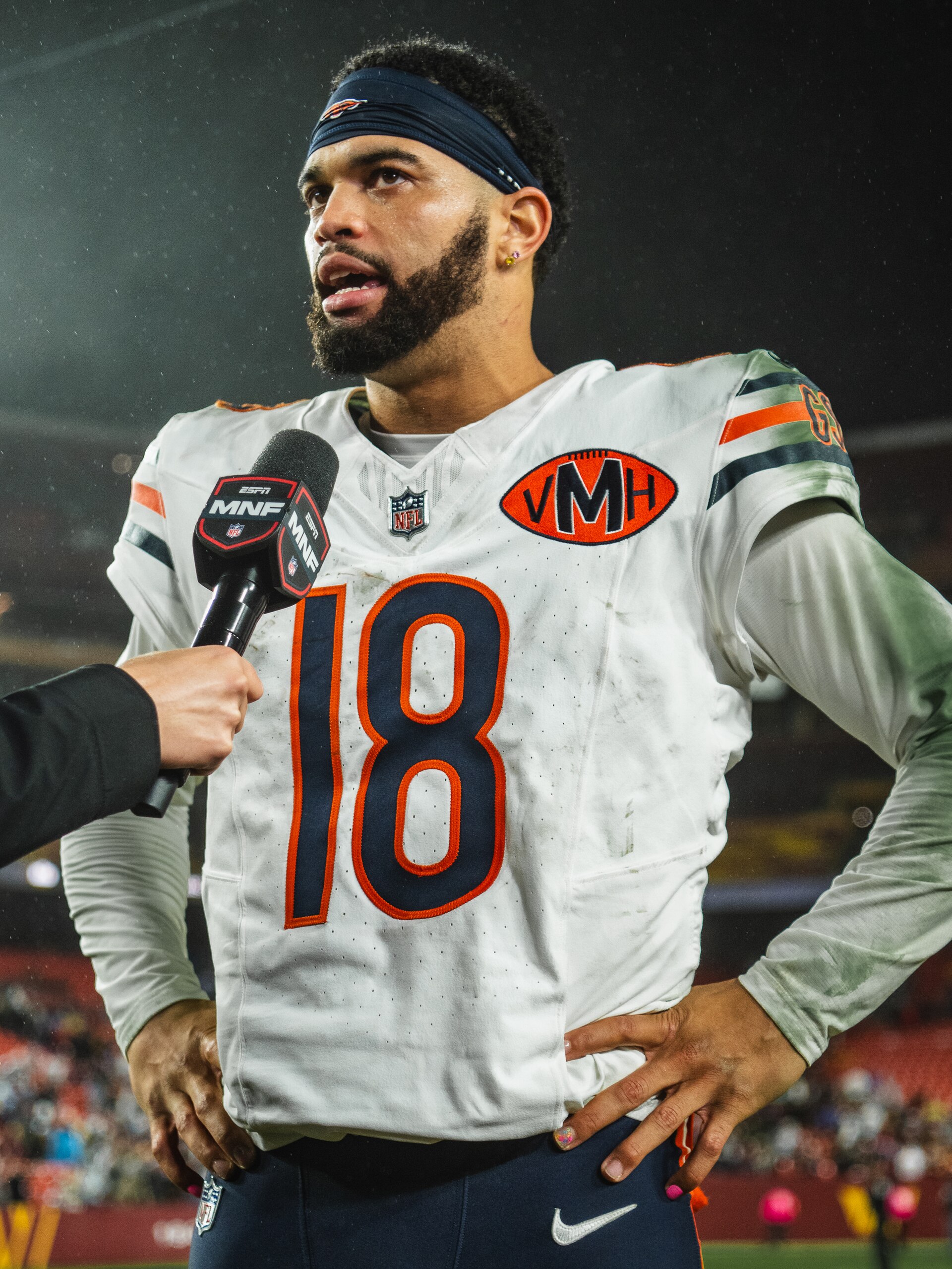
Three touchdowns did not mean three quarters of dominant rushing
Swift’s three touchdown runs came on 27 carries for 69 yards, an average of just 2.6 yards per attempt. That matters because it changes the lesson of the game: Chicago did not consistently rip off large rushing gains. It repeatedly converted high-value short-yardage chances after other players advanced the ball. The NFL’s official analysis highlights the difference between Swift’s finishing role and the offense’s overall yardage production.
The late second rushing touchdown also followed a 39-yard gain by Kalif Raymond on a backward pass from Williams. Short rushing scores can be decisive, but they belong in the context of the receivers, play-action passing and field position that create them. A more useful measure of whether the Bears’ rushing offense has improved will be how reliably it gains yardage between the scoring chances in future games.
For the exact game footage, watch the official Bears–Seahawks full highlights or Swift’s three-touchdown highlight package on the Chicago Bears’ website.
What Seattle can take from the defeat
Seattle did produce a credible response. Darnold connected on touchdown passes to Jaxon Smith-Njigba and Cooper Kupp, and Smith-Njigba finished with 118 receiving yards. Those contributions explain why the Seahawks stayed close into the second half despite the Bears’ strong start.
But the comeback stalled at the point where Seattle needed both clean possessions and defensive stops. The blocked kick, interception and Chicago’s late rushing scores compounded each other. Against a balanced opponent, individual passing highlights were not enough to erase the earlier deficit.
Why this Week 8 result matters
At 6–2, Chicago enters the next portion of the schedule with three straight victories since Williams returned from a hamstring injury. The evidence from Seattle supports a specific takeaway: this team won with lengthy drives, passing efficiency, second-half rushing touchdowns, disruptive defense and a timely special-teams play. Those are repeatable categories to evaluate in the next game, even if the exact outcomes are not repeatable.
For Seattle, a 4–4 record places renewed importance on consistency. The Seahawks can still move the ball through the air, but they must improve how they respond when an opponent controls early possessions and adds defensive pressure. SportsyVibe will follow the next games for evidence of whether those trends continue.
Related reading: browse NFL Gridiron Gold or see SportsyVibe’s NFL playoff format explainer.
Sources and image credit
- NFL: Bears–Seahawks official Week 8 analysis and game score, November 2–3, 2026.
- Reuters: Swift’s three scores and Bears–Seahawks recap, November 3, 2026.
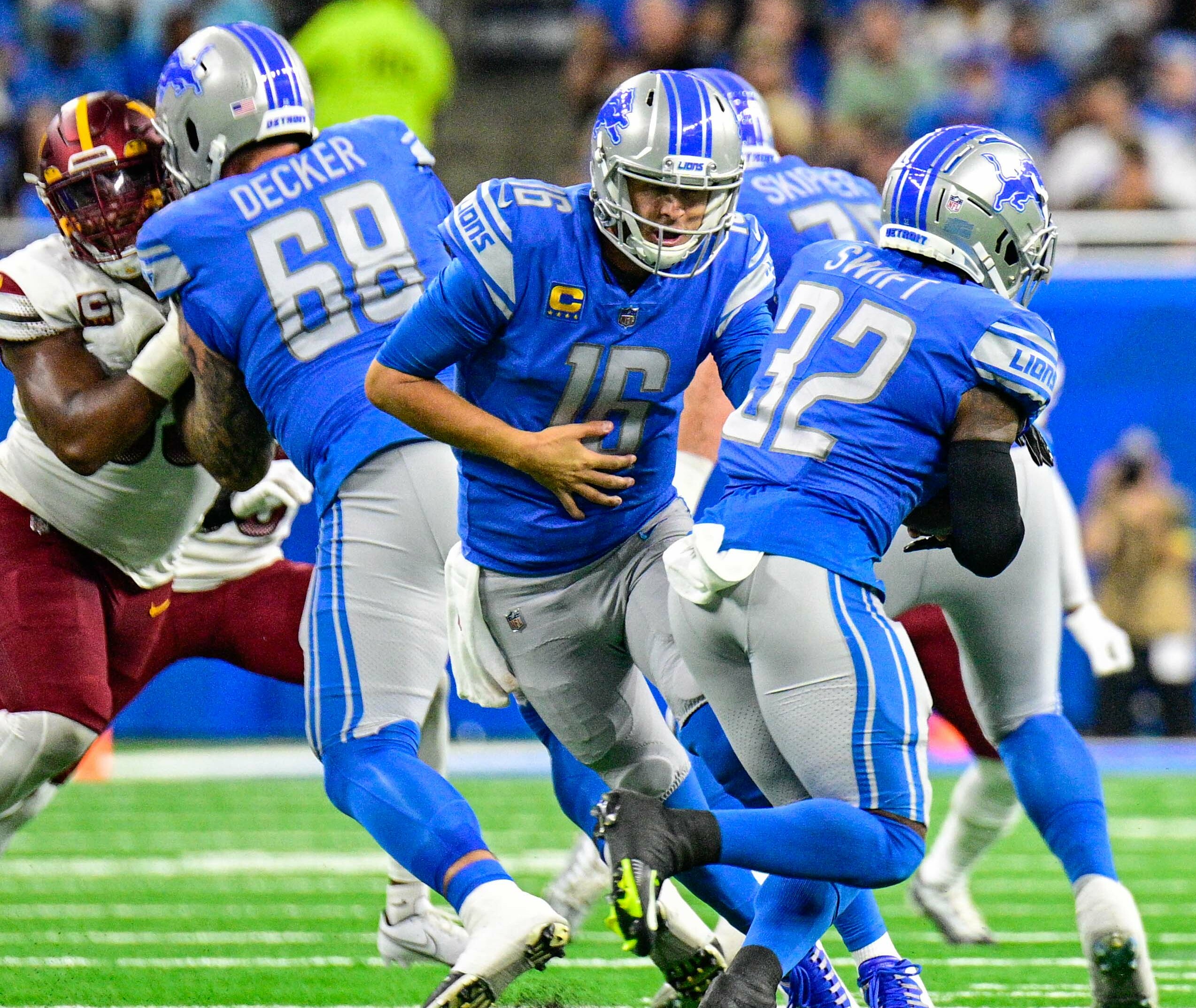
- Featured photo: D’Andre Swift in a 2022 Detroit Lions game. Joe Glorioso/All-Pro Reels via Wikimedia Commons, CC BY-SA 2.0. Archival photograph, not from this Bears–Seahawks game.