
Hey, just so you know, some of the links on this site are affiliate links. That means I may earn a small commission if you buy something through them. It doesn’t cost you anything extra, and it helps me keep this site running. Thanks for your support!
The UEFA Champions League no longer uses the old eight-group format. The modern competition begins with a 36-club league phase in which every team plays eight different opponents before the standings determine who advances directly, who must survive a play-off and who is eliminated.
How many teams are in the league phase?
There are 36 clubs in the Champions League league phase. UEFA’s 2026/27 regulations divide those clubs into four pots of nine for the draw. The reigning Champions League holder is placed at the top of pot 1, while the rest of the pots are built from UEFA club coefficients.
How many matches does each club play?
Each club plays eight league-phase matches against eight different opponents. UEFA’s draw procedure gives each team two opponents from each of the four pots: one home match and one away match against clubs drawn from every pot.
This is why the current Champions League is called a league phase rather than a traditional group stage. Clubs share one overall table instead of being separated into small four-team groups.
How does the league table work?
All 36 teams are ranked in one standings table based on their results across the eight matches. The position a club finishes in is crucial because it determines the route into the knockout rounds.
What happens to the top eight?
The clubs finishing first through eighth advance directly to the round of 16. They skip the knockout phase play-offs entirely, which makes a top-eight finish a major competitive advantage.
What happens to teams finishing ninth through 24th?
Teams finishing from ninth through 24th enter the knockout phase play-offs. Those ties are played over two legs. The eight winners move into the round of 16, where they join the eight clubs that qualified directly.
UEFA seeds the play-off structure according to league-phase finishing positions. Higher finishers receive a more favorable place in the bracket and, in principle, the seeded side plays the second leg at home.
What happens to teams finishing 25th through 36th?
Those clubs are eliminated from the Champions League after the league phase. The modern format does not send eliminated Champions League teams down into the Europa League.
How does the knockout phase work?
After the play-offs, 16 clubs remain. The competition proceeds through the round of 16, quarterfinals and semifinals before the final. The knockout ties before the final are played over two legs, with aggregate score deciding who advances under UEFA competition rules.
From the knockout play-offs onward, the competition operates through a bracket structure influenced by the league-phase standings. That gives the eight-match league phase consequences beyond simple qualification: finishing position helps shape the path through the knockout rounds.
Can clubs from the same country face each other?
During the league-phase draw, UEFA’s regulations generally prevent clubs from the same association from being drawn against each other and limit how many opponents a club can face from another single association, subject to UEFA’s draw constraints. In the knockout phase play-offs, clubs from the same national association can face one another.
Why did the format change?
The current structure creates more variety in opponents and gives every league-phase match a place in one shared standings race. Instead of playing the same three group opponents home and away, each club now sees eight different teams before the knockout phase.
The easiest way to remember the format
Think 36-8-24-16: 36 teams enter the league phase; each team plays eight matches; the top 24 stay alive; and after the play-offs, 16 clubs remain for the round of 16. The top eight avoid the play-offs, teams nine through 24 fight through them, and the bottom 12 are eliminated.
For more foundational soccer context, see Soccer Positions Explained and How Offside Works in Soccer.
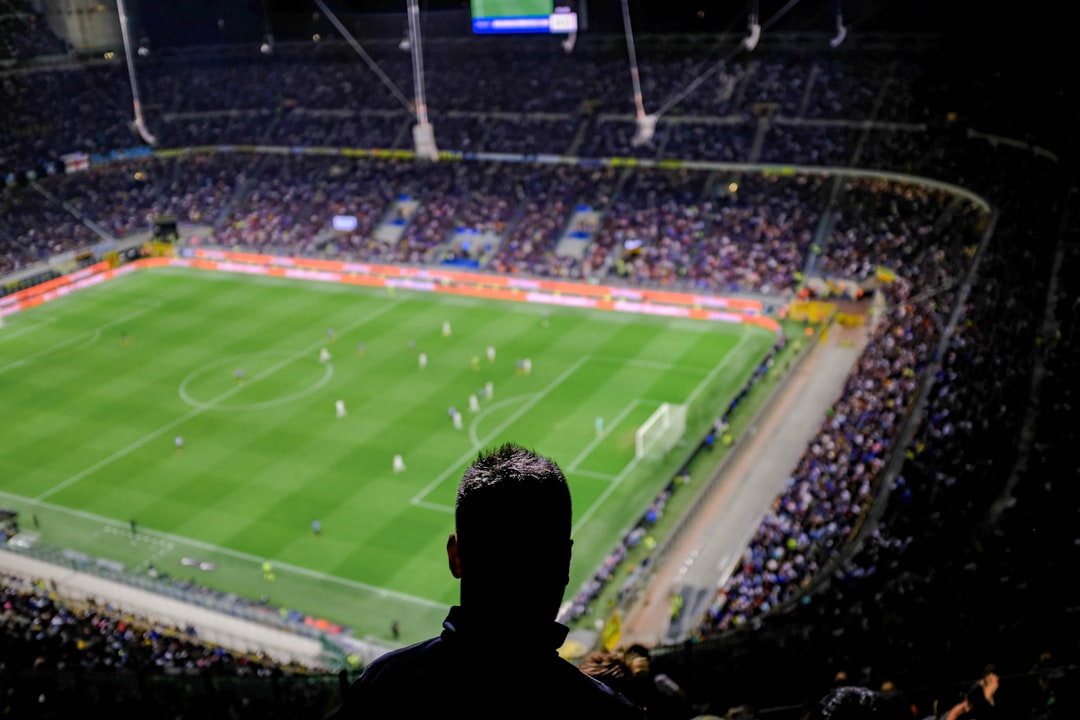
Format checked against current UEFA Champions League 2026/27 regulations and UEFA competition guidance. Featured image: generic soccer stadium imagery by Zach Rowlandson via Unsplash; it does not depict a specific Champions League match.