Hey, just so you know, some of the links on this site are affiliate links. That means I may earn a small commission if you buy something through them. It doesn’t cost you anything extra, and it helps me keep this site running. Thanks for your support!
Soccer positions are easier to understand when you separate two ideas: a player’s starting position and the role that player performs once the match begins. A right back may defend like a traditional fullback in one system, then step into midfield in another. A striker may spend the night leading the line, dropping between midfield and defense, or pressing the opposing center backs. The labels matter, but the responsibilities matter more.
The 11-player structure
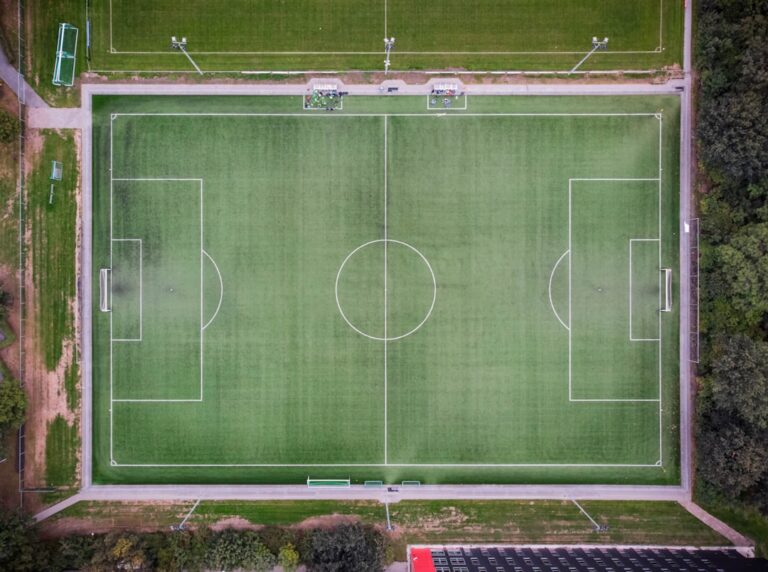
A team normally starts with one goalkeeper and 10 outfield players. Those outfield players are commonly grouped into defenders, midfielders and forwards. Formations such as 4-3-3, 4-2-3-1, 3-5-2 and 4-4-2 describe the basic distribution of those players, not a rigid map of where everyone must stand for 90 minutes.
Goalkeeper
The goalkeeper is the last line of defense and the only player with special permission to handle the ball inside that team’s own penalty area, subject to the Laws of the Game. Core duties include shot stopping, claiming crosses, organizing defenders, dealing with through balls and starting attacks with throws, passes or longer kicks.
Modern goalkeepers are also judged on their feet. Teams that build possession from the back often ask the goalkeeper to act as an extra passing option and to make quick decisions under pressure.
Center backs
Center backs defend the central spaces in front of goal. They track strikers, challenge for aerial balls, block shots, defend crosses and help control the defensive line. In possession, they are often the first outfield players responsible for progressing the ball.
In a back three, the outside center backs may step into wider areas while the central defender protects the middle. In a back four, the two center backs usually divide responsibility for the central channel and coordinate closely with the fullbacks and goalkeeper.
Fullbacks and wingbacks
Left backs and right backs defend the flanks. They must stop wide attackers, support center backs, defend the back post and help the team advance up the touchline. Attacking fullbacks overlap wingers and deliver crosses, while inverted fullbacks may move inside to create an extra midfielder.
Wingbacks perform a similar job but usually start higher in systems with three center backs. Because they are asked to cover large vertical spaces, the position demands stamina, recovery speed and repeated involvement in both attack and defense.
Defensive midfielder
The defensive midfielder, often called a holding midfielder or a number 6, connects the defense to the rest of the team. Typical responsibilities include screening the center backs, intercepting passes, collecting second balls, offering a safe outlet in possession and controlling transitions after turnovers.
Some number 6s are primarily destroyers. Others are deep-lying playmakers who dictate tempo and break lines with passing. Many elite teams ask the same player to do both jobs.
Central midfielders
Central midfielders operate between the defensive and attacking lines. A box-to-box midfielder covers ground in both directions, supports pressing, arrives around the penalty area and helps move the ball through midfield. A more possession-oriented midfielder may focus on receiving under pressure, switching play and controlling rhythm.
Attacking midfielder
The attacking midfielder, commonly associated with the number 10 role, works in the spaces behind the forwards and ahead of deeper midfielders. The job is to create chances through passes, combinations, dribbling and late runs into scoring areas.
In modern pressing systems, the number 10 may also have an important defensive assignment: closing the opposing defensive midfielder or triggering the press when the ball enters a specific zone.
Wingers and wide forwards
Wingers attack from wide areas. Traditional wingers stay near the touchline, beat defenders and cross. Inverted wingers start on the side opposite their stronger foot so they can cut inside to shoot or combine centrally. Wide forwards may play even closer to the striker and attack the penalty area rather than remaining wide.
Striker and center forward
The striker’s most visible responsibility is scoring, but modern center forwards often do much more. They may pin center backs, run behind the defense, hold up long passes, create space for teammates and lead the team’s first line of pressure.
A target forward emphasizes physical presence and hold-up play. A poacher lives closer to goal and attacks finishing opportunities. A false 9 drops away from the defensive line into midfield, trying to pull defenders out of position and create room for runners.
Why positions change during a match
Soccer is fluid. A team may defend in a 4-4-2 shape, build possession in a 3-2 structure and attack with five players across the front line. That is why two teams using the same listed formation can look completely different once the ball moves.
The best way to read positions is to watch what happens in four moments: when the team has the ball, when it loses the ball, when it defends in an organized shape and when it wins the ball back. Those transitions reveal a player’s real role.
Position numbers fans often hear
Traditional number labels are still common shorthand. The number 1 is associated with the goalkeeper, 6 with a holding midfielder in many modern discussions, 8 with a central or box-to-box midfielder, 9 with the center forward and 10 with the attacking playmaker. These are conventions rather than universal rules, and shirt numbers no longer have to match a player’s tactical role.
The bottom line
Soccer positions provide the starting map: goalkeeper, defenders, midfielders and forwards. Roles explain how that map comes alive. Once you understand the difference between a position and a role, formations, substitutions and tactical changes become much easier to follow.
Featured image: generic soccer training imagery by Jannes Glas via Unsplash. It does not depict a specific professional match.