Hey, just so you know, some of the links on this site are affiliate links. That means I may earn a small commission if you buy something through them. It doesn’t cost you anything extra, and it helps me keep this site running. Thanks for your support!
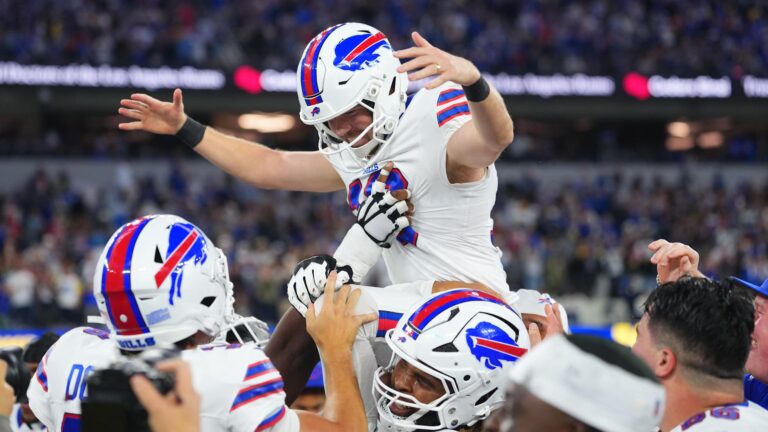
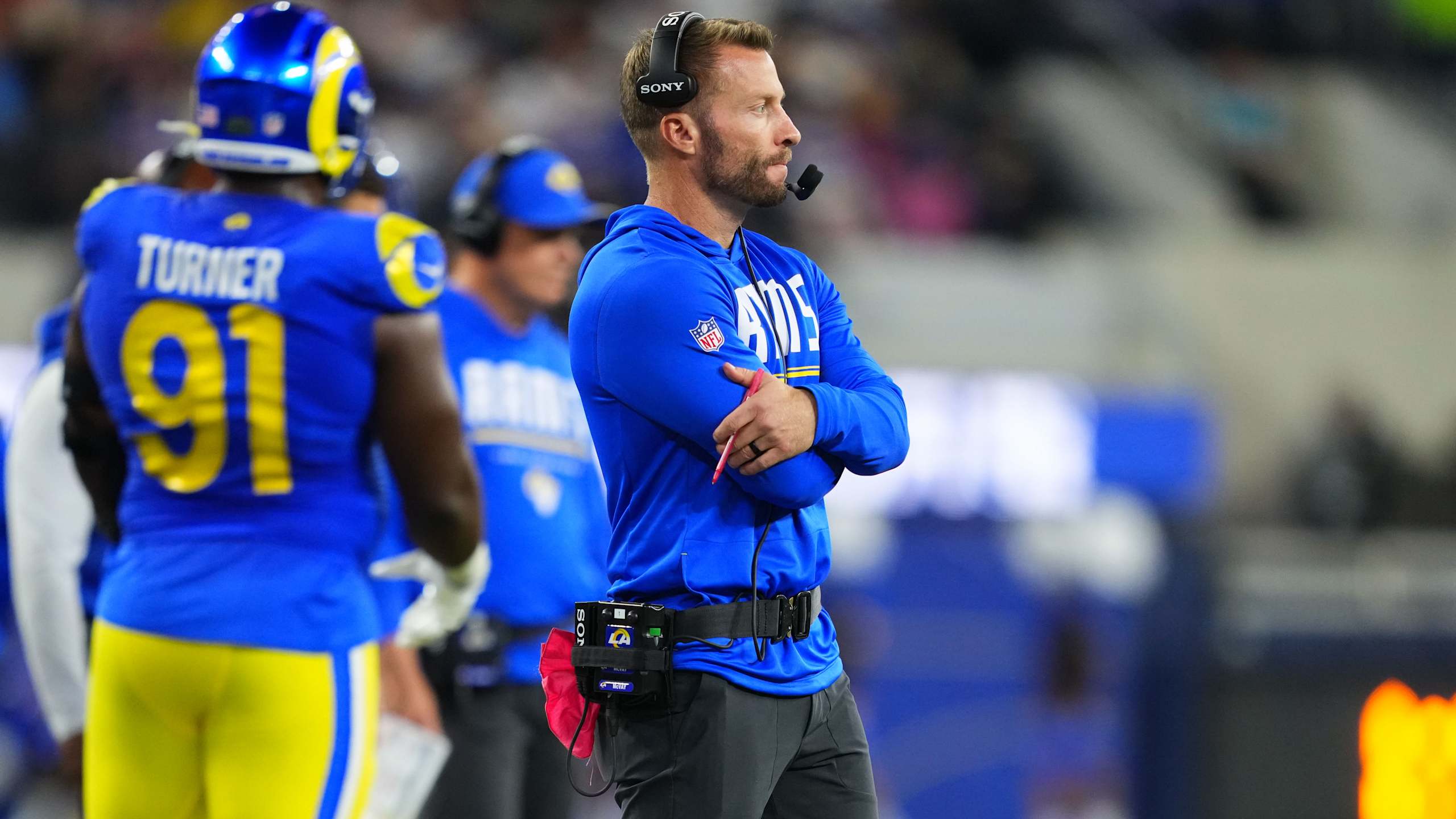
Sean McVay said the Los Angeles Rams’ kicking game cost them Monday night’s 37-34 overtime loss to Buffalo, and he also accepted responsibility for settling for a 48-yard field-goal attempt instead of pushing closer. The kick was blocked by Bills defensive end Gregory Rousseau, and Buffalo won five plays later.
What McVay is evaluating
- Harrison Mevis missed a 50-yard field goal in the first quarter.
- Buffalo opened with a 70-yard kickoff return.
- The Rams’ 48-yard overtime attempt was blocked.
- McVay acknowledged his third-down call left the kick longer than necessary.
- The coach said Los Angeles will evaluate its entire kicking operation.
The blocked kick was the final failure, not the first
It is easy to reduce the loss to Rousseau’s block, but the warning signs appeared on the opening kickoff. Ray Davis’ 70-yard return gave Buffalo immediate field position. Mevis then missed from 50 yards on the Rams’ first possession.
Those mistakes changed how every later decision should have been assessed. By overtime, Los Angeles already knew that its field-goal operation was unreliable. The offense also knew Stafford had just directed three consecutive touchdown drives.
Why the third-down choice matters
After the Rams recovered James Cook’s fumble, Stafford completed gains of 21 yards on the drive and moved Los Angeles to Buffalo’s 30. On third-and-5, the Rams handed the ball to Kyren Williams rather than asking Stafford to create a first down or a shorter fourth-down decision.
The run did not produce enough. Los Angeles chose the 48-yard field-goal attempt, and the Bills’ block transformed a likely Rams celebration into another Buffalo possession.
| Decision point | Available evidence | Risk |
|---|---|---|
| Third-and-5 at Buffalo 30 | Stafford had 383 passing yards and three touchdowns | A conservative run could leave a long kick |
| 48-yard attempt | Mevis had already missed from 50 | Protection or trajectory failure ends the chance |
| Potential fourth down | Rams needed only five yards | Failure gives Buffalo favorable field position |
This was not a decision with an obvious zero-risk answer. Going for it could also have failed. The problem is that the Rams selected the option least supported by the night’s evidence: a relatively long kick after the kicking unit had already struggled.
McVay’s accountability was important—and incomplete
McVay told reporters the field-goal and extra-point operation was “not even close to good enough.” He also said he regretted not having a better call to gain more yardage. That admission correctly separates two issues: execution by the kicking unit and decision-making by the head coach.
Changing the kicker alone would not solve protection breakdowns, kickoff coverage or conservative late-game sequencing. An honest evaluation has to include snap, hold, protection, kick trajectory, return coverage and the offensive call that created the attempt.
Stafford’s performance makes the choice harder to defend
Stafford completed 40 of 54 passes for 383 yards and three touchdowns without an interception. Puka Nacua and Davante Adams repeatedly won against Buffalo’s coverage, and the Rams scored touchdowns on three straight late drives.
When an offense is operating at that level, removing the quarterback from the decisive third-down play demands a strong reason. Los Angeles instead leaned on a unit that had supplied multiple negative plays.
What comes next for Los Angeles
The Rams are 2-3 and cannot treat special teams as a side project. The unit has now missed or had kicks blocked at a rate that repeatedly changes games, while coverage mistakes have created short fields for opponents.
Personnel changes may be considered, but the bigger question is whether practice priorities and game-management choices change with them. A new specialist cannot fix every problem if the surrounding operation remains unstable.
Read SportsyVibe’s full Bills-Rams overtime breakdown for the complete scoring and quarterback context. Our Sports DNA explainer also shows why field position and possession decisions can matter as much as raw scoring.
Sources
- Los Angeles Rams, October 12, 2026 — McVay and Stafford’s official postgame remarks.
- NFL.com, October 13, 2026 — special-teams sequence and McVay’s accountability.
- Los Angeles Rams game recap — official drive and scoring details.
Quick questions
Who blocked the Rams’ overtime field goal?
Buffalo defensive end Gregory Rousseau.
How long was the attempt?
Harrison Mevis attempted a 48-yard field goal.
Did McVay accept responsibility?
Yes. He criticized the kicking operation and said his own third-down decision should have produced a better chance.