Hey, just so you know, some of the links on this site are affiliate links. That means I may earn a small commission if you buy something through them. It doesn’t cost you anything extra, and it helps me keep this site running. Thanks for your support!
NBA preseason • Final • October 13, 2026
Los Angeles led by 20 points in the third quarter and lost by 12. Golden State’s 101–89 preseason win at T-Mobile Arena was not a conventional comeback built by a superstar takeover. It was a rotation game that flipped when the Warriors’ younger groups defended with more urgency, the Lakers’ ball security collapsed and Los Angeles scored only 26 points after halftime.
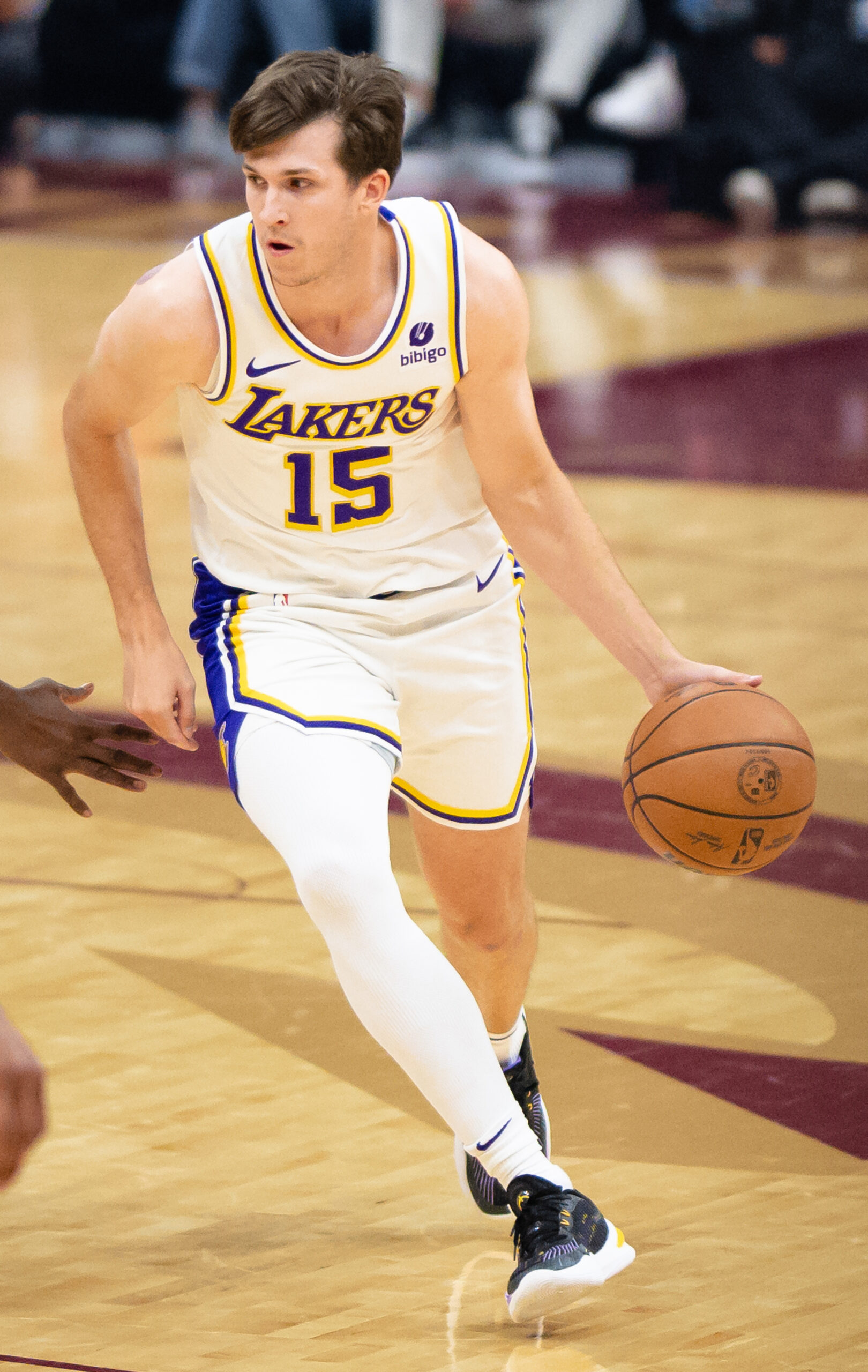
Austin Reaves was the best first-half scorer on the floor, finishing with 28 points, seven assists and four rebounds in 25 minutes. Walker Kessler added 11 points and nine rebounds in his Lakers preseason debut, all before halftime. But the Lakers’ advantage disappeared after the main rotation loosened its grip: 30 turnovers became 26 Warriors points, and Golden State closed the game with consecutive 29-point quarters.
The Lakers built the lead with real rotation strengths
Los Angeles’ first half was more than hot shooting. Reaves repeatedly manipulated point-of-attack defenders, using changes of pace to reach pull-ups and passing windows. Kessler gave the Lakers a vertical target and a reliable rebounder, finishing the half one board short of a double-double. The Lakers scored 34 points in the second quarter, won the paint battle early and carried a 63–50 lead into halftime.
That stretch matters because it came against useful Golden State personnel, even with Luka Dončić out and Draymond Green resting. Reaves’ 23 first-half points and six assists forced the Warriors to confront the same problem possession after possession: contain the ball without opening the lane for Kessler. For the portion of the night that resembled a regular-season rotation test, Los Angeles had the clearer answers.
Golden State changed the game by changing the floor
The comeback began before the fourth quarter. After the Lakers stretched their lead to 20, Golden State answered with a 14–0 run. The Warriors defended farther from the basket, turned loose possessions into transition chances and forced Los Angeles to create late in the clock. The Lakers went 6-for-20 in the third and missed seven three-point attempts, allowing the margin to shrink to four.
Once the benches took over, Brandin Podziemski tied the game and then helped push Golden State ahead. Gui Santos added a three, Gary Payton II supplied consecutive baskets, and the Warriors’ defensive activity made every Lakers mistake feel like two: a possession lost at one end and an early-clock chance conceded at the other. Golden State won the second half 51–26.
Turnovers explain the score better than shooting does
The Lakers shot 33-for-76 overall and 9-for-34 from three. Those figures are not strong, but they are survivable in a preseason game—especially after leading by 20. The 30 turnovers were not. Golden State converted them into 26 points, meaning more than a quarter of the Warriors’ offense came directly from Los Angeles losing possession.
This is also why the final score should not be read as a verdict on the Lakers’ starting group. The main rotation built the advantage; later lineups surrendered it. But it would be equally misleading to dismiss the comeback as meaningless bench noise. Young Warriors such as Yaxel Lendeborg are competing for roles, and closing a game through defensive energy and cleaner decisions is precisely the kind of evidence coaches seek in October.
Lendeborg and Bassey gave Golden State practical answers
Lendeborg led Golden State with 17 points and remained involved after turning an ankle in the third quarter. Charles Bassey contributed on the glass and around the rim, while the Warriors found enough size to survive Kessler’s early impact. Neither performance solves Golden State’s entire rotation, but both helped the Warriors play with structure once the veteran-led offense was no longer carrying the game.
The next step is separating energetic preseason possessions from reliable regular-season habits. Golden State still committed mistakes in its developing offense, and coach Steve Kerr said afterward that the group was not close to where it wanted to be. The comeback showed adaptability, not completion.
| Verified game fact | Number |
|---|---|
| Final score | Warriors 101, Lakers 89 |
| Halftime | Lakers 63, Warriors 50 |
| Second half | Warriors 51, Lakers 26 |
| Austin Reaves | 28 points, 7 assists, 4 rebounds |
| Walker Kessler | 11 points, 9 rebounds in first half |
| Lakers turnovers | 30, leading to 26 Warriors points |
What each team should take from Las Vegas
For Los Angeles, the encouraging evidence is concentrated and specific: Reaves created efficiently, Kessler’s screening and rebounding translated immediately, and the main group generated a 20-point cushion. The warning is organizational. When the ball became loose and the floor spacing deteriorated, the Lakers had no secondary mechanism to calm the game.
For Golden State, the win validates competitive depth and defensive pressure. It does not erase the early problems guarding Reaves or the work still required in Kerr’s evolving offense. The Warriors’ most useful film is the contrast between halves: passive at the point of attack early, connected and opportunistic after the break.
Continue with SportsyVibe’s NBA Buzz coverage or compare the league’s game environments in our NBA arena guide.
Sources
- NBA official box score — score, period totals and player statistics.
- NBA official game recap — exact matchup video.
- Silver Screen and Roll recap — Lakers rotation and second-half context.