Hey, just so you know, some of the links on this site are affiliate links. That means I may earn a small commission if you buy something through them. It doesn’t cost you anything extra, and it helps me keep this site running. Thanks for your support!
ALCS Game 2 • Final • October 13, 2026
Tampa Bay did not need a barrage to change the shape of the American League Championship Series. The Rays needed one opening, one clean swing behind it and six scoreless innings from Freddy Peralta. That combination produced a 3–1 win over Cleveland on Tuesday night, tied the best-of-seven ALCS at one game apiece and turned Thursday’s Game 3 in Cleveland into a fresh start rather than a rescue mission.
The decisive sequence was unusually compact: a successful challenge kept the fourth inning alive, José Ramírez could not handle Ben Williamson’s grounder, and Liam Hicks lined the very next pitch into right-center for two runs. Every Tampa Bay run was unearned, but the result was not accidental. The Rays converted the only defensive crack in a game controlled by pitching.
The fourth inning was three separate pressure plays, not just one error
It is tempting to reduce the game to Ramírez’s misplay, but that skips the work Tampa Bay did before and after it. Cleveland appeared to turn a double play earlier in the inning; video review instead ruled Victor Mesa Jr. safe at first. That reversal preserved a runner and forced rookie left-hander Parker Messick to keep working with the score still 0–0.
Williamson then hit a routine-looking ground ball toward third. Ramírez said afterward that the ball took a difficult hop near the dirt-turf boundary, but the play still put Tampa Bay ahead when Mesa scored. Hicks made the error expensive immediately, driving Messick’s next pitch into right-center to bring home Chandler Simpson and Williamson. In a postseason game with little margin, Tampa Bay turned a reprieve into a three-run inning before Cleveland could reset.
Peralta’s outing changed the Rays’ bullpen math
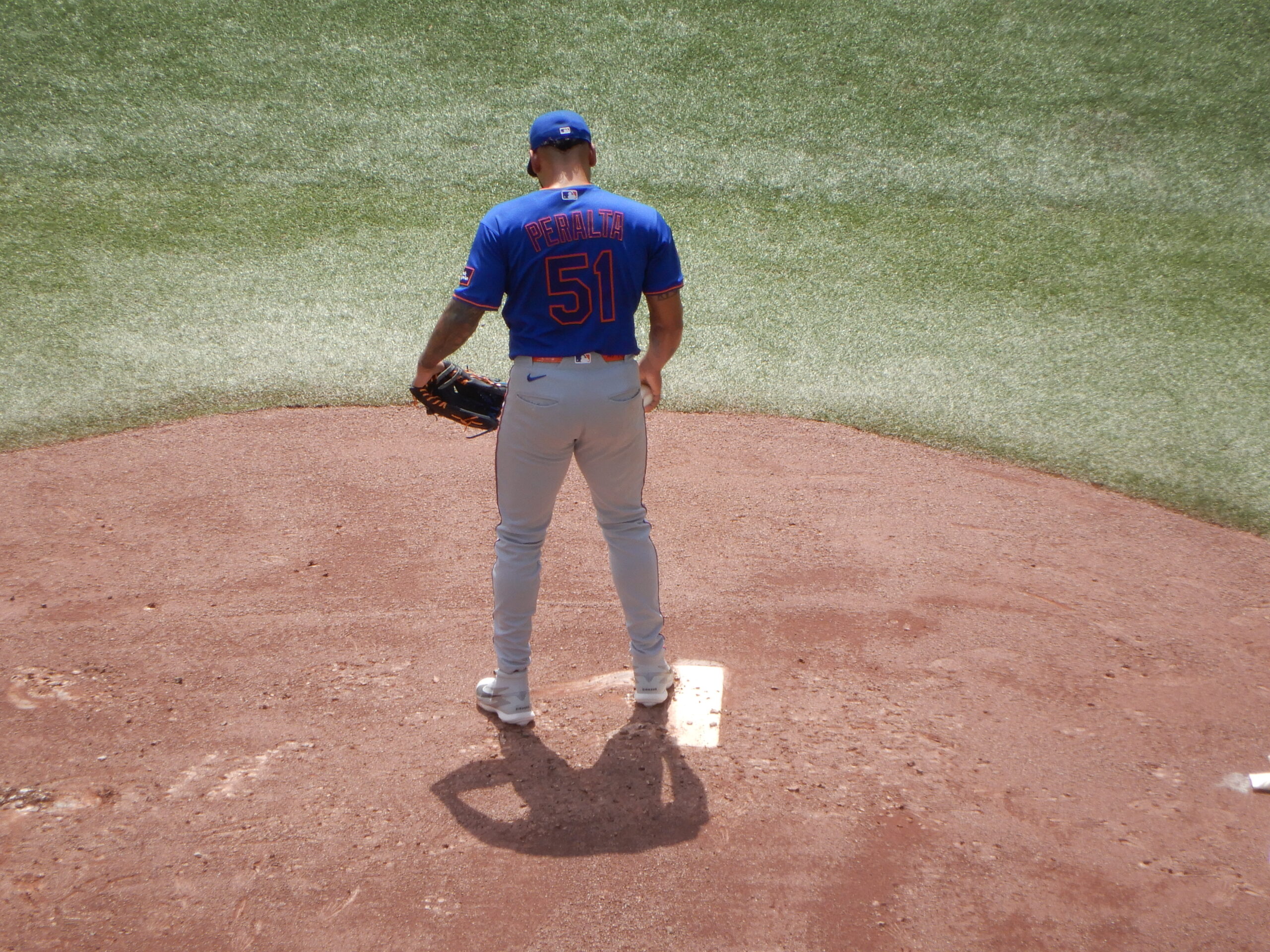
Peralta allowed four hits, walked two and struck out six across six scoreless innings on 99 pitches. The line matters, but so does the timing. Tampa Bay had lost Game 1 after Cleveland scored five times over the final two innings. Asking a bullpen to protect a lead for three innings is materially different from asking it to solve half a game, and Peralta gave manager Kevin Cash the shorter path.
Cleveland put traffic on the bases, yet Peralta repeatedly avoided the hit that would have tied his pitch count to the scoreboard. His last batter was rookie Petey Halpin, whom he struck out to finish the sixth. That ending allowed Ian Seymour to begin a clean seventh rather than inherit a rally. Peralta’s mix of velocity and changeup did not make every plate appearance comfortable; it made Cleveland’s best swings arrive without enough runners attached.
Cleveland’s seventh-inning threat showed how close the game remained
Chase DeLauter’s RBI double in the seventh cut the deficit to 3–1 and put runners at second and third. That was Cleveland’s chance to erase the entire fourth inning with one hit. Seymour struck out Jo Adell to end the threat, then retired the side in order in the eighth. Bryan Baker followed with a clean ninth for his fourth save of the postseason.
The sequence explains the real divide between the teams. Cleveland did not lack opportunities; it lacked the conversion Tampa Bay found. The Guardians finished close enough that one well-placed single could have tied the game, but the Rays’ relief plan never allowed that contact once the tying runs reached scoring position.
What the 1–1 series score changes
The series now moves to Cleveland for Game 3 on Thursday. A split was the minimum Tampa Bay needed after losing the opener at home, and it prevents Cleveland from carrying both a lead and home-field momentum into the middle games. For the Guardians, the loss is costly without being structural: Messick allowed three runs but none were earned, and the bullpen kept the margin fixed.
The more useful question is whether Cleveland can make Tampa Bay generate offense without assistance. The Rays scored all three runs in a single inning built around replay, pressure and a defensive mistake. Cleveland’s pitching was otherwise good enough. Conversely, Tampa Bay now has proof that one lead can survive if its starter works deep enough to line up Seymour and Baker.
| Verified Game 2 fact | Result |
|---|---|
| Final score | Rays 3, Guardians 1 |
| Series | Tied 1–1 |
| Winning pitcher | Freddy Peralta: 6 IP, 4 H, 0 R, 6 K, 2 BB |
| Decisive hit | Liam Hicks two-run single, fourth inning |
| Next game | Game 3, Thursday in Cleveland |
The SportsyVibe read
This was not simply “Rays capitalize on an error.” Tampa Bay’s win came from stacking small advantages: a challenge that saved an out, immediate contact after the mistake, a starter who absorbed six innings and two relievers who protected the only high-leverage Cleveland rally. That formula is repeatable even if the exact misplay is not. Cleveland’s counter is also clear—make the Rays beat clean defense and force Cash away from his preferred late-game alignment.
For more postseason context and ballpark stories, visit SportsyVibe’s MLB & Baseball hub.
Sources
- MLB Game Story: Guardians at Rays, Game 2 — score and decisive plays.
- MLB condensed game — official game video.
- Reuters/Field Level Media recap — pitching line, quotes and series context.